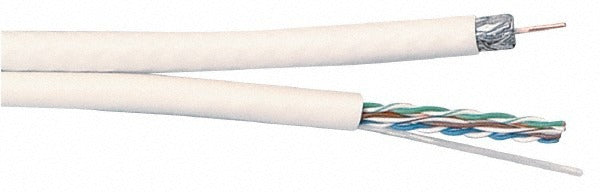
The SOUTHWIRE 9900030601 is a shielded automation communication cable designed for low-voltage signal transmission in building automation, control, and data communication systems. Constructed with bare copper conductors at 24 AWG, it delivers reliable electrical performance across its 1000-foot length. The polyethylene insulation and overall shielded construction protect signal integrity in environments where interference is a concern. Licensed electricians and automation technicians install this cable in commercial and light industrial applications where multi-conductor shielded wiring is required. The 0.575-inch outside diameter keeps routing and termination manageable in conduit or open plenum runs.
This cable is suited for building automation systems, HVAC controls wiring, and general-purpose communication or data runs requiring a 5-conductor shielded configuration. Its 1000-foot reel length is appropriate for larger commercial projects or installations where continuous cable runs reduce splice points. The white jacket color aids identification in multi-cable installations. It meets Canadian CMH FT1 flame requirements and is ETL Listed as CM per UL 444, making it applicable where those certifications are required by local code.
Key Features
5-conductor configuration supports multi-signal automation and control wiring
Shielded construction reduces electromagnetic interference on signal lines
Bare copper conductors at 24 AWG for consistent conductivity
Polyethylene insulation rated for communication cable applications
1000-foot reel minimizes splices on long commercial runs
ETL Listed CM per UL 444 and Canadian Certified CMH FT1; RoHS Compliant
Compatibility
Designed for use in automation, building controls, and low-voltage communication wiring applications requiring a 5-conductor shielded 24 AWG cable meeting CM and CMH ratings.
Installation Notes
Installation should be performed by a licensed electrician in accordance with the National Electrical Code (NEC) and applicable local codes governing communication wiring. De-energize all connected control circuits before terminating or splicing. Maintain minimum bend radius to avoid damage to the shield or conductors, and avoid running parallel to high-voltage power conductors where possible to preserve signal integrity.