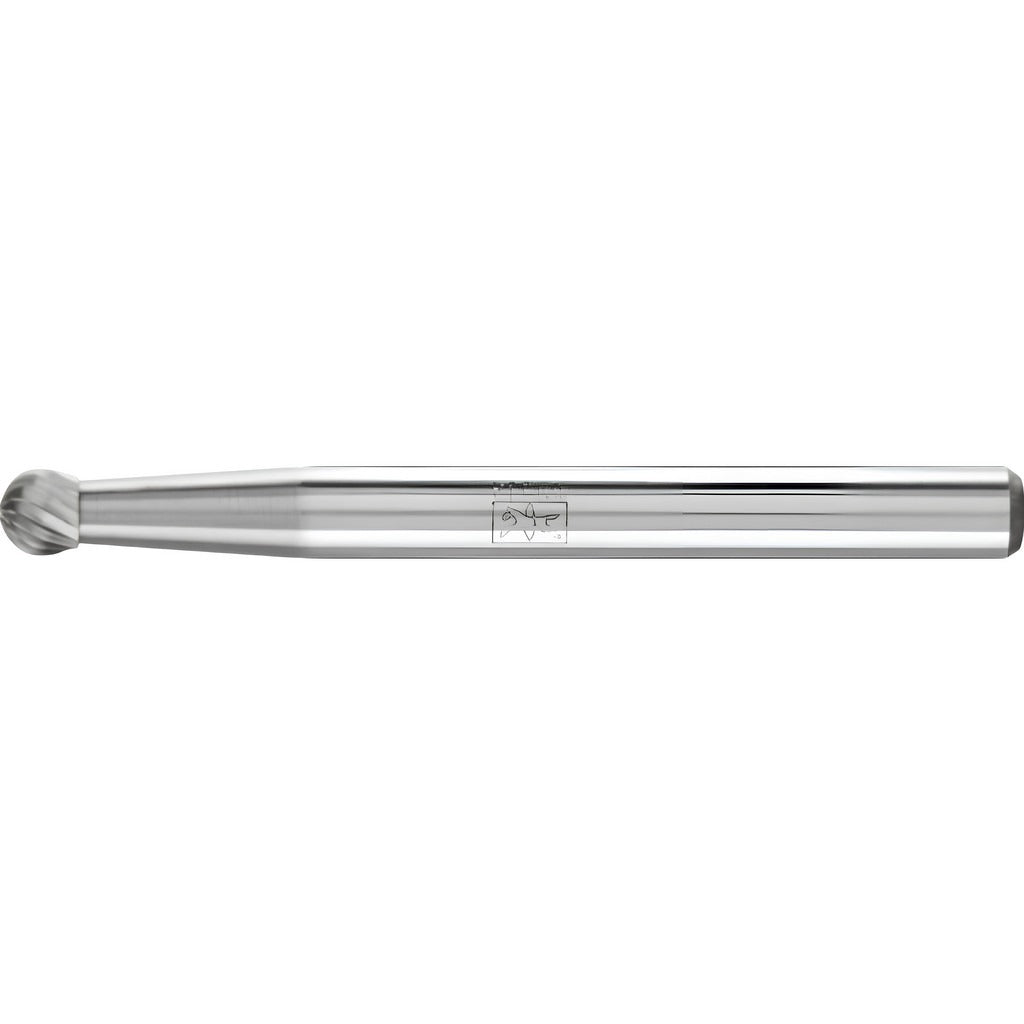
The PFERD 21823241 is a single-cut carbide abrasive bur designed for precision material removal in metalworking and die-grinding applications. The ball-shaped head measures 0.125 inches in cutting diameter with a 3/32-inch length of cut, making it well suited for contouring, deburring, and blending in confined areas. The uncoated carbide head provides durability across a wide range of ferrous and non-ferrous materials. With a maximum rated speed of 95,000 RPM and a 1/8-inch shank diameter, this bur is compatible with standard die grinders and rotary tools used throughout fabrication, tooling, and maintenance environments. The overall length is 1.5 inches.
This bur is used in machine shops, toolrooms, welding fabrication shops, and general maintenance operations where controlled material removal is needed in tight or curved surfaces. The ball geometry allows the operator to work in concave profiles, drilled recesses, and rounded pockets where flat or cylindrical burs cannot reach. Licensed machinists, tool and die makers, and skilled maintenance technicians are the primary installers and users of this style of bur.
Key Features
Ball head geometry for contouring, blending, and deburring in curved and recessed areas
Single-cut tooth style for smooth finishes and efficient chip clearing
Uncoated carbide head for broad material compatibility
1/8-inch shank diameter fits standard die grinder and rotary tool collets
Rated to 95,000 RPM for use with high-speed rotary tools
Compact 1.5-inch overall length for access in tight workspaces
Compatibility
Designed as an OEM-style replacement and standard trade bur meeting SD-42 industry specification, compatible with 1/8-inch collet die grinders and rotary tools used in metalworking and fabrication.
Installation Notes
Installation and use of carbide burs should be performed by trained machinists or maintenance technicians familiar with rotary cutting tools. Verify that the die grinder or rotary tool collet is properly tightened before operation and that the tool RPM rating meets or exceeds the bur maximum of 95,000 RPM. Always wear appropriate eye and face protection when operating rotary burs. Inspect the bur for chips or cracks before each use and do not use a damaged bur.