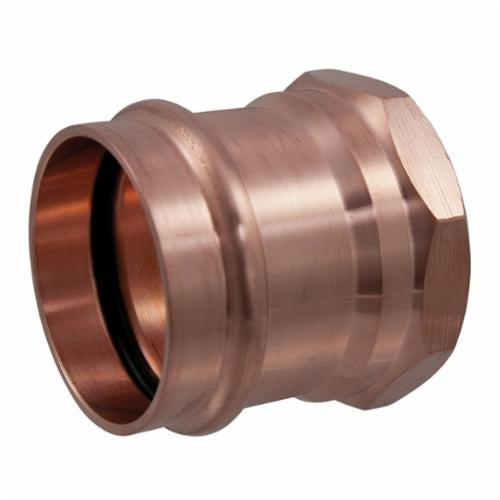
The NIBCO 902640PC is a 2.5-inch nominal wrought copper adapter fitting designed to transition between a press-style connection and a female National Pipe Thread (FNPT) end. This fitting allows installers to connect press-fit copper piping systems to threaded components without the need for soldering or open flame at the transition point. It is used in potable water, hydronic heating, and commercial plumbing systems where press technology is the installation method of choice. Licensed plumbers and pipefitters working with press tooling are the primary installers of this fitting.
This adapter is suited for residential and commercial plumbing installations where a 2.5-inch press copper line must connect to a threaded valve, strainer, pump, or other FNPT-threaded component. The press end accepts standard press-fit copper tooling, while the FNPT end threads directly onto compatible male-threaded fittings or equipment connections. It is commonly found in mechanical rooms, boiler rooms, and commercial plumbing rough-in applications where press systems are specified.
Key Features
2.5-inch nominal size for use in larger-diameter press copper piping systems
Press x FNPT end configuration transitions press copper to threaded connections
Wrought copper construction provides durability and corrosion resistance in plumbing service
No-flame press connection on one end reduces fire risk and speeds installation
FNPT end threads directly onto male-threaded valves, pumps, or equipment ports
Compatibility
Designed as an OEM-style press copper adapter for use in 2.5-inch press-fit copper piping systems with FNPT-threaded components.
Installation Notes
Installation should be performed by a licensed plumber familiar with press-fit copper systems and the appropriate press tooling for 2.5-inch fittings. Shut off and depressurize the water or hydronic system completely before cutting into existing lines or making connections. Apply an appropriate thread sealant or PTFE tape to the FNPT threads before assembly. Verify that the press end is fully seated before actuating the press tool, and inspect the pressed joint for proper formation after completion.