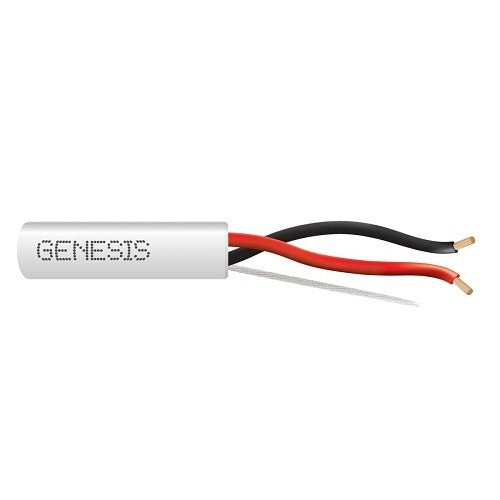
The GENESIS CABLE 54731101 is a 16 AWG, 2-conductor audio cable built for in-wall and structured wiring installations where non-plenum routing is required. Constructed with 65-strand conductors, this cable delivers reliable signal transmission for distributed audio systems. Its CMR, CL3R, and FT4 ratings make it compliant with riser-rated in-wall wiring applications, meeting the requirements of the National Electrical Code for vertical runs between floors. It is sized and rated for permanent installation work handled by licensed electricians and low-voltage technicians.
This cable is suited for residential and light commercial audio distribution systems where non-plenum riser routing is the application. Typical installations include speaker wiring runs through interior walls, between floors, and within structured wiring enclosures. The 16 AWG gauge supports moderate cable runs commonly found in whole-home audio setups. It is sold by the individual unit as indicated by the unit of measure designation.
Key Features
16 AWG, 65-strand conductor construction for flexibility and consistent conductivity
2-conductor configuration for standard speaker or audio signal wiring
CMR riser rating suitable for vertical in-wall runs per NEC requirements
CL3R rating confirms compliance for Class 3 remote-control and signal cable in riser applications
FT4 flame test rating meets Canadian Standards Association vertical flame requirements
Non-plenum rated — appropriate for walls, conduit, and riser shafts outside air-handling spaces
Compatibility
Designed as an OEM-style drop-in wire for non-plenum riser audio distribution wiring applications in residential and light commercial systems.
Installation Notes
Installation should be performed by a licensed electrician or qualified low-voltage technician in accordance with NEC Article 640 and applicable local codes. This cable is not approved for use in plenum air-handling spaces — verify ceiling and chase classifications before routing. De-energize any connected amplifiers, speakers, or control equipment before terminating wire ends. Avoid sharp bends and staple over-drive, which can damage strand integrity and affect signal quality.