


Search
-
HVAC Equipment
-
Ductless Mini Splits
- Ductless Mini Splits
- Shop By Zone
- Shop by BTU
- Shop By Brand
- Components
- Accessories
-
HVAC Parts & Supplies
- HVAC Parts & Supplies
- HVAC Supplies
- HVAC Tools
-
HVAC Replacement Parts
- Blower Housing & Assemblies
- Blower Wheels
- Breakers, Contactors & Disconnects
- Capacitors & Transformers
- Control & Circuit Boards
- Filter Driers & Accumulators
- Gas Valves & Conversion Kits
- Heat Exchangers
- Thermal Expansion Valves (TXV)
- Temperature Controls
- Wall Brackets & Parts
- Miscellaneous Parts
- O-Rings & Gaskets
- Hydronics
- Motors
- Thermostats & Zoning
-
Plumbing
-
Pool
-
Electrical
-
Air Quality
-
Tools & Supplies
-
Door Security & Hardware


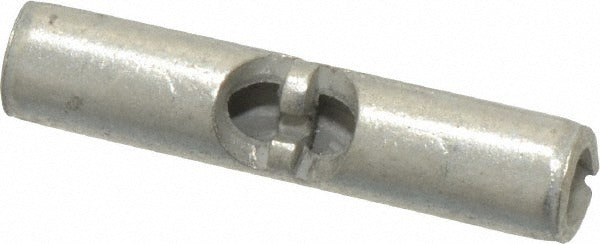
Thomas Betts 2A-18 Butt Splice Terminal Crimp-on 100 Pack
Availability:
In Stock

Ships same day if ordered by 12 pm
- $98.92
- $98.92
- Unit price
- / per
✓
Better Price in Cart
Manufacturer pricing rules prevent us from advertising our discount — no account or email required to see it.
-
Secure Payments
-
Easy Returns
-
Expert Advice
-
Fast Shipping
Product Description
The THOMAS BETTS 2A-18 is a non-insulated, crimp-on butt splice terminal designed to join two wire ends in a single inline connection. Manufactured from copper with a TiN (titanium nitride) contact plating, it delivers reliable conductivity and resistance to oxidation in demanding wiring environments. The terminal measures 0.62 inches in overall length and 0.12 inches in overall diameter, making it compact for tight junction boxes and panel wiring. Rated to UL 94 V-2 flame standards and compliant with MIL-T-7928 and CSA requirements, the 2A-18 is a trusted choice for licensed electricians and industrial maintenance technicians working to established wiring codes.
This butt splice terminal is suited for residential, commercial, and light industrial wiring applications where a clean, low-profile inline splice is required. Its non-insulated design is appropriate when splices will be covered by separate insulating sleeves or heat-shrink tubing, or where the installation environment calls for a bare terminal per job spec. Electricians typically use this terminal in panel wiring, control panel builds, harness assembly, and field splicing of branch circuit or low-voltage control wiring. The 2A-18 accepts two wire entries, one at each end, for a direct butt-splice configuration.
Key Features
- Non-insulated crimp-on design for use with separate insulating sleeve or heat-shrink coverage
- Copper contact material with TiN plating for oxidation resistance and long-term conductivity
- Compact profile: 0.62 inches overall length, 0.12 inches overall diameter
- Two wire entries for direct inline butt-splice connection
- Meets MIL-T-7928, CSA, UL Listed (File E9809), UL 94 V-2, and RoHS compliance requirements
- Sold in a 100-piece package with no minimum order restriction
Compatibility
Designed as an OEM-style crimp terminal for use in standard inline butt-splice applications across residential, commercial, and industrial electrical wiring assemblies.
Installation Notes
Installation should be performed by a licensed electrician or qualified technician in accordance with the National Electrical Code (NEC) and applicable local codes. De-energize the circuit and verify absence of voltage before making any splice connection. Use a calibrated ratcheting crimp tool rated for the terminal size to ensure a secure, gas-tight crimp. If the installation environment requires insulation, apply an appropriately rated heat-shrink sleeve or insulating boot over the completed splice before restoring power.
Technical Specifications

Complete your install
We pulled together the parts most installs need for this unit, plus a few add-ons worth a look. Check what you need — nothing here blocks checkout.
Loading install accessories...
Add install kit to cart
—
Related Products
- Choosing a selection results in a full page refresh.