


Search
-
HVAC Equipment
-
Ductless Mini Splits
- Ductless Mini Splits
- Shop By Zone
- Shop by BTU
- Shop By Brand
- Components
- Accessories
-
HVAC Parts & Supplies
- HVAC Parts & Supplies
- HVAC Supplies
- HVAC Tools
-
HVAC Replacement Parts
- Blower Housing & Assemblies
- Blower Wheels
- Breakers, Contactors & Disconnects
- Capacitors & Transformers
- Control & Circuit Boards
- Filter Driers & Accumulators
- Gas Valves & Conversion Kits
- Heat Exchangers
- Thermal Expansion Valves (TXV)
- Temperature Controls
- Wall Brackets & Parts
- Miscellaneous Parts
- O-Rings & Gaskets
- Hydronics
- Motors
- Thermostats & Zoning
-
Plumbing
-
Pool
-
Electrical
-
Air Quality
-
Tools & Supplies
-
Door Security & Hardware


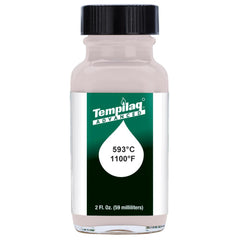
Tempil 24431 Temperature Indicating Liquid 1100F 2 Oz
Availability:
In Stock

Ships same day if ordered by 12 pm
- $68.08
- $68.08
- Unit price
- / per
✓
Better Price in Cart
Manufacturer pricing rules prevent us from advertising our discount — no account or email required to see it.
-
Secure Payments
-
Easy Returns
-
Expert Advice
-
Fast Shipping
Product Description
The TEMPIL 24431 is a temperature-indicating liquid used to verify surface temperatures on metal, glass, and other industrial materials. Applied directly to a workpiece, the liquid dries quickly on both horizontal and vertical surfaces and melts at exactly 1100 degrees F (593 degrees C), leaving a clearly visible mark that confirms the target temperature has been reached. Accuracy is rated within plus or minus 1% of the Fahrenheit value and plus or minus 3% of the Celsius value. The 2 oz container is a standard size suited for field and shop use. HVAC technicians, pipefitters, welders, and metalworkers rely on this product for heat-treating, brazing, soldering, and process verification tasks.
This temperature-indicating liquid is suited for glass and metal surfaces in both shop and field settings. It is commonly used during brazing and soldering operations to confirm preheat or peak temperatures without relying on infrared or contact thermometers. The fast-drying, enhanced formula is designed to reduce settling so the product remains consistent throughout the container. It is appropriate for residential and commercial mechanical work wherever precise surface temperature confirmation is required before or during a heat process.
Key Features
- Melts at 1100 degrees F (593 degrees C), leaving a visible mark at the designated temperature
- Accuracy within plus or minus 1% of Fahrenheit and plus or minus 3% of Celsius
- Dries fast on horizontal and vertical surfaces for quick application in the field
- Enhanced formula reduces settling for consistent performance throughout the container
- Compatible with glass and metal substrates
- Compact 2 oz container suitable for portable field use
Compatibility
Designed for use on glass and metal surfaces where surface temperature verification at 1100 degrees F is required during heat-intensive operations such as brazing, soldering, or heat treating.
Installation Notes
Applied by a qualified technician, welder, or pipefitter as part of a controlled heating process. Apply a thin mark to the workpiece surface before or during heating and allow the indicator to dry. Do not apply to surfaces that are already above the rated temperature, as this will produce an immediate melt that does not reflect accurate preheat confirmation. Follow applicable codes and workplace safety procedures when working near open flame or high-heat equipment.
Technical Specifications

Complete your install
We pulled together the parts most installs need for this unit, plus a few add-ons worth a look. Check what you need — nothing here blocks checkout.
Loading install accessories...
Add install kit to cart
—
Related Products
- Choosing a selection results in a full page refresh.