


Search
-
HVAC Equipment
-
Ductless Mini Splits
- Ductless Mini Splits
- Shop By Zone
- Shop by BTU
- Shop By Brand
- Components
- Accessories
-
HVAC Parts & Supplies
- HVAC Parts & Supplies
- HVAC Supplies
- HVAC Tools
-
HVAC Replacement Parts
- Blower Housing & Assemblies
- Blower Wheels
- Breakers, Contactors & Disconnects
- Capacitors & Transformers
- Control & Circuit Boards
- Filter Driers & Accumulators
- Gas Valves & Conversion Kits
- Heat Exchangers
- Thermal Expansion Valves (TXV)
- Temperature Controls
- Wall Brackets & Parts
- Miscellaneous Parts
- O-Rings & Gaskets
- Hydronics
- Motors
- Thermostats & Zoning
-
Plumbing
-
Pool
-
Electrical
-
Air Quality
-
Tools & Supplies
-
Door Security & Hardware


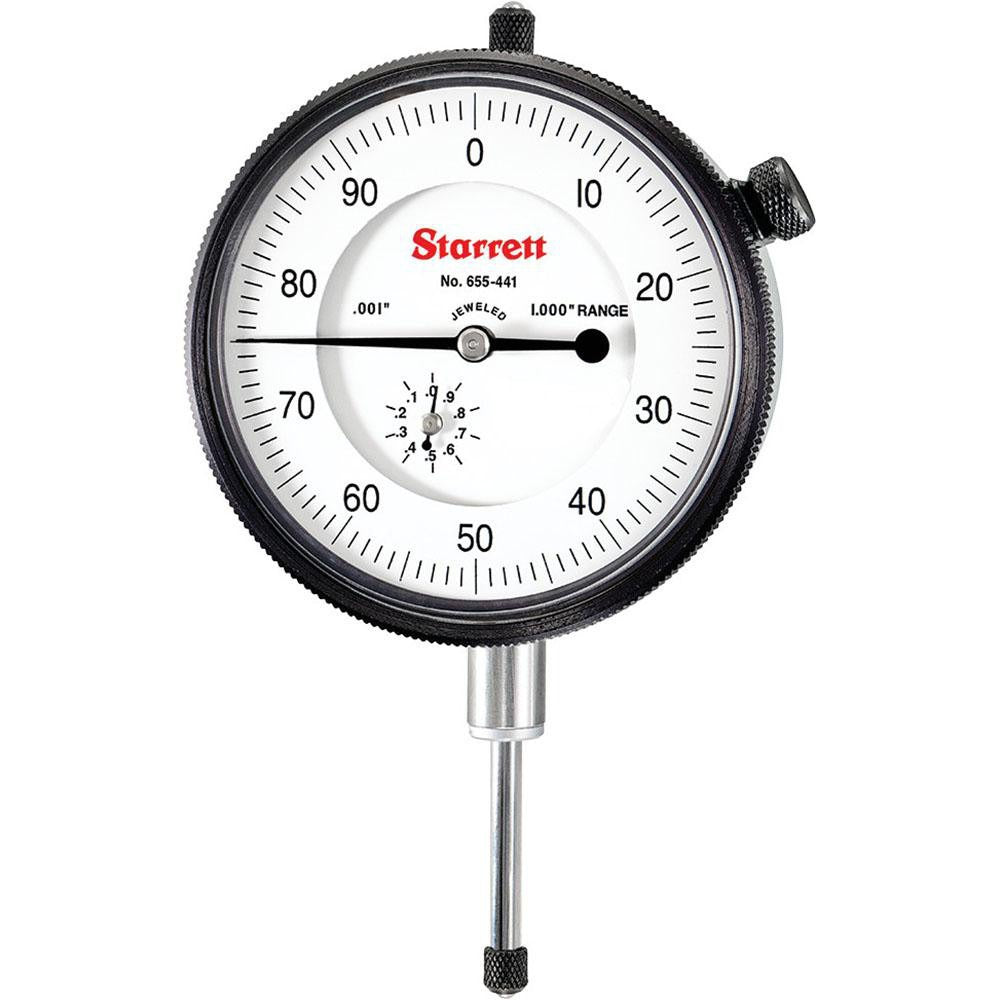
Starrett 53613 Dial Drop Indicator 0-1 in 0.001 Grad Lug Back
Availability:
In Stock

Ships same day if ordered by 12 pm
- $359.64
- $359.64
- Unit price
- / per
✓
Better Price in Cart
Manufacturer pricing rules prevent us from advertising our discount — no account or email required to see it.
-
Secure Payments
-
Easy Returns
-
Expert Advice
-
Fast Shipping
Product Description
The STARRETT 53613 is a dial drop indicator designed for precise linear measurement in machining, inspection, and alignment applications. It covers a measurement range of 0 to 1 inch with a graduation of 0.001 inches per division and a 0-100 dial reading, allowing technicians to resolve fine deviations quickly. The 2.75-inch white dial face carries a no-glare satin finish and is protected by an unbreakable crystal. The stainless steel stem measures 0.375 inches in diameter and 0.625 inches in length. A built-in revolution counter tracks full spindle rotations, reducing reading errors during extended measurement runs. The unit weighs 1 pound and ships with a flat back included.
This indicator is suited for use on surface plates, magnetic bases, and indicator holders in machine shop, tool-and-die, and quality-control environments. It is appropriate for both production floor inspection and setup work where consistent, repeatable readings are required. The lug back mount allows direct attachment to standard indicator holders and arms. The jeweled bearing construction supports long service life under regular shop use. Machinists, metrologists, and quality technicians install this type of indicator for runout checks, flatness verification, and workpiece alignment tasks.
Key Features
- 0 to 1 inch measurement range with 0.001 inch graduation for high-resolution readings
- Jeweled bearing construction for smooth spindle travel and extended service life
- Revolution counter tracks full spindle rotations for accurate multi-revolution readings
- No-glare satin finish on 2.75-inch white dial for clear readability under shop lighting
- Unbreakable crystal protects dial face from impact and debris
- Stainless steel stem resists corrosion in wet or coolant-exposed environments
- Lug back mount with flat back included for versatile fixture compatibility
Compatibility
Designed as an OEM-style drop indicator compatible with standard lug back indicator holders, magnetic bases, and surface gauge arms commonly used in machine shop and inspection environments.
Installation Notes
Installation is performed by machinists, metrologists, or quality technicians using a compatible indicator holder or magnetic base that accepts a lug back mount. Secure the lug back firmly before taking measurements to prevent indicator movement that would affect reading accuracy. Ensure the spindle axis is aligned perpendicular to the measurement surface to obtain valid readings. Do not overtighten clamping hardware against the stem or bezel, as this can introduce preload errors or damage the mechanism.
Technical Specifications

Complete your install
We pulled together the parts most installs need for this unit, plus a few add-ons worth a look. Check what you need — nothing here blocks checkout.
Loading install accessories...
Add install kit to cart
—
Related Products
- Choosing a selection results in a full page refresh.