


Search
-
HVAC Equipment
-
Ductless Mini Splits
- Ductless Mini Splits
- Shop By Zone
- Shop by BTU
- Shop By Brand
- Components
- Accessories
-
HVAC Parts & Supplies
- HVAC Parts & Supplies
- HVAC Supplies
- HVAC Tools
-
HVAC Replacement Parts
- Blower Housing & Assemblies
- Blower Wheels
- Breakers, Contactors & Disconnects
- Capacitors & Transformers
- Control & Circuit Boards
- Filter Driers & Accumulators
- Gas Valves & Conversion Kits
- Heat Exchangers
- Thermal Expansion Valves (TXV)
- Temperature Controls
- Wall Brackets & Parts
- Miscellaneous Parts
- O-Rings & Gaskets
- Hydronics
- Motors
- Thermostats & Zoning
-
Plumbing
-
Pool
-
Electrical
-
Air Quality
-
Tools & Supplies
-
Door Security & Hardware


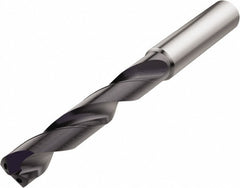
Seco 03046201 Carbide Jobber Drill 8.40mm 140deg Tialn
Availability:
In Stock

Ships same day if ordered by 12 pm
- $384.02
- $384.02
- Unit price
- / per
✓
Better Price in Cart
Manufacturer pricing rules prevent us from advertising our discount — no account or email required to see it.
-
Secure Payments
-
Easy Returns
-
Expert Advice
-
Fast Shipping
Product Description
The SECO 03046201 is a solid carbide jobber-length drill bit designed for high-performance drilling in demanding materials. It features a 140-degree point angle and a TiAlN (titanium aluminum nitride) coating that extends tool life in abrasive and hard-material applications. The 8.40 mm cutting diameter is paired with a 10.00 mm straight-cylindrical shank, giving it added rigidity and resistance to deflection under load. With an overall length of 103.00 mm and a two-flute regular spiral configuration, this bit evacuates chips efficiently during through-hole and blind-hole operations. It is suited for machinists, tool-and-die technicians, and metalworking professionals who require consistent, tight-tolerance results.
This drill bit is rated for use in steel, stainless steel, cast iron, and other hard materials, making it a practical choice for production drilling environments and job-shop applications. The SD205A series is built to ANSI standards and carries an m7 diameter tolerance, which supports accurate fit in precision drilling setups. The 6xD flute-to-diameter ratio and 61.00 mm flute length support drilling depths up to 49.00 mm without coolant-through requirements. It is sold individually and is appropriate for CNC machining centers and manual drill presses with compatible toolholding.
Key Features
- Solid carbide construction for rigidity and wear resistance in hard and abrasive materials
- TiAlN coating for extended tool life and reduced heat buildup at the cutting edge
- 140-degree point angle minimizes walking and reduces thrust force on entry
- Two-flute regular spiral design supports efficient chip evacuation
- m7 diameter tolerance for consistent, repeatable hole sizing
- Straight-cylindrical shank compatible with standard collet and drill chuck toolholding
Compatibility
Designed for use in steel, stainless steel, cast iron, and hard materials as indicated by primary workpiece material codes P, M, K, and H. Fits toolholders accepting a 10.00 mm straight-cylindrical shank. Part of the SD205A series built to ANSI specification.
Installation Notes
Installation and operation should be performed by qualified machinists or metalworking technicians familiar with rotating cutting tools. Ensure the machine spindle is fully stopped and the tool is secured in a properly sized collet or drill chuck before beginning work. Verify that spindle speed and feed rate settings are appropriate for the workpiece material and hole depth before engaging the cut. Inspect the cutting edges for wear or chipping before each use, as a damaged drill bit can cause inaccurate holes or workpiece damage.
Technical Specifications

Complete your install
We pulled together the parts most installs need for this unit, plus a few add-ons worth a look. Check what you need — nothing here blocks checkout.
Loading install accessories...
Add install kit to cart
—
Related Products
- Choosing a selection results in a full page refresh.