


Search
-
HVAC Equipment
-
Ductless Mini Splits
- Ductless Mini Splits
- Shop By Zone
- Shop by BTU
- Shop By Brand
- Components
- Accessories
-
HVAC Parts & Supplies
- HVAC Parts & Supplies
- HVAC Supplies
- HVAC Tools
-
HVAC Replacement Parts
- Blower Housing & Assemblies
- Blower Wheels
- Breakers, Contactors & Disconnects
- Capacitors & Transformers
- Control & Circuit Boards
- Filter Driers & Accumulators
- Gas Valves & Conversion Kits
- Heat Exchangers
- Thermal Expansion Valves (TXV)
- Temperature Controls
- Wall Brackets & Parts
- Miscellaneous Parts
- O-Rings & Gaskets
- Hydronics
- Motors
- Thermostats & Zoning
-
Plumbing
-
Pool
-
Electrical
-
Air Quality
-
Tools & Supplies
-
Door Security & Hardware


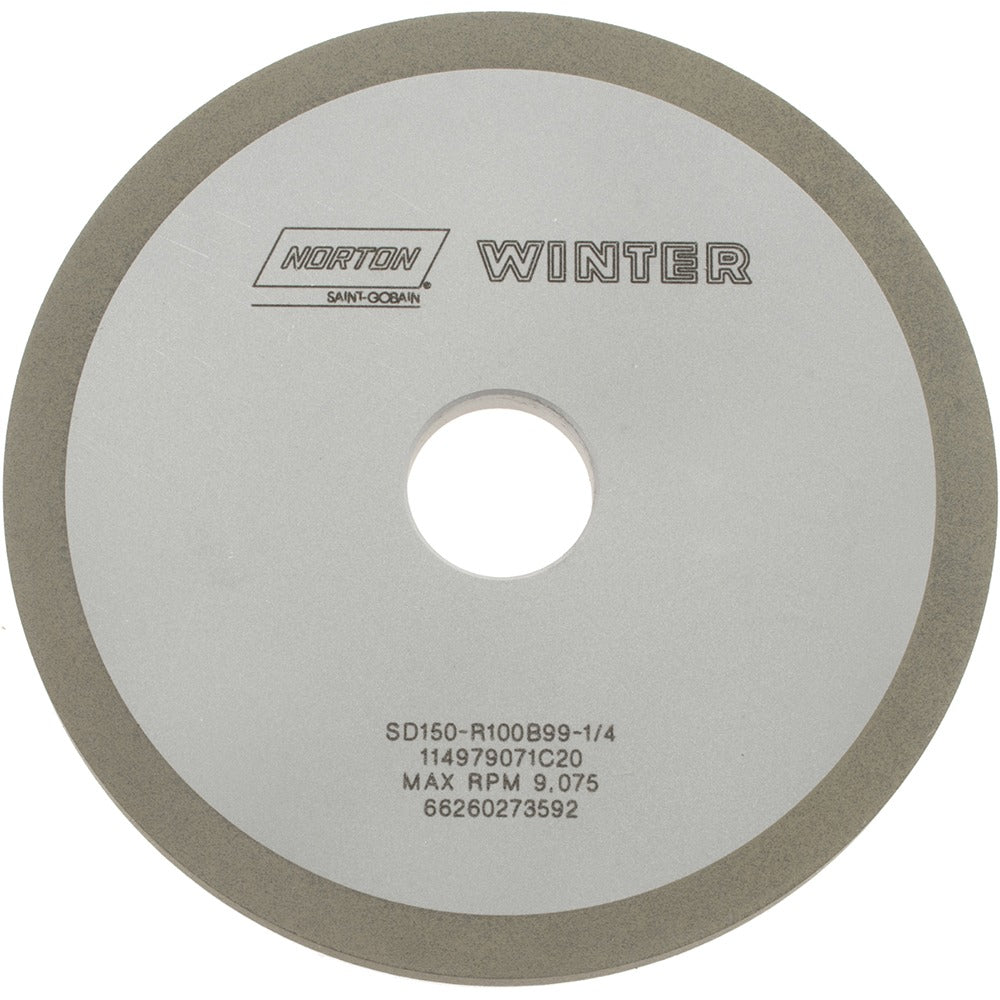
Norton 66260273592 Surface Grinding Wheel 150 Grit 4 in
Availability:
In Stock

Ships same day if ordered by 12 pm
- $550.06
- $550.06
- Unit price
- / per
✓
Better Price in Cart
Manufacturer pricing rules prevent us from advertising our discount — no account or email required to see it.
-
Secure Payments
-
Easy Returns
-
Expert Advice
-
Fast Shipping
Product Description
The NORTON 66260273592 is a Type 1A1 diamond surface grinding wheel engineered for precision material removal and finishing on hard, abrasive workpiece materials. It measures 4 inches in diameter and 1/4 inch thick, with a 3/4-inch hole size for standard spindle mounting. The abrasive matrix uses synthetic diamond (SD) at 100 percent concentration bonded in a resinoid bond system, providing consistent cut rate and wheel life across both roughing and finishing passes. At 150 grit with a Very Fine grade and Soft (R) hardness rating, this wheel suits applications requiring a refined surface finish without sacrificing stock removal efficiency. Machinists and tool room operators working with carbide, ceramics, glass, and similar hard materials are the primary users.
This wheel is suited for surface grinding operations in both wet and dry modes, making it adaptable to shop conditions where coolant may or may not be in use. The Type 1A1 straight wheel form fits conventional surface grinders and tool-and-cutter grinders commonly found in production and maintenance machine shops. With no taper and no recess, setup is straightforward on standard arbors. It is rated for roughing and finishing material applications, covering a broad range of stock removal tasks on non-metallic hard materials and cemented carbides. The Norton Diamond series designation indicates compliance with Norton abrasives product line specifications coded SD150-R100B99-1/4.
Key Features
- Synthetic diamond abrasive at 100 percent superabrasive concentration for consistent, long-lasting cut performance
- 150 grit Very Fine grade produces refined surface finishes suitable for finishing passes
- Resinoid bond system supports both wet and dry grinding operation
- Soft (R) hardness rating helps expose fresh abrasive on harder workpiece materials
- Type 1A1 straight wheel profile with no recess and no taper for simple spindle mounting
- Rated for roughing and finishing applications across a single wheel specification
Compatibility
Designed as an OEM-style replacement or standard aftermarket fit for surface grinders and tool-and-cutter grinders accepting a Type 1A1 straight wheel with a 4-inch diameter, 3/4-inch hole, and 1/4-inch thickness.
Installation Notes
Wheel mounting should be performed by a qualified machinist or grinding equipment operator following ANSI B7.1 safety standards for abrasive wheels. Always power down and lock out the grinder before changing wheels. Inspect the wheel for cracks or chips before mounting, and use proper blotters and flanges that are clean and flat. Conduct a ring test prior to installation and run the wheel at operating speed for a brief no-load break-in period before engaging workpiece contact.
Technical Specifications

Complete your install
We pulled together the parts most installs need for this unit, plus a few add-ons worth a look. Check what you need — nothing here blocks checkout.
Loading install accessories...
Add install kit to cart
—
Related Products
- Choosing a selection results in a full page refresh.