


Search
-
HVAC Equipment
-
Ductless Mini Splits
- Ductless Mini Splits
- Shop By Zone
- Shop by BTU
- Shop By Brand
- Components
- Accessories
-
HVAC Parts & Supplies
- HVAC Parts & Supplies
- HVAC Supplies
- HVAC Tools
-
HVAC Replacement Parts
- Blower Housing & Assemblies
- Blower Wheels
- Breakers, Contactors & Disconnects
- Capacitors & Transformers
- Control & Circuit Boards
- Filter Driers & Accumulators
- Gas Valves & Conversion Kits
- Heat Exchangers
- Thermal Expansion Valves (TXV)
- Temperature Controls
- Wall Brackets & Parts
- Miscellaneous Parts
- O-Rings & Gaskets
- Hydronics
- Motors
- Thermostats & Zoning
-
Plumbing
-
Pool
-
Electrical
-
Air Quality
-
Tools & Supplies
-
Door Security & Hardware


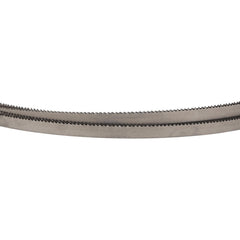
Lenox 1413D2C12127 Band Saw Blade Coil 250 Ft Bi-metal 3 Tpi

Availability:
In Stock
Ships same day if ordered by 12 pm
- $1,779.98
- $1,779.98
- Unit price
- / per
✓
Better Price in Cart
Manufacturer pricing rules prevent us from advertising our discount — no account or email required to see it.
-
Secure Payments
-
Easy Returns
-
Expert Advice
-
Fast Shipping
Product Description
The LENOX 1413D2C12127 is a bi-metal band saw blade coil stock designed for continuous cutting applications in trade and industrial environments. The blade measures 0.5 inches wide and 0.035 inches thick, wound in a 250-foot coil that allows shops and service techs to cut blades to the exact length needed for their saw. The cutting edge uses high-speed steel teeth in a hook tooth form with a constant 3 teeth-per-inch (TPI) pitch, suited for aggressive cuts in metal pipe, structural stock, and tubing. The flexible back resists fatigue and cracking under repeated flexing on the saw wheel. Plumbers, HVAC contractors, pipefitters, and metal fabricators are the primary installers of this blade type.
This coil stock is well suited for shops and service vehicles that run multiple band saws with varying wheel sizes, or that regularly cut a wide range of metal materials including ferrous pipe, conduit, and structural shapes. The 3 TPI constant pitch provides a balance of cut speed and tooth durability on wall thicknesses common in trade work. The Lenox tooth set geometry is factory-set and ready to use once the blade is cut to length and welded or joined. Contour cutting capability makes it usable on radius cuts as well as straight crosscuts.
Key Features
- Bi-metal construction with high-speed steel teeth bonded to a flexible alloy steel back for extended blade life
- 3 TPI constant pitch delivers aggressive stock removal on metal pipe and structural sections
- Hook tooth form improves chip clearance and reduces heat buildup during cuts
- Flexible back design reduces blade fatigue and breakage on the saw wheel
- 250-foot coil allows custom blade lengths to be cut and welded on-site
- Contour cutting capable for radius and profile work in addition to straight cuts
Compatibility
Designed as a coil-stock replacement blade for band saws that accept 0.5-inch wide bi-metal blades; blade length is field-cut from the coil and requires butt welding or joining to match individual saw specifications.
Installation Notes
Band saw blade installation should be performed by a qualified technician following the saw manufacturer guidelines and applicable ANSI safety standards for band saw equipment. Disconnect and lock out power to the saw before removing the old blade or installing a new one. Coil stock must be cut to the correct length and properly welded or joined before installation; an improperly welded joint is a common failure point and should be inspected before running the saw under load. Verify blade tension and tracking per the saw manufacturer specifications after installation.
Technical Specifications

Complete your install
We pulled together the parts most installs need for this unit, plus a few add-ons worth a look. Check what you need — nothing here blocks checkout.
Loading install accessories...
Add install kit to cart
—
Related Products
- Choosing a selection results in a full page refresh.