


Search
-
HVAC Equipment
-
Ductless Mini Splits
- Ductless Mini Splits
- Shop By Zone
- Shop by BTU
- Shop By Brand
- Components
- Accessories
-
HVAC Parts & Supplies
- HVAC Parts & Supplies
- HVAC Supplies
- HVAC Tools
-
HVAC Replacement Parts
- Blower Housing & Assemblies
- Blower Wheels
- Breakers, Contactors & Disconnects
- Capacitors & Transformers
- Control & Circuit Boards
- Filter Driers & Accumulators
- Gas Valves & Conversion Kits
- Heat Exchangers
- Thermal Expansion Valves (TXV)
- Temperature Controls
- Wall Brackets & Parts
- Miscellaneous Parts
- O-Rings & Gaskets
- Hydronics
- Motors
- Thermostats & Zoning
-
Plumbing
-
Pool
-
Electrical
-
Air Quality
-
Tools & Supplies
-
Door Security & Hardware


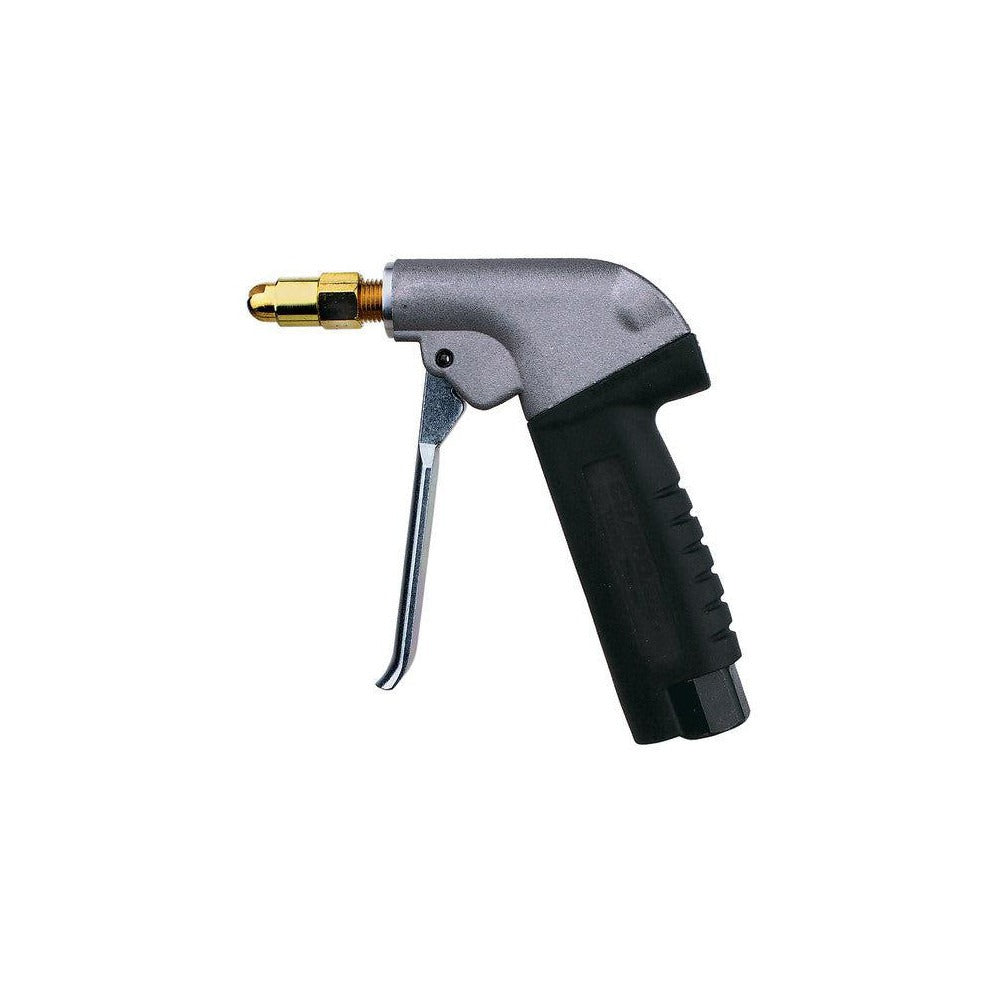
Guardair U74HVB Air Blow Gun High Volume Safety Nozzle
Availability:
In Stock

Ships same day if ordered by 12 pm
- $133.85
- $133.85
- Unit price
- / per
✓
Better Price in Cart
Manufacturer pricing rules prevent us from advertising our discount — no account or email required to see it.
-
Secure Payments
-
Easy Returns
-
Expert Advice
-
Fast Shipping
Product Description
The GUARDAIR U74HVB is a high volume safety blow gun designed for industrial and shop air applications requiring controlled, high-flow air delivery. Built with a brass body and brass nozzle, this blow gun connects via a 3/8 NPT female inlet and delivers up to 32 standard cubic feet per minute (SCFM) of airflow. The safety nozzle design limits maximum transmissible thrust to 1.80 ounces-force, meeting OSHA dead-end pressure requirements. At 6.6 inches in overall length, it offers a compact, balanced profile suited for production floors, maintenance shops, and HVAC equipment bays. Installers and technicians in mechanical, industrial, and HVAC trades reach for this tool for blowing out debris, clearing coils, and drying components.
The U74HVB is suited for use in light manufacturing, HVAC maintenance, plumbing shops, and general facility maintenance environments. The high volume nozzle delivers strong airflow for clearing heat exchanger fins, blowing out drain lines, cleaning work surfaces, and drying components after service. Its operating temperature range spans -30 degrees F to 180 degrees F, making it appropriate for both cold storage and high-heat shop environments. The 3/8 NPT female inlet fits standard shop air lines and quick-connect fittings commonly found in trade service vehicles and shop compressor systems.
Key Features
- High volume safety nozzle delivers 32 SCFM for effective debris clearing and component drying
- Brass body and brass nozzle construction for corrosion resistance and durability
- 3/8 NPT female inlet threads onto standard shop air lines and quick-connect fittings
- 87 decibel rating reflects reduced noise output compared to standard open-pipe blow guns
- Maximum transmissible thrust of 1.80 ounces-force meets OSHA dead-end pressure safety requirements
- Wide operating temperature range from -30 degrees F to 180 degrees F suits varied shop environments
Compatibility
Designed as a standard replacement or additional blow gun for shop air systems equipped with 3/8 NPT female inlet connections and compressed air supplies capable of supporting 32 SCFM flow rates.
Installation Notes
Installation is performed by a qualified technician or mechanic familiar with compressed air system fittings. Depressurize the air line before threading the blow gun onto the supply fitting to avoid unexpected discharge. Apply thread sealant or PTFE tape to the 3/8 NPT male fitting before connection to prevent air leaks. Always point the nozzle away from personnel when pressurizing the line, and confirm the safety nozzle is undamaged before use.
WARNING: This product can expose you to chemicals including lead, which are known to the State of California to cause cancer and birth defects or other reproductive harm. For more information go to www.P65Warnings.ca.gov.
Technical Specifications

Complete your install
We pulled together the parts most installs need for this unit, plus a few add-ons worth a look. Check what you need — nothing here blocks checkout.
Loading install accessories...
Add install kit to cart
—
Related Products
- Choosing a selection results in a full page refresh.