


Search
-
HVAC Equipment
-
Ductless Mini Splits
- Ductless Mini Splits
- Shop By Zone
- Shop by BTU
- Shop By Brand
- Components
- Accessories
-
HVAC Parts & Supplies
- HVAC Parts & Supplies
- HVAC Supplies
- HVAC Tools
-
HVAC Replacement Parts
- Blower Housing & Assemblies
- Blower Wheels
- Breakers, Contactors & Disconnects
- Capacitors & Transformers
- Control & Circuit Boards
- Filter Driers & Accumulators
- Gas Valves & Conversion Kits
- Heat Exchangers
- Thermal Expansion Valves (TXV)
- Temperature Controls
- Wall Brackets & Parts
- Miscellaneous Parts
- O-Rings & Gaskets
- Hydronics
- Motors
- Thermostats & Zoning
-
Plumbing
-
Pool
-
Electrical
-
Air Quality
-
Tools & Supplies
-
Door Security & Hardware


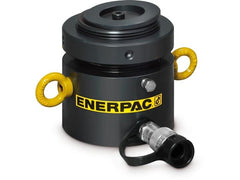
Enerpac lpl602 Low-height Lock Nut Hydraulic Cylinder
Availability:
In Stock

Ships same day if ordered by 12 pm
- $3,545.18
- $3,545.18
- Unit price
- / per
✓
Better Price in Cart
Manufacturer pricing rules prevent us from advertising our discount — no account or email required to see it.
-
Secure Payments
-
Easy Returns
-
Expert Advice
-
Fast Shipping
Product Description
The ENERPAC lpl602 is a low-height hydraulic cylinder engineered for heavy-duty lifting and pressing applications where vertical clearance is restricted. Rated at 68 tons of capacity and delivering a stroke of 1.97 inches (50 mm), this cylinder provides substantial force output in a compact package. A built-in lock nut supplies mechanical load holding, allowing the cylinder to maintain position under load for extended durations without relying solely on hydraulic pressure. The nitrocarburized exterior coating protects the cylinder against corrosion and surface wear in demanding field environments. Hydraulic technicians and industrial maintenance professionals are the primary installers of this unit.
The lpl602 is suited for structural maintenance, heavy equipment repair, bridge and civil infrastructure work, and any application requiring sustained load holding in a confined space. The tilt saddle accommodates up to 5 degrees of misalignment, which is useful in field installations where surfaces are not perfectly perpendicular to the load path. The longer stroke of 1.97 inches distinguishes this model from flatter pancake-style cylinders, offering more working travel while keeping overall height to a minimum.
Key Features
- 68-ton rated load capacity for heavy-duty lifting and pressing
- 1.97-inch (50 mm) stroke provides more working travel than standard pancake cylinders
- Lock nut mechanism enables mechanical load holding for extended periods without hydraulic pressure
- Tilt saddle allows up to 5 degrees of misalignment to accommodate uneven load points
- Nitrocarburized coating delivers enhanced corrosion resistance and surface durability in harsh environments
- Low-height profile designed for use where vertical clearance is limited
Compatibility
Designed as an OEM-style component within the ENERPAC LPL-Series low-height hydraulic cylinder line, suitable for use with standard single-acting hydraulic hand pumps and power units operating at the rated system pressure for this series.
Installation Notes
Installation should be performed by qualified hydraulic technicians familiar with high-pressure hydraulic systems. Depressurize and bleed the hydraulic system fully before connecting or disconnecting cylinder fittings. Ensure the load is properly supported by secondary mechanical means before performing any maintenance or repositioning. Follow all applicable industry safety standards and equipment manufacturer guidelines when operating cylinders under load.
Technical Specifications

Complete your install
We pulled together the parts most installs need for this unit, plus a few add-ons worth a look. Check what you need — nothing here blocks checkout.
Loading install accessories...
Add install kit to cart
—
Related Products
- Choosing a selection results in a full page refresh.