


Search
-
HVAC Equipment
-
Ductless Mini Splits
- Ductless Mini Splits
- Shop By Zone
- Shop by BTU
- Shop By Brand
- Components
- Accessories
-
HVAC Parts & Supplies
- HVAC Parts & Supplies
- HVAC Supplies
- HVAC Tools
-
HVAC Replacement Parts
- Blower Housing & Assemblies
- Blower Wheels
- Breakers, Contactors & Disconnects
- Capacitors & Transformers
- Control & Circuit Boards
- Filter Driers & Accumulators
- Gas Valves & Conversion Kits
- Heat Exchangers
- Thermal Expansion Valves (TXV)
- Temperature Controls
- Wall Brackets & Parts
- Miscellaneous Parts
- O-Rings & Gaskets
- Hydronics
- Motors
- Thermostats & Zoning
-
Plumbing
-
Pool
-
Electrical
-
Air Quality
-
Tools & Supplies
-
Door Security & Hardware


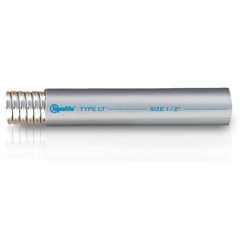
E-flex 16802 Liquidtight Flexible Steel Conduit 2in 50ft
Availability:
Out Of Stock
- $864.45
- $864.45
- Unit price
- / per
✓
Better Price in Cart
Manufacturer pricing rules prevent us from advertising our discount — no account or email required to see it.

LTL Delivery
This product weighs 51 lb each and will be shipped via LTL carrier. A lift gate option will be added free of charge for your convenience.
-
Secure Payments
-
Easy Returns
-
Expert Advice
-
Fast Shipping
Product Description
The E-FLEX 16802 is a Type LT liquidtight flexible steel conduit supplied in a 50-foot coil at 2-inch trade size in black. The steel core provides solid mechanical protection while a PVC jacket seals out moisture and resists oil exposure, making this conduit suitable for runs subject to continuous motion, vibration, or repeated bending. Inside diameter runs from 2.02 inches to 2.045 inches, and outside diameter spans 2.340 inches to 2.375 inches. Electricians and industrial maintenance technicians install this conduit where a rigid or semi-rigid raceway cannot accommodate movement or where environmental sealing is required at connection points.
This conduit is intended for general-purpose electrical installations in demanding environments. Typical applications include machine tool wiring, industrial plant floors, and outdoor installations where UV exposure is a concern. The inherent UV resistance of the PVC jacket makes it appropriate for exposed outdoor runs. It performs across a working temperature range of -30 degrees C to 80 degrees C in dry conditions, 60 degrees C in wet conditions, and 70 degrees C in oil-exposed conditions, covering most light industrial and commercial service scenarios.
Key Features
- Steel core construction delivers mechanical protection against impact and crush forces
- Oil-resistant PVC jacket maintains moisture seal in wet and oil-splash environments
- UV-resistant jacket rated for outdoor and exposed industrial use
- Flexible design accommodates motion, vibration, and repeated bending in service
- Inside bend radius of 535 inches supports code-compliant routing in tight spaces
- Black color with machine tool gray also available as a standard color option
Compatibility
Designed as a general-purpose Type LT liquidtight flexible steel conduit fitting standard 2-inch liquidtight fittings and connectors used in machine tool, industrial, and outdoor electrical installations.
Installation Notes
Installation should be performed by a licensed electrician in accordance with applicable NEC requirements for liquidtight flexible metal conduit. De-energize all circuits before making conduit connections. Use listed liquidtight fittings rated for the trade size and environment to maintain the moisture and oil seal at termination points. Avoid routing conduit in a manner that places sustained stress on the jacket or creates sharp bends beyond the rated bend radius.
Technical Specifications

Complete your install
We pulled together the parts most installs need for this unit, plus a few add-ons worth a look. Check what you need — nothing here blocks checkout.
Loading install accessories...
Add install kit to cart
—
Related Products
- Choosing a selection results in a full page refresh.