


Search
-
HVAC Equipment
-
Ductless Mini Splits
- Ductless Mini Splits
- Shop By Zone
- Shop by BTU
- Shop By Brand
- Components
- Accessories
-
HVAC Parts & Supplies
- HVAC Parts & Supplies
- HVAC Supplies
- HVAC Tools
-
HVAC Replacement Parts
- Blower Housing & Assemblies
- Blower Wheels
- Breakers, Contactors & Disconnects
- Capacitors & Transformers
- Control & Circuit Boards
- Filter Driers & Accumulators
- Gas Valves & Conversion Kits
- Heat Exchangers
- Thermal Expansion Valves (TXV)
- Temperature Controls
- Wall Brackets & Parts
- Miscellaneous Parts
- O-Rings & Gaskets
- Hydronics
- Motors
- Thermostats & Zoning
-
Plumbing
-
Pool
-
Electrical
-
Air Quality
-
Tools & Supplies
-
Door Security & Hardware


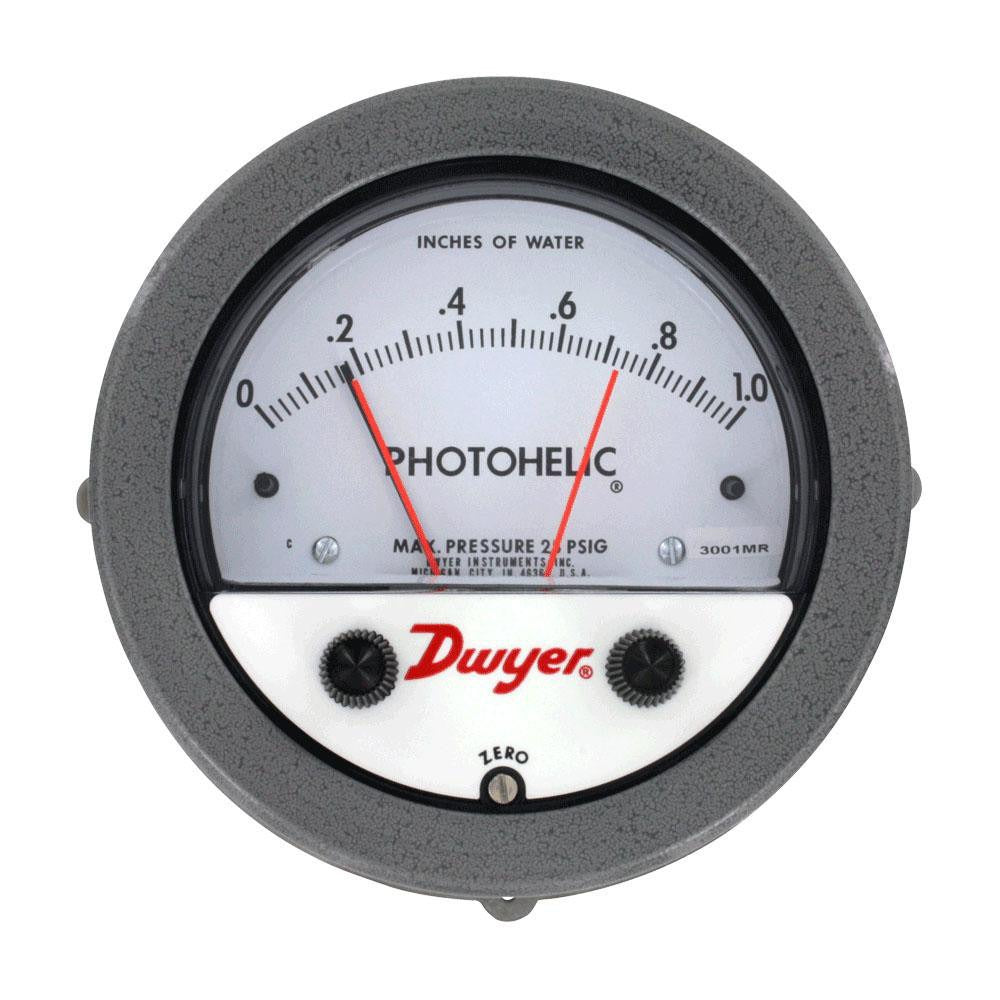

Dwyer 3001MR Photohelic Pressure Switch 25 Psi 4in Dial

Availability:
Out Of Stock
- $917.15
- $917.15
- Unit price
- / per
✓
Better Price in Cart
Manufacturer pricing rules prevent us from advertising our discount — no account or email required to see it.
-
Secure Payments
-
Easy Returns
-
Expert Advice
-
Fast Shipping
Product Description
The DWYER 3001MR is a Photohelic pressure switch and gauge combination designed for precise differential pressure measurement and switching in HVAC, industrial, and cleanroom monitoring applications. It combines a visual analog gauge with integrated switch contacts, allowing a single instrument to both display pressure and trigger control actions at set points. The unit features a 4-inch dial face, a maximum pressure rating of 25 psi, and 2% full-scale accuracy. The female 1/8-inch NPT back and side connection ports mount directly into standard process piping or panel surfaces. HVAC technicians and instrumentation professionals install this device for continuous pressure monitoring with automatic switching output.
The 3001MR is suited for residential and commercial HVAC systems, air handling units, filter banks, clean rooms, and light industrial process monitoring where both a local pressure readout and an integrated switch output are required. The 1-inch water column minimum range makes it appropriate for low-differential pressure monitoring common in duct pressure and filter change applications. A maximum operating temperature of 120 degrees F keeps it within range for typical mechanical room and air handler environments. The surface mount design allows panel or wall installation in accessible service locations.
Key Features
- Combined Photohelic gauge and pressure switch in a single instrument — eliminates the need for separate gauge and switch devices
- 4-inch dial face for clear local readout at a distance
- 2% full-scale accuracy for reliable set-point switching
- 1/8-inch FNPT back and side connections for flexible piping hookup
- Surface mount body accommodates panel and wall installations
- Includes 8-inch cable assemblies for electrical switch connections
- CE listed for applicable markets
Compatibility
Designed as an OEM-style replacement or direct-install Photohelic pressure switch gauge for HVAC air handling, filter monitoring, and light industrial differential pressure control applications using standard 1/8-inch NPT process connections.
Installation Notes
Installation should be performed by a licensed HVAC technician or instrumentation professional. De-energize all associated control circuits and isolate process pressure before connecting or removing the instrument. Use appropriate thread sealant on NPT connections and avoid over-tightening the polycarbonate body. Switch wiring should comply with NEC requirements for the control voltage and current of the connected circuit.
Technical Specifications

Complete your install
We pulled together the parts most installs need for this unit, plus a few add-ons worth a look. Check what you need — nothing here blocks checkout.
Loading install accessories...
Add install kit to cart
—
Related Products
- Choosing a selection results in a full page refresh.