


Search
-
HVAC Equipment
-
Ductless Mini Splits
- Ductless Mini Splits
- Shop By Zone
- Shop by BTU
- Shop By Brand
- Components
- Accessories
-
HVAC Parts & Supplies
- HVAC Parts & Supplies
- HVAC Supplies
- HVAC Tools
-
HVAC Replacement Parts
- Blower Housing & Assemblies
- Blower Wheels
- Breakers, Contactors & Disconnects
- Capacitors & Transformers
- Control & Circuit Boards
- Filter Driers & Accumulators
- Gas Valves & Conversion Kits
- Heat Exchangers
- Thermal Expansion Valves (TXV)
- Temperature Controls
- Wall Brackets & Parts
- Miscellaneous Parts
- O-Rings & Gaskets
- Hydronics
- Motors
- Thermostats & Zoning
-
Plumbing
-
Pool
-
Electrical
-
Air Quality
-
Tools & Supplies
-
Door Security & Hardware


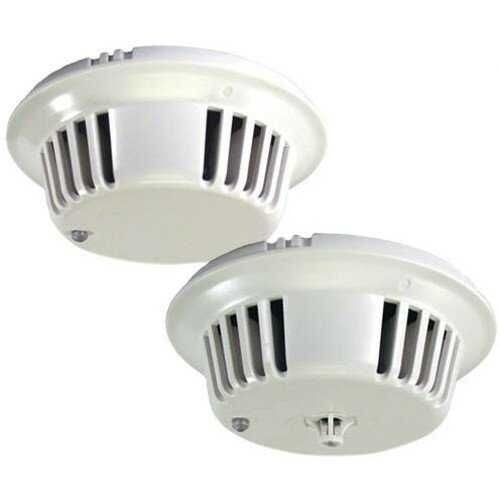
Bosch f220-p Photoelectric Smoke Detector No Base
Availability:
In Stock

Ships same day if ordered by 12 pm
- $70.49
- $70.49
- Unit price
- / per
✓
Better Price in Cart
Manufacturer pricing rules prevent us from advertising our discount — no account or email required to see it.
-
Secure Payments
-
Easy Returns
-
Expert Advice
-
Fast Shipping
Product Description
The BOSCH f220-p is a 2-wire photoelectric smoke detector head designed for open-area detection in both commercial fire protective signaling systems and residential fire warning systems as defined by NFPA 72. The unit uses a pulsed infrared light source paired with a gated, high-speed photodiode infrared sensor to detect smoke via light scattering. The optical chamber is symmetrically designed to allow 360-degree uniform smoke entry while minimizing interference from external light sources. Low-current electronic circuitry allows the detector to operate on either a 12 VDC nominal or 24 VDC nominal power source circuit. This model ships without a base and requires a compatible mounting base for installation.
The f220-p is suited for open-area deployment in commercial buildings, light industrial spaces, and residential applications where photoelectric detection technology is specified. It connects to standard 2-wire fire alarm control panels and signaling circuits. Installations must conform to NFPA 72 requirements for smoke detector placement, spacing, and system integration. The detector is UL Listed, making it appropriate for use in systems requiring listed components under applicable fire codes.
Key Features
- Photoelectric detection using pulsed infrared source for reliable smoke sensing
- Symmetrical optical chamber delivers 360-degree smoke entry with minimal external light intrusion
- Compatible with 12 VDC nominal and 24 VDC nominal power source circuits
- Low-current circuitry reduces load on 2-wire signaling loops
- UL Listed for use in commercial fire protective signaling and household fire warning systems
- Ships without base — mounting base must be ordered and installed separately
Compatibility
Designed for use with commercial fire protective signaling systems and household fire warning systems per NFPA 72. Operates on 2-wire circuits with 12 VDC nominal or 24 VDC nominal power. A compatible mounting base is required and is not included with this detector head.
Installation Notes
Installation must be performed by a licensed fire alarm technician or contractor in accordance with NFPA 72 and all applicable local fire codes. De-energize the fire alarm control panel circuit before connecting or removing the detector head. A compatible mounting base is required before the detector can be secured and wired. Follow the manufacturer wiring documentation for proper 2-wire circuit connection to avoid supervisory faults.
Technical Specifications

Complete your install
We pulled together the parts most installs need for this unit, plus a few add-ons worth a look. Check what you need — nothing here blocks checkout.
Loading install accessories...
Add install kit to cart
—
Related Products
- Choosing a selection results in a full page refresh.