


Search
-
HVAC Equipment
-
Ductless Mini Splits
- Ductless Mini Splits
- Shop By Zone
- Shop by BTU
- Shop By Brand
- Components
- Accessories
-
HVAC Parts & Supplies
- HVAC Parts & Supplies
- HVAC Supplies
- HVAC Tools
-
HVAC Replacement Parts
- Blower Housing & Assemblies
- Blower Wheels
- Breakers, Contactors & Disconnects
- Capacitors & Transformers
- Control & Circuit Boards
- Filter Driers & Accumulators
- Gas Valves & Conversion Kits
- Heat Exchangers
- Thermal Expansion Valves (TXV)
- Temperature Controls
- Wall Brackets & Parts
- Miscellaneous Parts
- O-Rings & Gaskets
- Hydronics
- Motors
- Thermostats & Zoning
-
Plumbing
-
Pool
-
Electrical
-
Air Quality
-
Tools & Supplies
-
Door Security & Hardware


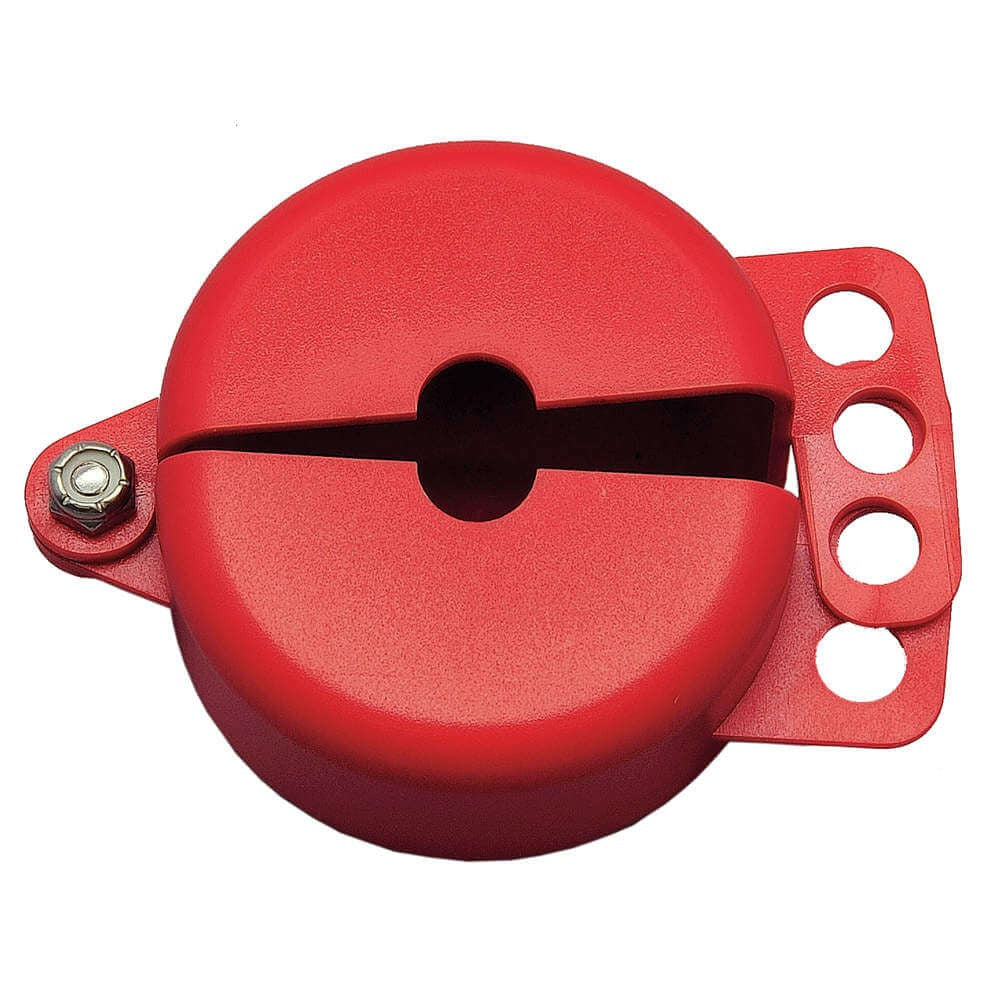
Zing Green Safety 7103 Gate Valve Lockout 1 to 2.5 in
Availability:
In Stock

Ships same day if ordered by 12 pm
- $21.90
- $21.90
- Unit price
- / per
✓
Better Price in Cart
Manufacturer pricing rules prevent us from advertising our discount — no account or email required to see it.
-
Secure Payments
-
Easy Returns
-
Expert Advice
-
Fast Shipping
Product Description
The ZING GREEN SAFETY 7103 is a hinged gate valve lockout designed to secure hand wheel-operated gate valves during lockout/tagout (LOTO) procedures. Made from polyethylene plastic, this red lockout device fits hand wheels ranging from 1 inch to 2.5 inches in diameter and accommodates handle thicknesses up to 1.5 inches. It accepts up to three padlocks simultaneously, allowing multiple tradespeople or safety personnel to apply their own locks during an energy isolation procedure. The device is abrasion resistant and rated for use in temperatures from -25 degrees F to +225 degrees F, making it suitable for both indoor and outdoor industrial environments.
This valve lockout is used in facilities where gate valves controlling gas, water, steam, or other process fluids must be isolated before maintenance or repair work begins. It is appropriate for residential, commercial, and industrial applications wherever OSHA lockout/tagout compliance is required. Plumbers, pipefitters, industrial maintenance technicians, and safety coordinators typically deploy this device as part of a facility-wide LOTO program. Its hinged design allows quick installation and removal without disassembling surrounding piping or equipment.
Key Features
- Fits hand wheel diameters from 1 inch to 2.5 inches
- Hinged design for fast application and removal
- Accepts up to 3 padlocks with shackle diameter up to 0.375 inches
- Polyethylene construction is abrasion resistant
- Rated for -25 degrees F to +225 degrees F operating range
- Red color provides high-visibility identification at the valve
Compatibility
Designed to fit gate valves with hand wheel diameters between 1 inch and 2.5 inches and handle thicknesses up to 1.5 inches. Suitable for hand wheel-operated gate valves in plumbing, process piping, and mechanical systems where LOTO procedures are required.
Installation Notes
Installation is performed by maintenance technicians or safety personnel as part of an OSHA-compliant lockout/tagout procedure. Close the gate valve fully before applying the lockout device, then position the hinged lockout over the hand wheel and secure with one or more padlocks through the available shackle holes. Always follow your facility LOTO program and applicable OSHA 29 CFR 1910.147 requirements before beginning any maintenance activity. Do not use this device as a substitute for a complete energy control procedure.
Technical Specifications

Complete your install
We pulled together the parts most installs need for this unit, plus a few add-ons worth a look. Check what you need — nothing here blocks checkout.
Loading install accessories...
Add install kit to cart
—
Related Products
- Choosing a selection results in a full page refresh.