


Search
-
HVAC Equipment
-
Ductless Mini Splits
- Ductless Mini Splits
- Shop By Zone
- Shop by BTU
- Shop By Brand
- Components
- Accessories
-
HVAC Parts & Supplies
- HVAC Parts & Supplies
- HVAC Supplies
- HVAC Tools
-
HVAC Replacement Parts
- Blower Housing & Assemblies
- Blower Wheels
- Breakers, Contactors & Disconnects
- Capacitors & Transformers
- Control & Circuit Boards
- Filter Driers & Accumulators
- Gas Valves & Conversion Kits
- Heat Exchangers
- Thermal Expansion Valves (TXV)
- Temperature Controls
- Wall Brackets & Parts
- Miscellaneous Parts
- O-Rings & Gaskets
- Hydronics
- Motors
- Thermostats & Zoning
-
Plumbing
-
Pool
-
Electrical
-
Air Quality
-
Tools & Supplies
-
Door Security & Hardware


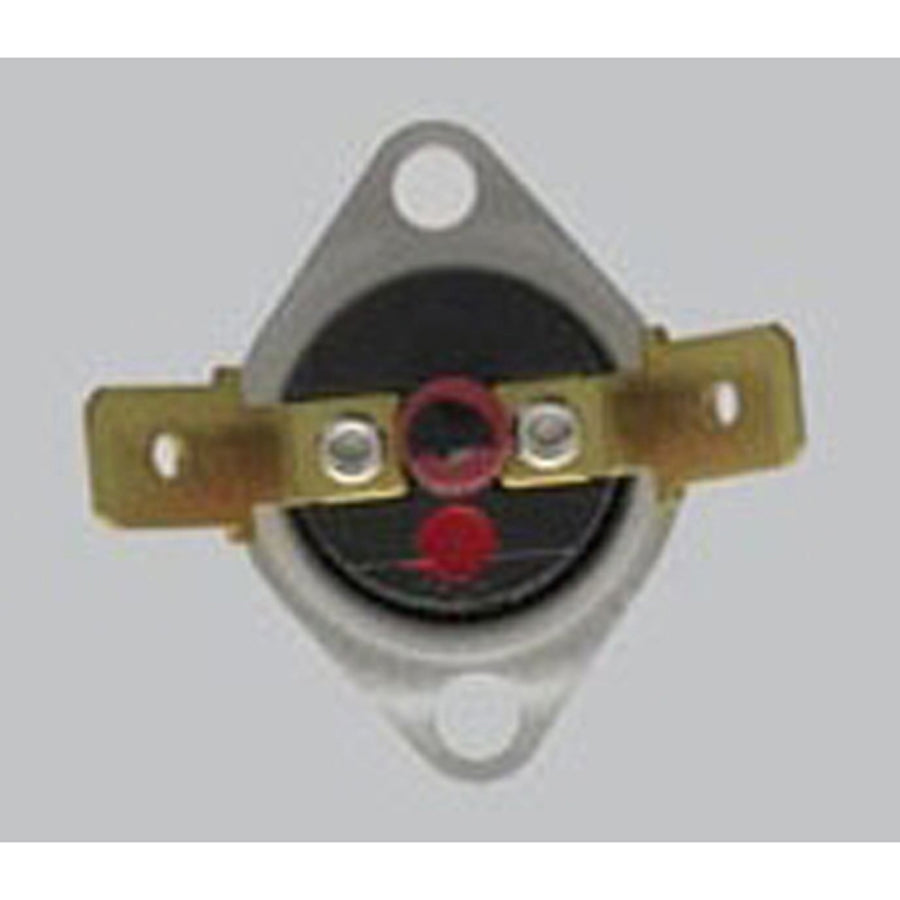

Westinghouse 626547R Roll-out Limit Switch 320F Manual Reset
Availability:
In Stock

Ships same day if ordered by 12 pm
- $19.20
- $19.20
- Unit price
- / per
✓
Better Price in Cart
Manufacturer pricing rules prevent us from advertising our discount — no account or email required to see it.
-
Secure Payments
-
Easy Returns
-
Expert Advice
-
Fast Shipping
Product Description
The WESTINGHOUSE 626547R is a manual-reset roll-out limit switch rated at 320 degrees F, designed to protect the heat exchanger and burner compartment in packaged gas heating and electric cooling units. When burner flame rolls out beyond the firebox due to restricted airflow, a cracked heat exchanger, or a blocked flue, this switch opens the control circuit and locks out the gas valve until a technician manually resets it. The 320 degrees F trip point is factory-set and non-adjustable. Licensed HVAC technicians install and service this component as part of routine safety system maintenance or failure diagnosis.
This roll-out limit switch is used on 15 SEER single package gas heating and electric cooling equipment. It is specifically applied on units with part numbers X24K072X, X36K100X, X48K120X, and X60K120X within the PPGE2GE and PPG2GF model families. These are rooftop or ground-mount packaged units common in light commercial and residential replacement applications. Roll-out limit replacement is typically triggered by nuisance lockouts, visible flame rollout, or a confirmed open-circuit reading across the switch terminals during a service call.
Key Features
- 320 degrees F fixed trip point provides consistent overheat detection at the burner compartment
- Manual reset design requires technician intervention before the unit can restart, preventing repeated unsafe ignition attempts
- OEM replacement part engineered for PPGE2GE and PPG2GF series packaged units
- Direct fit for multiple tonnage configurations including X24K072X, X36K100X, X48K120X, and X60K120X units
- Locks out the gas valve circuit on activation, protecting the heat exchanger and surrounding components
Compatibility
Designed for use on WESTINGHOUSE PPGE2GE and PPG2GF 15 SEER single package gas heating and electric cooling units, specifically models X24K072X, X36K100X, X48K120X, and X60K120X.
Installation Notes
Roll-out limit switch replacement must be performed by a licensed HVAC technician. Shut off electrical power at the disconnect and close the gas supply valve before accessing the burner compartment. Before installing the replacement switch, investigate and correct the root cause of rollout — such as a restricted heat exchanger, blocked flue, or combustion air deficiency — as replacing the switch alone without addressing the underlying fault will result in repeat lockout. Work performed on gas appliances must comply with local mechanical codes and the current edition of the IFGC.
Technical Specifications

Complete your install
We pulled together the parts most installs need for this unit, plus a few add-ons worth a look. Check what you need — nothing here blocks checkout.
Loading install accessories...
Add install kit to cart
—
Related Products
- Choosing a selection results in a full page refresh.