


Search
-
HVAC Equipment
-
Ductless Mini Splits
- Ductless Mini Splits
- Shop By Zone
- Shop by BTU
- Shop By Brand
- Components
- Accessories
-
HVAC Parts & Supplies
- HVAC Parts & Supplies
- HVAC Supplies
- HVAC Tools
-
HVAC Replacement Parts
- Blower Housing & Assemblies
- Blower Wheels
- Breakers, Contactors & Disconnects
- Capacitors & Transformers
- Control & Circuit Boards
- Filter Driers & Accumulators
- Gas Valves & Conversion Kits
- Heat Exchangers
- Thermal Expansion Valves (TXV)
- Temperature Controls
- Wall Brackets & Parts
- Miscellaneous Parts
- O-Rings & Gaskets
- Hydronics
- Motors
- Thermostats & Zoning
-
Plumbing
-
Pool
-
Electrical
-
Air Quality
-
Tools & Supplies
-
Door Security & Hardware


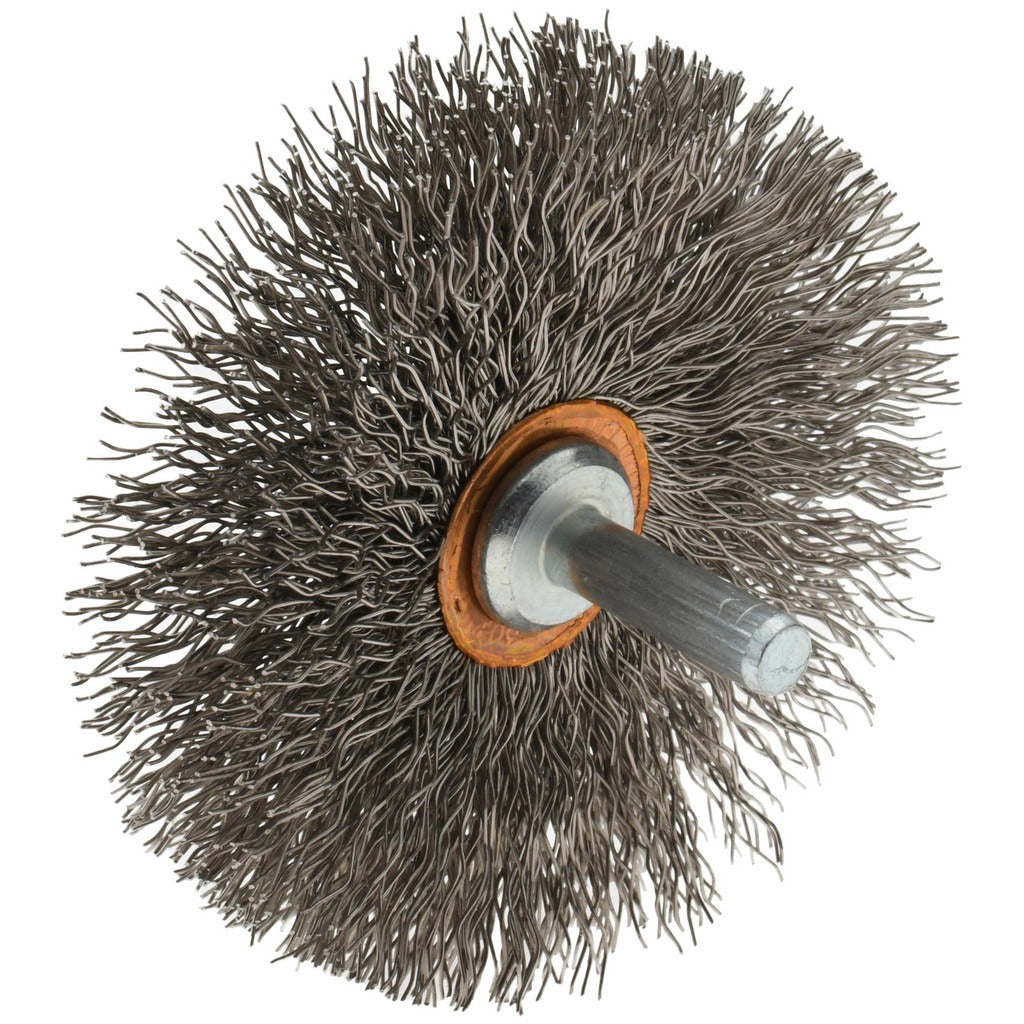

Weiler 91116 Wheel Brush 3 in Crimped Stainless 20000 Rpm
Availability:
In Stock

Ships same day if ordered by 12 pm
- $39.87
- $39.87
- Unit price
- / per
✓
Better Price in Cart
Manufacturer pricing rules prevent us from advertising our discount — no account or email required to see it.
-
Secure Payments
-
Easy Returns
-
Expert Advice
-
Fast Shipping
Product Description
The WEILER 91116 is a 3-inch diameter wheel brush designed for surface preparation, deburring, cleaning, and blending on metal and fabricated components. It uses crimped stainless steel wire fill, which provides consistent scratch patterns and resists corrosion when working on stainless steel or other materials where iron contamination is a concern. The brush mounts via a 1/4-inch shank that fits standard die grinders and rotary tools and is rated to a maximum of 20,000 RPM. The 3/8-inch face width and 1/2-inch trim length make it well suited for getting into grooves, weld seams, and tight geometries without aggressive material removal. Fabricators, pipe fitters, welders, and maintenance technicians are the typical users.
This wheel brush is used in light industrial, fabrication, and maintenance applications where a portable rotary tool or die grinder is the preferred driver. Common tasks include pre-weld and post-weld cleanup, rust and scale removal, deburring machined edges, and surface conditioning on ferrous and non-ferrous metals. The crimped wire configuration is chosen over knotted wire when a less aggressive action is needed. The included 1/4-inch shank mounts directly to standard collet-style die grinders without additional adapters.
Key Features
- 3-inch outside diameter suits a wide range of surface prep and cleaning tasks
- Crimped stainless steel wire fill resists corrosion and prevents iron contamination on stainless workpieces
- Rated to 20,000 RPM for use with standard die grinders and rotary tools
- 1/4-inch shank included — no adapter required for most die grinder collets
- 3/8-inch face width and 1/2-inch trim length allow access to welds, grooves, and tight contours
- Non-encapsulated wire construction for consistent wire action across the full face
Compatibility
Designed for use with die grinders and rotary tools accepting a 1/4-inch shank, operating at speeds up to 20,000 RPM. Verify that the tool spindle speed does not exceed the brush maximum RPM rating before use.
Installation Notes
This brush is installed and serviced by fabricators, machinists, or maintenance technicians using standard die grinders. Always confirm the tool is de-energized and the trigger is locked out before mounting or removing the brush. Thread the shank fully into the collet and tighten securely before operation. Do not exceed the 20,000 RPM maximum speed rating, and always wear appropriate eye and face protection when operating wire brushes at high RPM.
Technical Specifications

Complete your install
We pulled together the parts most installs need for this unit, plus a few add-ons worth a look. Check what you need — nothing here blocks checkout.
Loading install accessories...
Add install kit to cart
—
Related Products
- Choosing a selection results in a full page refresh.