


Search
-
HVAC Equipment
-
Ductless Mini Splits
- Ductless Mini Splits
- Shop By Zone
- Shop by BTU
- Shop By Brand
- Components
- Accessories
-
HVAC Parts & Supplies
- HVAC Parts & Supplies
- HVAC Supplies
- HVAC Tools
-
HVAC Replacement Parts
- Blower Housing & Assemblies
- Blower Wheels
- Breakers, Contactors & Disconnects
- Capacitors & Transformers
- Control & Circuit Boards
- Filter Driers & Accumulators
- Gas Valves & Conversion Kits
- Heat Exchangers
- Thermal Expansion Valves (TXV)
- Temperature Controls
- Wall Brackets & Parts
- Miscellaneous Parts
- O-Rings & Gaskets
- Hydronics
- Motors
- Thermostats & Zoning
-
Plumbing
-
Pool
-
Electrical
-
Air Quality
-
Tools & Supplies
-
Door Security & Hardware


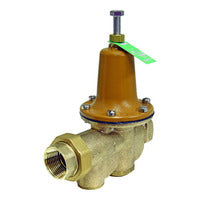

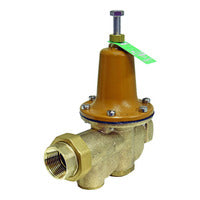
Watts w-0009309 Pressure Reducing Valve 1 in Fnpt 25-75 Psi

Availability:
In Stock
Ships same day if ordered by 12 pm
- $212.90
- $212.90
- Unit price
- / per
✓
Better Price in Cart
Manufacturer pricing rules prevent us from advertising our discount — no account or email required to see it.
-
Secure Payments
-
Easy Returns
-
Expert Advice
-
Fast Shipping
Product Description
The WATTS w-0009309 is a lead-free water pressure reducing valve (PRV) designed to lower incoming supply pressure to a safe, consistent level for protection of downstream plumbing components. The valve features a cast copper silicon alloy body, a reinforced EPDM diaphragm rated for hot water service, and an integral stainless steel strainer. It handles an adjustable outlet pressure range of 25 to 75 psi and is rated for media temperatures from 33 to 160 degrees F. Licensed plumbers install this valve on residential and commercial potable water systems where incoming street pressure exceeds safe operating limits for fixtures, appliances, or piping.
The w-0009309 is suited for both residential and commercial plumbing applications where incoming water pressure must be reduced to protect system components and lower water consumption. The 1-inch nominal FNPT union inlet connection allows the valve body to be removed for in-line servicing without disturbing the surrounding piping. The Series LF25AUB-Z3 platform is offered with multiple end-connection options including threaded, solder, PEX, quick-connect, and CPVC in union and double-union configurations, giving installers flexibility across job types.
Key Features
- Lead-free cast copper silicon alloy body meets potable water material requirements
- Adjustable outlet pressure range: 25 to 75 psi
- Reinforced EPDM diaphragm and polymer seat rated for high-temperature hot water service up to 160 degrees F
- Integral stainless steel strainer protects the seat and diaphragm from debris
- Union inlet connection enables in-line serviceability without pipe disassembly
- FNPT union x FNPT end-style for standard threaded pipe connections
Compatibility
Designed as an OEM-style replacement or new-installation PRV for 1-inch nominal threaded potable water supply lines in residential and commercial plumbing systems. Part of the WATTS Series LF25AUB-Z3 lead-free pressure reducing valve family.
Installation Notes
Installation should be performed by a licensed plumber in accordance with local plumbing codes and the International Plumbing Code (IPC). Shut off the main water supply and relieve system pressure before removing or installing the valve. The union inlet connection allows the valve body to be serviced in-line; always reinstall with the flow arrow oriented in the direction of supply flow. An expansion tank may be required downstream on closed systems per code after pressure reduction.
Technical Specifications
- Series: LF25AUB-Z3
- Nominal Size: 1 inch
- End Connection: FNPT Union x FNPT
- Outlet Pressure Range: 25 to 75 psi
- Temperature Range: 33 to 160 degrees F
- Media: Water
- Body Material: Cast Copper Silicon Alloy (Lead Free)
- Diaphragm Material: Reinforced EPDM
- Seat Material: Polymer
- Strainer Material: Stainless Steel
- Inlet to Outlet Length: 8.75 inches
- Top to Inlet Center: 9 inches
Standard Information
- Brand: WATTS
- Manufacturer Part Number: w-0009309

Complete your install
We pulled together the parts most installs need for this unit, plus a few add-ons worth a look. Check what you need — nothing here blocks checkout.
Loading install accessories...
Add install kit to cart
—
Related Products
- Choosing a selection results in a full page refresh.