


Search
-
HVAC Equipment
-
Ductless Mini Splits
- Ductless Mini Splits
- Shop By Zone
- Shop by BTU
- Shop By Brand
- Components
- Accessories
-
HVAC Parts & Supplies
- HVAC Parts & Supplies
- HVAC Supplies
- HVAC Tools
-
HVAC Replacement Parts
- Blower Housing & Assemblies
- Blower Wheels
- Breakers, Contactors & Disconnects
- Capacitors & Transformers
- Control & Circuit Boards
- Filter Driers & Accumulators
- Gas Valves & Conversion Kits
- Heat Exchangers
- Thermal Expansion Valves (TXV)
- Temperature Controls
- Wall Brackets & Parts
- Miscellaneous Parts
- O-Rings & Gaskets
- Hydronics
- Motors
- Thermostats & Zoning
-
Plumbing
-
Pool
-
Electrical
-
Air Quality
-
Tools & Supplies
-
Door Security & Hardware


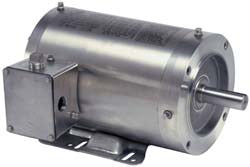
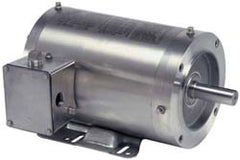
Us Motors WDP32S2AC 1.5 Hp 3-phase Tenv Ac Motor 145TC

Availability:
In Stock
Ships same day if ordered by 12 pm
- $994.84
- $994.84
- Unit price
- / per
✓
Better Price in Cart
Manufacturer pricing rules prevent us from advertising our discount — no account or email required to see it.
-
Secure Payments
-
Easy Returns
-
Expert Advice
-
Fast Shipping
Product Description
The US MOTORS WDP32S2AC is a three-phase, energy-efficient AC motor built for demanding washdown and wet-environment applications. Rated at 1.5 horsepower and 1725 RPM, it runs on 208 to 230 volts or 460 volts at 60 Hz, making it compatible with standard single and dual-voltage three-phase power supplies. The totally enclosed non-ventilated (TENV) enclosure protects internal components from moisture, dust, and contaminants without relying on airflow for cooling. Housed in a 145TC steel frame with a combined base and C-Face mount, this motor is suited for pumps, blowers, conveyors, and washdown-duty equipment in food processing, commercial, and industrial settings. Licensed electricians and mechanical contractors are the primary installers.
The WDP32S2AC is designed for washdown-duty installations where moisture ingress is a persistent concern. The TENV enclosure and steel frame hold up in environments where spray-down cleaning is routine. The 145TC frame with dual base and C-Face mounting gives installers flexibility to couple directly to pump flanges or mount on a base rail. Full load amperage is rated at 4.9 to 4.8 amps on 208 to 230 volts and 2.4 amps on 460 volts. With reversible rotation, the motor can be configured for the driven load direction at the time of installation.
Key Features
- TENV enclosure rated for washdown environments — no external ventilation required
- Dual voltage operation: 208 to 230 volts or 460 volts, 60 Hz, three-phase
- 145TC steel frame with base and C-Face mount for direct-coupled or base-mounted installs
- Ball bearings with Class F insulation for extended thermal tolerance
- Reversible motor rotation configurable at installation
- Full load efficiency rated at 87.50 percent
Compatibility
Designed as an OEM-style replacement or direct upgrade for three-phase TENV motors in 145TC frame configurations used in washdown-duty commercial and industrial equipment. Also listed under Dayton part number 4LW82.
Installation Notes
Installation should be performed by a licensed electrician in accordance with NEC requirements for motor branch circuits, including proper overcurrent protection and disconnect means. Verify that the supply voltage and phase configuration match the motor nameplate before energizing. De-energize and lock out the circuit before making any wiring or mechanical connections. Confirm shaft coupling alignment before final startup to avoid premature bearing wear.
Technical Specifications

Complete your install
We pulled together the parts most installs need for this unit, plus a few add-ons worth a look. Check what you need — nothing here blocks checkout.
Loading install accessories...
Add install kit to cart
—
Related Products
- Choosing a selection results in a full page refresh.