


Search
-
HVAC Equipment
-
Ductless Mini Splits
- Ductless Mini Splits
- Shop By Zone
- Shop by BTU
- Shop By Brand
- Components
- Accessories
-
HVAC Parts & Supplies
- HVAC Parts & Supplies
- HVAC Supplies
- HVAC Tools
-
HVAC Replacement Parts
- Blower Housing & Assemblies
- Blower Wheels
- Breakers, Contactors & Disconnects
- Capacitors & Transformers
- Control & Circuit Boards
- Filter Driers & Accumulators
- Gas Valves & Conversion Kits
- Heat Exchangers
- Thermal Expansion Valves (TXV)
- Temperature Controls
- Wall Brackets & Parts
- Miscellaneous Parts
- O-Rings & Gaskets
- Hydronics
- Motors
- Thermostats & Zoning
-
Plumbing
-
Pool
-
Electrical
-
Air Quality
-
Tools & Supplies
-
Door Security & Hardware


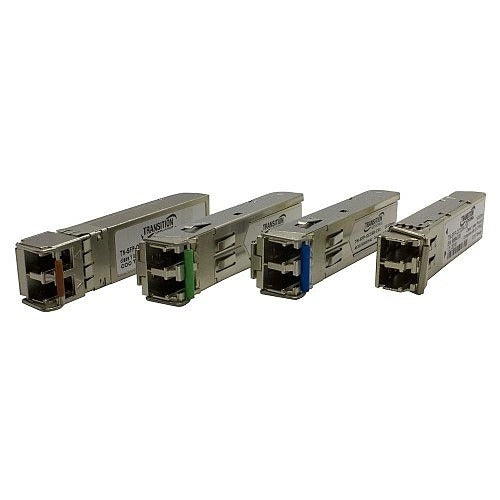
Transition Networks TN-SFP-OC3S8-C49 Sfp Transceiver
Availability:
In Stock

Ships same day if ordered by 12 pm
- $1,301.76
- $1,301.76
- Unit price
- / per
✓
Better Price in Cart
Manufacturer pricing rules prevent us from advertising our discount — no account or email required to see it.
-
Secure Payments
-
Easy Returns
-
Expert Advice
-
Fast Shipping
Product Description
The TRANSITION NETWORKS TN-SFP-OC3S8-C49 is a small form-factor pluggable (SFP) optical transceiver designed for OC3 and Fast Ethernet applications using coarse wavelength division multiplexing (CWDM) technology. This module converts electrical signals to optical signals and back, enabling fiber-based data transmission in enterprise and carrier-class network infrastructure. It is sold as a single unit and is typically installed by network technicians or licensed low-voltage cabling professionals working on structured cabling, WAN uplinks, or metro Ethernet deployments. The CWDM design allows multiple wavelengths to share a single fiber strand, making it well suited for bandwidth expansion without additional fiber runs.
This transceiver is intended for use in enterprise network environments where OC3 SONET or Fast Ethernet fiber uplinks are required. Typical installation scenarios include core and distribution layer switches, routers, media converters, and optical transport equipment that accept standard SFP form-factor modules. It is appropriate for both new installations and upgrades to existing fiber plant infrastructure where CWDM wavelength planning is already in place.
Key Features
- SFP form-factor for hot-swappable installation in compatible network equipment
- Supports OC3 SONET and Fast Ethernet dual-rate operation
- CWDM optical interface allows wavelength-division multiplexed fiber deployments
- Single-unit packaging for individual port upgrades or spares inventory
- Designed for enterprise PoE device infrastructure environments
Compatibility
Designed as an OEM-style SFP replacement or upgrade module for network switches, routers, and media converters that support standard SFP slots with OC3 or Fast Ethernet fiber interfaces.
Installation Notes
Installation is performed by qualified network technicians or low-voltage professionals familiar with fiber optic handling procedures. Always power down or hot-swap in accordance with the host equipment manufacturer guidelines before seating or removing the SFP module. Handle fiber connectors with care to avoid contamination of end-faces, and use appropriate fiber inspection and cleaning tools prior to insertion. Follow applicable TIA-568 structured cabling standards and local low-voltage codes when deploying fiber infrastructure.
Technical Specifications

Complete your install
We pulled together the parts most installs need for this unit, plus a few add-ons worth a look. Check what you need — nothing here blocks checkout.
Loading install accessories...
Add install kit to cart
—
Related Products
- Choosing a selection results in a full page refresh.