


Search
-
HVAC Equipment
-
Ductless Mini Splits
- Ductless Mini Splits
- Shop By Zone
- Shop by BTU
- Shop By Brand
- Components
- Accessories
-
HVAC Parts & Supplies
- HVAC Parts & Supplies
- HVAC Supplies
- HVAC Tools
-
HVAC Replacement Parts
- Blower Housing & Assemblies
- Blower Wheels
- Breakers, Contactors & Disconnects
- Capacitors & Transformers
- Control & Circuit Boards
- Filter Driers & Accumulators
- Gas Valves & Conversion Kits
- Heat Exchangers
- Thermal Expansion Valves (TXV)
- Temperature Controls
- Wall Brackets & Parts
- Miscellaneous Parts
- O-Rings & Gaskets
- Hydronics
- Motors
- Thermostats & Zoning
-
Plumbing
-
Pool
-
Electrical
-
Air Quality
-
Tools & Supplies
-
Door Security & Hardware


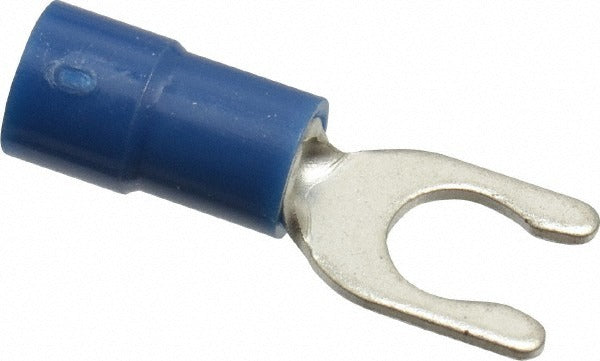
Thomas Betts TV14-10LF-XV Locking Fork Terminal 10 Stud
Availability:
Out Of Stock
- $80.33
- $80.33
- Unit price
- / per
✓
Better Price in Cart
Manufacturer pricing rules prevent us from advertising our discount — no account or email required to see it.

Secure Payments
-
Easy Returns
-
Expert Advice
-
Fast Shipping
Product Description
The THOMAS BETTS TV14-10LF-XV is a locking fork terminal designed for secure, vibration-resistant electrical connections in demanding wiring applications. This crimp-style terminal features a partially insulated blue vinyl sleeve and a number 10 stud size, rated for up to 600 volts. The copper contact body is plated with TiN (titanium nitride) for enhanced corrosion resistance and reliable conductivity. The locking fork design prevents the terminal from backing off the stud during service, making it the right choice in panel wiring, control enclosures, and equipment installations where connection integrity is critical. Electricians and panel builders install these terminals using a calibrated crimp tool sized to the wire gauge range.
This terminal is suited for residential and commercial electrical work, industrial control panels, and equipment wiring where a removable but secure ring-style alternative is needed. The locking tab holds the fork on the stud even before the fastener is fully tightened, which speeds up multi-terminal installations on terminal blocks and bus bars. It is commonly used by electricians, maintenance technicians, and panel assemblers working on low-voltage control wiring and power distribution up to 600 volts. The blue color coding aligns with standard wire gauge identification conventions for quick visual verification during inspection.
Key Features
- Locking fork design prevents terminal from dislodging from stud during installation and service
- Rated to 600 volts for compatibility with standard low-voltage control and power wiring
- Copper contact with TiN plating for corrosion resistance and stable conductivity
- Partially insulated blue vinyl sleeve for visual wire gauge identification
- Crimp termination compatible with standard crimp tooling for number 14 AWG wire range
- RoHS compliant and UL 94 V-0 rated insulation material
Compatibility
Designed as an OEM-style locking fork terminal for number 10 stud applications in electrical panel wiring, control enclosures, and equipment terminations requiring a partially insulated crimp connection up to 600 volts.
Installation Notes
Installation should be performed by a qualified electrician in accordance with NEC requirements. De-energize and lock out the circuit before terminating or removing any wiring. Use a calibrated ratcheting crimp tool rated for the wire gauge and terminal series to ensure a gas-tight crimp. Do not solder crimp terminals after crimping, as this can compromise the mechanical integrity of the connection.
Technical Specifications

Complete your install
We pulled together the parts most installs need for this unit, plus a few add-ons worth a look. Check what you need — nothing here blocks checkout.
Loading install accessories...
Add install kit to cart
—
Related Products
- Choosing a selection results in a full page refresh.