


Search
-
HVAC Equipment
-
Ductless Mini Splits
- Ductless Mini Splits
- Shop By Zone
- Shop by BTU
- Shop By Brand
- Components
- Accessories
-
HVAC Parts & Supplies
- HVAC Parts & Supplies
- HVAC Supplies
- HVAC Tools
-
HVAC Replacement Parts
- Blower Housing & Assemblies
- Blower Wheels
- Breakers, Contactors & Disconnects
- Capacitors & Transformers
- Control & Circuit Boards
- Filter Driers & Accumulators
- Gas Valves & Conversion Kits
- Heat Exchangers
- Thermal Expansion Valves (TXV)
- Temperature Controls
- Wall Brackets & Parts
- Miscellaneous Parts
- O-Rings & Gaskets
- Hydronics
- Motors
- Thermostats & Zoning
-
Plumbing
-
Pool
-
Electrical
-
Air Quality
-
Tools & Supplies
-
Door Security & Hardware


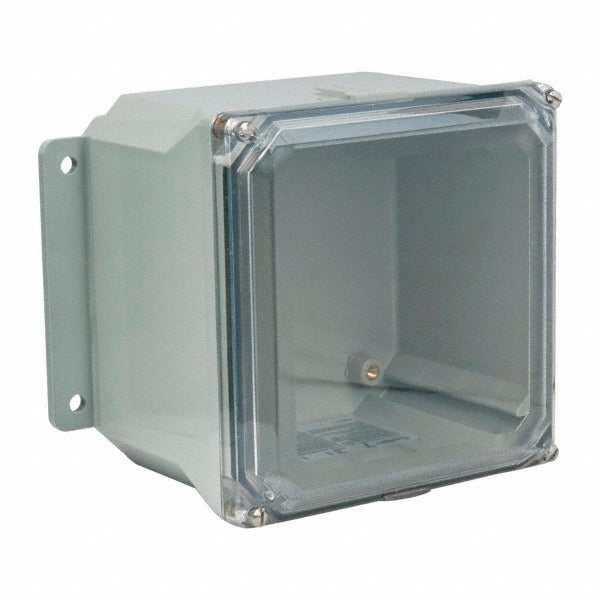
Thomas Betts NV664 Polycarbonate Enclosure 6x6x4 Nema 4X
Availability:
In Stock

Ships same day if ordered by 12 pm
- $3,104.71
- $3,104.71
- Unit price
- / per
✓
Better Price in Cart
Manufacturer pricing rules prevent us from advertising our discount — no account or email required to see it.
-
Secure Payments
-
Easy Returns
-
Expert Advice
-
Fast Shipping
Product Description
The THOMAS BETTS NV664 is a standard polycarbonate electrical enclosure designed to house and protect electrical components in a wide range of indoor and outdoor installations. Measuring 6 inches wide, 6 inches high, and 4 inches deep, it provides a compact yet functional footprint for control boards, terminal blocks, and similar gear. The clear polycarbonate construction allows visual inspection of interior components without opening the enclosure. A screw flat cover with captive fasteners keeps the lid secure during service. Licensed electricians and instrumentation technicians typically install this enclosure in panel rooms, equipment skids, and light industrial environments.
The NV664 is rated for NEMA 1, 2, 3, 3S, 3SX, 3X, 4, and 4X environments, making it suitable for both dry indoor locations and wet or washdown-exposure areas. Its impact-resistant polycarbonate body holds up to physical abuse on job sites. The enclosure ships with captive cover screws, hinges, and swing panels included. Residential, commercial, and light industrial electrical work are all common applications. It is a practical choice wherever a compact, corrosion-resistant, transparent enclosure is needed to comply with NEC installation requirements.
Key Features
- Clear polycarbonate body allows visual inspection without opening the cover
- NEMA 1, 2, 3, 3S, 3SX, 3X, 4, and 4X rated for broad environmental coverage
- Impact-resistant material withstands rough handling on active job sites
- Screw flat cover with captive fasteners prevents hardware loss during service
- Includes hinges and swing panels — no separate hardware purchase required
- cULus Listed (E88685) and UL Listed 50 certified
Compatibility
Designed as an OEM-style standard electrical enclosure suitable for residential, commercial, and light industrial wiring and control applications requiring NEMA 4X or lower environmental protection ratings.
Installation Notes
Installation should be performed by a licensed electrician in accordance with the National Electrical Code (NEC) and applicable local codes. De-energize all circuits before mounting or wiring inside the enclosure. Verify that the selected mounting surface and conduit entries are appropriate for the NEMA rating required by the application. Avoid drilling or cutting the polycarbonate body with tools or methods that could crack the material — use a step bit or hole saw rated for plastics.
Technical Specifications

Complete your install
We pulled together the parts most installs need for this unit, plus a few add-ons worth a look. Check what you need — nothing here blocks checkout.
Loading install accessories...
Add install kit to cart
—
Related Products
- Choosing a selection results in a full page refresh.