


Search
-
HVAC Equipment
-
Ductless Mini Splits
- Ductless Mini Splits
- Shop By Zone
- Shop by BTU
- Shop By Brand
- Components
- Accessories
-
HVAC Parts & Supplies
- HVAC Parts & Supplies
- HVAC Supplies
- HVAC Tools
-
HVAC Replacement Parts
- Blower Housing & Assemblies
- Blower Wheels
- Breakers, Contactors & Disconnects
- Capacitors & Transformers
- Control & Circuit Boards
- Filter Driers & Accumulators
- Gas Valves & Conversion Kits
- Heat Exchangers
- Thermal Expansion Valves (TXV)
- Temperature Controls
- Wall Brackets & Parts
- Miscellaneous Parts
- O-Rings & Gaskets
- Hydronics
- Motors
- Thermostats & Zoning
-
Plumbing
-
Pool
-
Electrical
-
Air Quality
-
Tools & Supplies
-
Door Security & Hardware


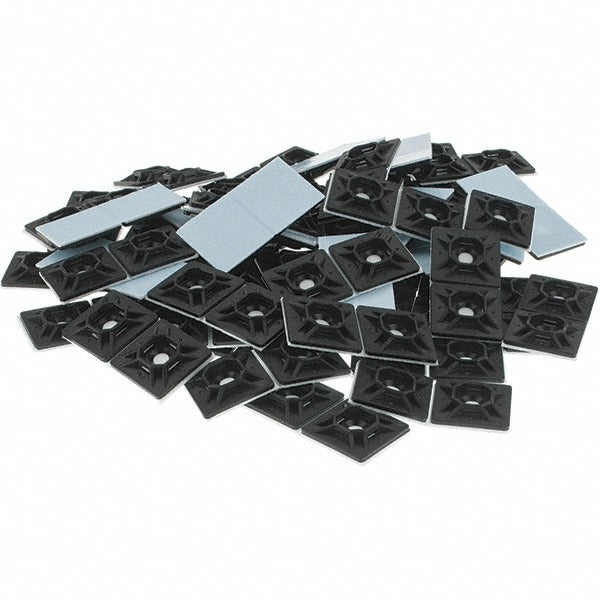

Thomas Betts MPNY-1000-0-C Cable Tie Mounting Pad 100pk
Availability:
In Stock

Ships same day if ordered by 12 pm
- $61.70
- $61.70
- Unit price
- / per
✓
Better Price in Cart
Manufacturer pricing rules prevent us from advertising our discount — no account or email required to see it.
-
Secure Payments
-
Easy Returns
-
Expert Advice
-
Fast Shipping
Product Description
The THOMAS BETTS MPNY-1000-0-C is a black nylon four-way cable tie mounting pad designed to anchor cable ties to flat surfaces without drilling or permanent fasteners. The adhesive-backed base bonds directly to panels, enclosures, wire trays, and equipment frames, allowing cable bundles to be routed and secured quickly. Each pad measures 1 inch long by 1 inch wide by 0.215 inches high and accepts cable tie tails from four directions, giving installers routing flexibility in tight or congested spaces. Rated for continuous use from -40 degrees F to 185 degrees F, these pads hold up in both indoor and outdoor electrical and low-voltage wiring applications. Each package contains 100 pads.
These mounting pads are used by electricians, low-voltage technicians, and panel builders wherever cable management is needed on non-drillable or finished surfaces. Common applications include securing wire bundles inside control panels, HVAC equipment cabinets, electrical enclosures, and conduit runs. The four-way clip design accommodates multiple routing angles from a single pad, reducing the total number of mounting points required on a surface. The nylon construction resists moisture, chemicals, and moderate heat, making these pads suitable for light-industrial and commercial wiring environments as well as residential electrical work.
Key Features
- Four-way cable tie entry accepts tie tails from any of four directions for flexible routing
- Adhesive back bonds to flat surfaces without screws, rivets, or drilling
- Black nylon construction resists moisture and chemicals
- Wide operating temperature range: -40 degrees F to 185 degrees F
- Compact footprint: 1 inch x 1 inch x 0.215 inches high
- Sold in a 100-piece package for production and service use
Compatibility
Designed as a standard adhesive-back mounting pad compatible with conventional nylon cable ties used in electrical, low-voltage, and general wire management applications.
Installation Notes
Clean and dry the mounting surface thoroughly before applying the adhesive back to ensure a secure bond. Electricians and low-voltage technicians should allow adequate adhesive cure time before loading the pad with dressed cable bundles. Follow NEC guidelines for cable bundling and support spacing in electrical installations. Do not exceed the rated operating temperature range, and avoid installing on surfaces subject to prolonged exposure to solvents that may degrade the adhesive.
Technical Specifications

Complete your install
We pulled together the parts most installs need for this unit, plus a few add-ons worth a look. Check what you need — nothing here blocks checkout.
Loading install accessories...
Add install kit to cart
—
Related Products
- Choosing a selection results in a full page refresh.