


Search
-
HVAC Equipment
-
Ductless Mini Splits
- Ductless Mini Splits
- Shop By Zone
- Shop by BTU
- Shop By Brand
- Components
- Accessories
-
HVAC Parts & Supplies
- HVAC Parts & Supplies
- HVAC Supplies
- HVAC Tools
-
HVAC Replacement Parts
- Blower Housing & Assemblies
- Blower Wheels
- Breakers, Contactors & Disconnects
- Capacitors & Transformers
- Control & Circuit Boards
- Filter Driers & Accumulators
- Gas Valves & Conversion Kits
- Heat Exchangers
- Thermal Expansion Valves (TXV)
- Temperature Controls
- Wall Brackets & Parts
- Miscellaneous Parts
- O-Rings & Gaskets
- Hydronics
- Motors
- Thermostats & Zoning
-
Plumbing
-
Pool
-
Electrical
-
Air Quality
-
Tools & Supplies
-
Door Security & Hardware


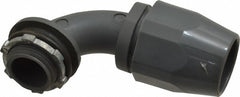
Thomas Betts LT20E 3/4 Inch Liquid-tight Conduit Connector
Availability:
In Stock

Ships same day if ordered by 12 pm
- $62.01
- $62.01
- Unit price
- / per
✓
Better Price in Cart
Manufacturer pricing rules prevent us from advertising our discount — no account or email required to see it.
-
Secure Payments
-
Easy Returns
-
Expert Advice
-
Fast Shipping
Product Description
The THOMAS BETTS LT20E is a 3/4 inch trade size angled connector designed for liquid-tight conduit systems. It features a threaded connection type and is constructed from thermoplastic with built-in insulation. This fitting is used to terminate liquid-tight flexible conduit at enclosures, junction boxes, and equipment panels in non-hazardous, water-resistant environments. Licensed electricians and electrical contractors install this connector as part of branch circuit and equipment wiring where flexible, moisture-resistant conduit routing is required. The angled body allows for easier routing in tight spaces and reduces stress on the conduit at the termination point.
The LT20E is suited for residential, commercial, and light industrial electrical installations where liquid-tight flexible nonmetallic conduit terminates at electrical enclosures or motor-driven equipment. The angled connector design is particularly useful when conduit must change direction close to the entry point of a panel or device enclosure. This fitting is appropriate for water-resistant, non-hazardous area applications where protection from moisture and contaminants is needed at the conduit termination.
Key Features
- 3/4 inch trade size fits standard liquid-tight flexible nonmetallic conduit
- Angled connector body simplifies routing in confined spaces
- Thermoplastic construction provides corrosion resistance and durability
- Insulated design protects conductors at the termination point
- Threaded connection type ensures a secure, consistent fit at the enclosure knockout
- Rated for water-resistant, non-hazardous area use
Compatibility
Designed as an OEM-style replacement and standard fitting for 3/4 inch trade size liquid-tight flexible nonmetallic conduit terminations in non-hazardous, water-resistant electrical installations.
Installation Notes
Installation should be performed by a qualified electrician in accordance with applicable NEC requirements for liquid-tight flexible nonmetallic conduit systems. De-energize the circuit and verify the absence of voltage before making any connections at the enclosure. Thread the connector body into the knockout and secure the locknut from inside the enclosure to achieve proper retention. Do not overtighten thermoplastic fittings, as excessive force can crack the connector body.
Technical Specifications

Complete your install
We pulled together the parts most installs need for this unit, plus a few add-ons worth a look. Check what you need — nothing here blocks checkout.
Loading install accessories...
Add install kit to cart
—
Related Products
- Choosing a selection results in a full page refresh.