


Search
-
HVAC Equipment
-
Ductless Mini Splits
- Ductless Mini Splits
- Shop By Zone
- Shop by BTU
- Shop By Brand
- Components
- Accessories
-
HVAC Parts & Supplies
- HVAC Parts & Supplies
- HVAC Supplies
- HVAC Tools
-
HVAC Replacement Parts
- Blower Housing & Assemblies
- Blower Wheels
- Breakers, Contactors & Disconnects
- Capacitors & Transformers
- Control & Circuit Boards
- Filter Driers & Accumulators
- Gas Valves & Conversion Kits
- Heat Exchangers
- Thermal Expansion Valves (TXV)
- Temperature Controls
- Wall Brackets & Parts
- Miscellaneous Parts
- O-Rings & Gaskets
- Hydronics
- Motors
- Thermostats & Zoning
-
Plumbing
-
Pool
-
Electrical
-
Air Quality
-
Tools & Supplies
-
Door Security & Hardware


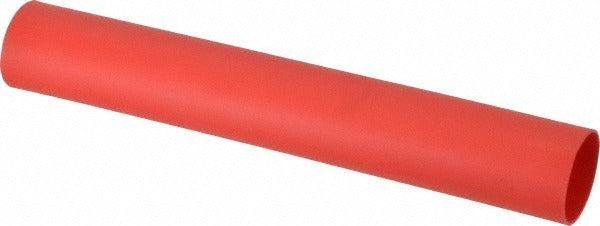

Thomas Betts HS4-30LR Heat Shrink Sleeve 3:1 Red
Availability:
In Stock

Ships same day if ordered by 12 pm
- $246.98
- $246.98
- Unit price
- / per
✓
Better Price in Cart
Manufacturer pricing rules prevent us from advertising our discount — no account or email required to see it.
-
Secure Payments
-
Easy Returns
-
Expert Advice
-
Fast Shipping
Product Description
The THOMAS BETTS HS4-30LR is a polyolefin heat shrink sleeve designed for insulating, sealing, and protecting electrical wire splices, terminations, and connections. With a 3:1 shrink ratio, it transitions from 1.1 inches inner diameter before shrinking down to 0.37 inches after activation, providing a tight mechanical and environmental seal over the conductor. Activation begins at 248 degrees F. The red color aids in circuit identification or phase coding on the job site. This sleeve is rated for continuous operation up to 194 degrees F and carries both UL Listed and CSA Certified designations, making it suitable for use in code-compliant installations.
This sleeve fits wire sizes from 1 AWG through 3/0 AWG, covering a broad range of medium-to-large conductor applications including service entrance work, panel feeders, and large branch circuit terminations. The 9-inch overall length provides ample coverage for butt splices, ring terminal lugs, and cable end protection on both copper and aluminum conductors. Electrical contractors and apprentices working on commercial, industrial, and residential distribution wiring will find this sleeve appropriate for high-demand termination points where insulation integrity is critical. Packages ship in quantities of 10 sleeves.
Key Features
- 3:1 shrink ratio delivers a secure, low-profile fit over large conductors
- Polyolefin construction provides abrasion resistance, acid resistance, and corrosion resistance
- Rated for continuous use up to 194 degrees F
- Activates at 248 degrees F with a standard heat gun
- Red color supports circuit identification in multi-phase or multi-circuit installations
- UL Listed and CSA Certified for use in regulated electrical installations
Compatibility
Compatible with wire sizes from 1 AWG through 3/0 AWG. Designed as an OEM-style heat shrink sleeve for use on copper or aluminum conductors in electrical wiring, termination, and splice protection applications.
Installation Notes
Electrical installers should de-energize and lock out the circuit before applying heat shrink sleeves to any conductor. Slide the sleeve over the conductor or termination before making the final connection, then apply even heat from a calibrated heat gun starting at the center and working outward to prevent air pockets. Do not use an open flame, as uneven or excessive heat can damage the sleeve material or underlying insulation. Work performed on service entrance conductors or feeders should comply with applicable NEC requirements.
Technical Specifications

Complete your install
We pulled together the parts most installs need for this unit, plus a few add-ons worth a look. Check what you need — nothing here blocks checkout.
Loading install accessories...
Add install kit to cart
—
Related Products
- Choosing a selection results in a full page refresh.