


Search
-
HVAC Equipment
-
Ductless Mini Splits
- Ductless Mini Splits
- Shop By Zone
- Shop by BTU
- Shop By Brand
- Components
- Accessories
-
HVAC Parts & Supplies
- HVAC Parts & Supplies
- HVAC Supplies
- HVAC Tools
-
HVAC Replacement Parts
- Blower Housing & Assemblies
- Blower Wheels
- Breakers, Contactors & Disconnects
- Capacitors & Transformers
- Control & Circuit Boards
- Filter Driers & Accumulators
- Gas Valves & Conversion Kits
- Heat Exchangers
- Thermal Expansion Valves (TXV)
- Temperature Controls
- Wall Brackets & Parts
- Miscellaneous Parts
- O-Rings & Gaskets
- Hydronics
- Motors
- Thermostats & Zoning
-
Plumbing
-
Pool
-
Electrical
-
Air Quality
-
Tools & Supplies
-
Door Security & Hardware


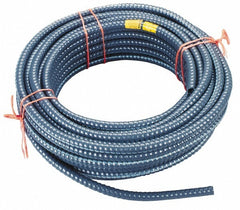
Thomas Betts 15011-050 Flexible Liquidtight Conduit 2in Gray
Availability:
In Stock

Ships same day if ordered by 12 pm
- $1,479.31
- $1,479.31
- Unit price
- / per
✓
Better Price in Cart
Manufacturer pricing rules prevent us from advertising our discount — no account or email required to see it.
-
Secure Payments
-
Easy Returns
-
Expert Advice
-
Fast Shipping
Product Description
The THOMAS BETTS 15011-050 is a gray PVC flexible liquidtight conduit designed to protect electrical conductors in wet, damp, and corrosive environments. With a 2-inch trade size, an inside diameter of 2.205 inches, and an outside diameter of 2.357 inches, this conduit provides a secure, moisture-resistant raceway for wiring in commercial and industrial applications. The PVC construction resists corrosion, oils, and many chemicals, making it well suited for mechanical rooms, process equipment, and outdoor electrical connections. Licensed electricians and electrical contractors are the primary installers. This coil ships in a 50-foot length and is priced and cut in 1-foot increments, with a 50-foot minimum cut length.
This conduit is used wherever a flexible, liquidtight wiring path is required between a fixed enclosure and a piece of equipment subject to vibration, movement, or moisture exposure. Typical applications include connections to motors, compressors, HVAC equipment, pumps, and outdoor panels. The gray PVC jacket is well suited for commercial and light industrial installations where non-metallic conduit is code-acceptable. It is commonly installed in wet locations per NEC requirements governing liquidtight flexible nonmetallic conduit (LFNC).
Key Features
- 2-inch trade size with 2.205-inch inside diameter for full conductor capacity
- Gray PVC body resists moisture, corrosion, and many chemicals
- Flexible construction absorbs vibration and accommodates equipment movement
- Liquidtight rating suitable for wet and damp location installations per NEC
- Supplied in a 50-foot coil, sold and cut in 1-foot increments
- 50-foot minimum cut length applies per order
Compatibility
Designed as an OEM-style replacement and standard-spec flexible liquidtight conduit for use with 2-inch trade size liquidtight conduit fittings in nonmetallic conduit systems.
Installation Notes
Installation should be performed by a licensed electrician in accordance with applicable NEC articles governing liquidtight flexible nonmetallic conduit. De-energize all circuits and verify lockout/tagout procedures before beginning work. Use listed 2-inch trade size liquidtight fittings rated for the conduit type; do not overtighten fittings on the PVC jacket. Support and secure the conduit at intervals required by the applicable code to prevent sagging or stress on termination points.
Technical Specifications

Complete your install
We pulled together the parts most installs need for this unit, plus a few add-ons worth a look. Check what you need — nothing here blocks checkout.
Loading install accessories...
Add install kit to cart
—
Related Products
- Choosing a selection results in a full page refresh.