


Search
-
HVAC Equipment
-
Ductless Mini Splits
- Ductless Mini Splits
- Shop By Zone
- Shop by BTU
- Shop By Brand
- Components
- Accessories
-
HVAC Parts & Supplies
- HVAC Parts & Supplies
- HVAC Supplies
- HVAC Tools
-
HVAC Replacement Parts
- Blower Housing & Assemblies
- Blower Wheels
- Breakers, Contactors & Disconnects
- Capacitors & Transformers
- Control & Circuit Boards
- Filter Driers & Accumulators
- Gas Valves & Conversion Kits
- Heat Exchangers
- Thermal Expansion Valves (TXV)
- Temperature Controls
- Wall Brackets & Parts
- Miscellaneous Parts
- O-Rings & Gaskets
- Hydronics
- Motors
- Thermostats & Zoning
-
Plumbing
-
Pool
-
Electrical
-
Air Quality
-
Tools & Supplies
-
Door Security & Hardware


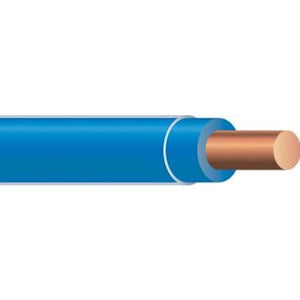

Thhncu-generic thhn10solblu2500r Thhn 10 Awg Solid Wire
Availability:
In Stock

Ships via freight in 1-3 business days
- $569.59
- $569.59
- Unit price
- / per
✓
Better Price in Cart
Manufacturer pricing rules prevent us from advertising our discount — no account or email required to see it.
LTL Delivery
This product weighs 100 lb each and will be shipped via LTL carrier. A lift gate option will be added free of charge for your convenience.
-
Secure Payments
-
Easy Returns
-
Expert Advice
-
Fast Shipping
Product Description
The THHNCU-GENERIC thhn10solblu2500r is a 10 AWG solid plain copper THHN building wire rated at 600 volts, supplied on a 2500-foot reel. The conductor is insulated with PVC and jacketed with nylon, which gives it the abrasion resistance and oil resistance required for conduit pulls in commercial and residential construction. The temperature rating reaches 90 degrees C in dry locations and 75 degrees C in wet locations. Current capacity is 30 amps at 90 degrees C, making it a standard choice for 20-amp and 30-amp branch circuit wiring depending on the applicable ampacity table and conduit fill. Licensed electricians and electrical contractors are the primary installers of this product.
This wire is used in general-purpose branch circuit and feeder wiring applications in residential, commercial, and light industrial construction. The solid stranding is well suited for conduit runs where stiffness aids fish-tape pulls and for terminations at devices and panels that accept solid conductors. The blue insulation color supports color-coding conventions used in multi-conductor conduit runs. It is appropriate for use in dry or damp conduit systems, raceways, and approved enclosures where THHN-rated conductors are specified.
Key Features
- Solid plain copper conductor for reliable conductivity and low-resistance terminations
- PVC insulation with nylon jacket provides abrasion, moisture, and oil resistance
- 600-volt rating covers standard residential and commercial branch circuit applications
- 90 degrees C dry / 75 degrees C wet temperature ratings support higher ampacity calculations under NEC Table 310
- Blue insulation color supports conduit color-coding practices
- 2500-foot reel reduces mid-run splices on large jobs and minimizes waste
Compatibility
Designed for use in conduit, raceways, and approved enclosures where 10 AWG THHN-rated, 600-volt solid copper building wire is specified per NEC requirements.
Installation Notes
Installation must be performed by a licensed electrician in accordance with the National Electrical Code (NEC) and applicable local codes. De-energize and lock out the circuit or panel before making any terminations. Solid 10 AWG conductors require proper torque at terminals per device and equipment manufacturer specifications listed on the equipment nameplate. Avoid sharp bends that exceed the minimum bend radius for the conductor size, and verify conduit fill does not exceed NEC allowances for the raceway type and wire count.
Technical Specifications

Complete your install
We pulled together the parts most installs need for this unit, plus a few add-ons worth a look. Check what you need — nothing here blocks checkout.
Loading install accessories...
Add install kit to cart
—
Related Products
- Choosing a selection results in a full page refresh.