


Search
-
HVAC Equipment
-
Ductless Mini Splits
- Ductless Mini Splits
- Shop By Zone
- Shop by BTU
- Shop By Brand
- Components
- Accessories
-
HVAC Parts & Supplies
- HVAC Parts & Supplies
- HVAC Supplies
- HVAC Tools
-
HVAC Replacement Parts
- Blower Housing & Assemblies
- Blower Wheels
- Breakers, Contactors & Disconnects
- Capacitors & Transformers
- Control & Circuit Boards
- Filter Driers & Accumulators
- Gas Valves & Conversion Kits
- Heat Exchangers
- Thermal Expansion Valves (TXV)
- Temperature Controls
- Wall Brackets & Parts
- Miscellaneous Parts
- O-Rings & Gaskets
- Hydronics
- Motors
- Thermostats & Zoning
-
Plumbing
-
Pool
-
Electrical
-
Air Quality
-
Tools & Supplies
-
Door Security & Hardware


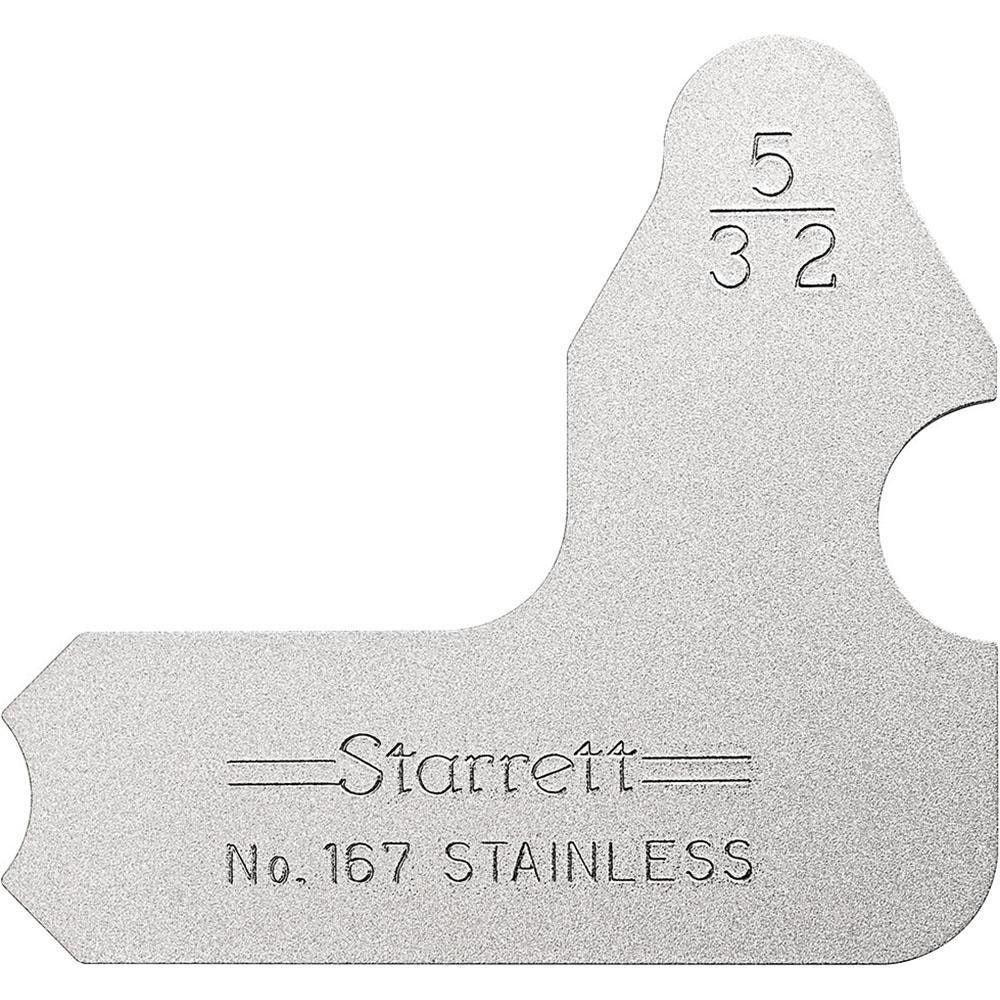
Starrett 50630 Radius Gage 5/32 Inch Convex Concave
Availability:
In Stock

Ships same day if ordered by 12 pm
- $18.80
- $18.80
- Unit price
- / per
✓
Better Price in Cart
Manufacturer pricing rules prevent us from advertising our discount — no account or email required to see it.
-
Secure Payments
-
Easy Returns
-
Expert Advice
-
Fast Shipping
Product Description
The STARRETT 50630 is a single-leaf radius gage designed to measure and verify both convex and concave radii of 5/32 inch (0.156 inches maximum radius). Constructed from stainless steel with a satin chrome finish, this gage provides corrosion resistance and long-term dimensional stability in shop environments. Machinists, tool-and-die makers, and precision metalworking trades rely on this type of leaf gage to check radii on machined parts, castings, fillets, and formed stock during layout and inspection work. The compact single-leaf format makes it easy to use in tight spaces or when checking a specific radius repeatedly on a production run.
This gage is suited for use in machine shops, fabrication facilities, and precision manufacturing environments where radius verification is part of routine part inspection. It is appropriate for both bench use and in-process checks on milling, turning, and grinding operations. The satin chrome finish reduces glare under shop lighting, making it easier to visually confirm contact between the gage and the workpiece surface. Inspection technicians and CNC setup personnel will find this gage a straightforward addition to a standard radius gage set or as a standalone replacement leaf.
Key Features
- Measures both convex and concave radii with a single leaf
- 5/32 inch (0.156 inch maximum) radius configuration
- Stainless steel construction for corrosion resistance and durability
- Satin chrome finish reduces glare during visual inspection
- Lightweight at 0.05 pounds for easy one-handed use
- Single-piece leaf format for dedicated radius checking
Compatibility
Designed as an OEM-style replacement or supplemental leaf for standard radius gage sets requiring a 5/32 inch convex and concave leaf. Verify leaf slot dimensions and retention style against your existing gage set before ordering.
Installation Notes
No power source or special tooling is required for this gage. When using, ensure the workpiece surface is clean and free of burrs or debris before seating the gage leaf to avoid false readings. If adding this leaf to an existing radius gage set, confirm the pivot hardware and frame are in good condition before assembly. Handle stainless steel gage leaves with care to avoid nicking the contact edges, which would affect measurement accuracy.
Technical Specifications

Complete your install
We pulled together the parts most installs need for this unit, plus a few add-ons worth a look. Check what you need — nothing here blocks checkout.
Loading install accessories...
Add install kit to cart
—
Related Products
- Choosing a selection results in a full page refresh.