


Search
-
HVAC Equipment
-
Ductless Mini Splits
- Ductless Mini Splits
- Shop By Zone
- Shop by BTU
- Shop By Brand
- Components
- Accessories
-
HVAC Parts & Supplies
- HVAC Parts & Supplies
- HVAC Supplies
- HVAC Tools
-
HVAC Replacement Parts
- Blower Housing & Assemblies
- Blower Wheels
- Breakers, Contactors & Disconnects
- Capacitors & Transformers
- Control & Circuit Boards
- Filter Driers & Accumulators
- Gas Valves & Conversion Kits
- Heat Exchangers
- Thermal Expansion Valves (TXV)
- Temperature Controls
- Wall Brackets & Parts
- Miscellaneous Parts
- O-Rings & Gaskets
- Hydronics
- Motors
- Thermostats & Zoning
-
Plumbing
-
Pool
-
Electrical
-
Air Quality
-
Tools & Supplies
-
Door Security & Hardware


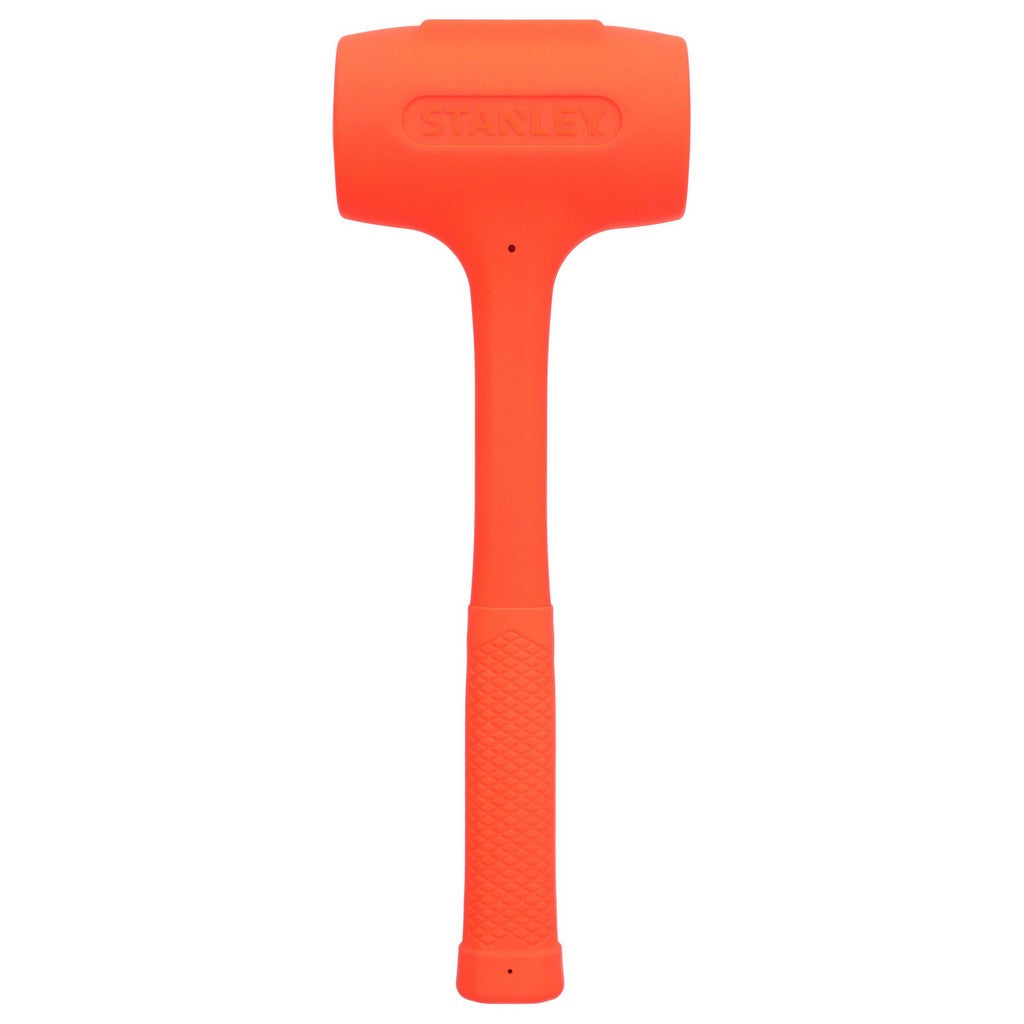
Stanley 57-541A Dead Blow Hammer 0.875 Lb Urethane
Availability:
In Stock

Ships same day if ordered by 12 pm
- $57.74
- $57.74
- Unit price
- / per
✓
Better Price in Cart
Manufacturer pricing rules prevent us from advertising our discount — no account or email required to see it.
-
Secure Payments
-
Easy Returns
-
Expert Advice
-
Fast Shipping
Product Description
The STANLEY 57-541A is a soft-face dead blow hammer designed to deliver controlled impact force without rebound or marring on finished surfaces. The head is constructed from urethane, a material that absorbs energy on contact and redistributes it through the workpiece rather than bouncing back at the technician. The head weighs 14 ounces (0.875 lb) and measures 1-19/64 inches in face diameter and 4-3/16 inches in head length. Overall tool length is 10-9/16 inches. The handle is urethane-covered steel, finished in orange for high-visibility job site identification. This hammer is suited for any trade professional who needs precise, marring-free striking.
Dead blow hammers like the STANLEY 57-541A are standard tools in HVAC, plumbing, electrical, and general mechanical service work. Common applications include seating ductwork flanges, driving plastic or rubber fittings, aligning pipe sections, dislodging stuck components, and assembly work where rebound would misalign the part or damage the surface. The urethane face is particularly well-suited to work on sheet metal, PVC, and finished fixture surfaces where a steel-face hammer would cause damage. The compact 10-9/16-inch overall length makes it manageable in tight cabinet or chase spaces.
Key Features
- Urethane head eliminates rebound and prevents surface marring on contact
- 14-ounce (0.875 lb) head weight delivers controlled force for precision work
- 1-19/64-inch face diameter provides a broad, stable strike surface
- Urethane-covered steel handle absorbs vibration and resists slipping
- Orange handle and head color for high-visibility tool identification on job sites
- Compact 10-9/16-inch overall length suits confined work areas
Compatibility
Designed as a general-purpose dead blow hammer for trade and mechanical service applications requiring a soft-face, non-marring striking tool.
Installation Notes
No installation is required for this hand tool. Inspect the urethane head before each use for cracks, splitting, or separation from the head body, as a compromised face can release debris or reduce striking control. Use the appropriate hammer weight and face size for the task — do not use this tool for driving hardened fasteners or striking metal-face tools such as chisels or punches. Store away from prolonged UV exposure and petroleum-based solvents, which can degrade urethane over time.
Technical Specifications

Complete your install
We pulled together the parts most installs need for this unit, plus a few add-ons worth a look. Check what you need — nothing here blocks checkout.
Loading install accessories...
Add install kit to cart
—
Related Products
- Choosing a selection results in a full page refresh.