


Search
-
HVAC Equipment
-
Ductless Mini Splits
- Ductless Mini Splits
- Shop By Zone
- Shop by BTU
- Shop By Brand
- Components
- Accessories
-
HVAC Parts & Supplies
- HVAC Parts & Supplies
- HVAC Supplies
- HVAC Tools
-
HVAC Replacement Parts
- Blower Housing & Assemblies
- Blower Wheels
- Breakers, Contactors & Disconnects
- Capacitors & Transformers
- Control & Circuit Boards
- Filter Driers & Accumulators
- Gas Valves & Conversion Kits
- Heat Exchangers
- Thermal Expansion Valves (TXV)
- Temperature Controls
- Wall Brackets & Parts
- Miscellaneous Parts
- O-Rings & Gaskets
- Hydronics
- Motors
- Thermostats & Zoning
-
Plumbing
-
Pool
-
Electrical
-
Air Quality
-
Tools & Supplies
-
Door Security & Hardware


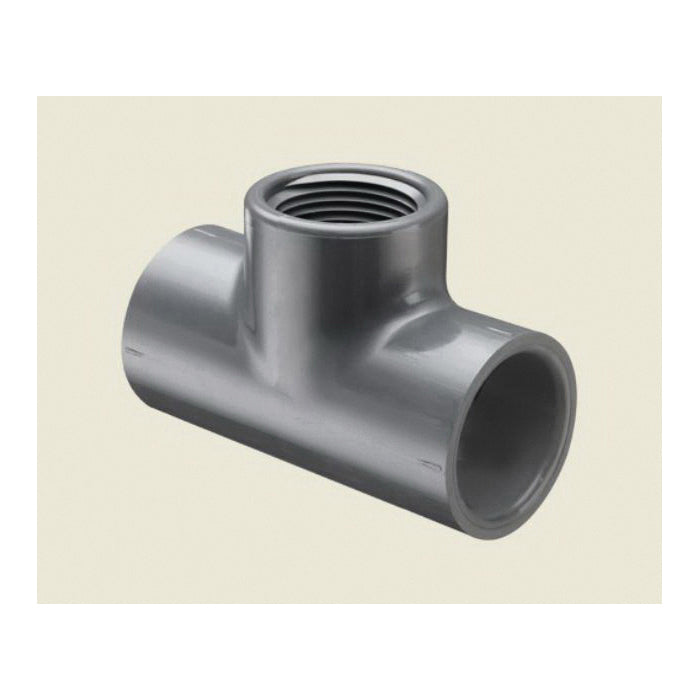
Spears 54211168943 Pvc Standard Tee 1-1/2 in Sch 80
Availability:
In Stock

Ships same day if ordered by 12 pm
- $16.04
- $16.04
- Unit price
- / per
✓
Better Price in Cart
Manufacturer pricing rules prevent us from advertising our discount — no account or email required to see it.
-
Secure Payments
-
Easy Returns
-
Expert Advice
-
Fast Shipping
Product Description
The SPEARS 54211168943 is a Schedule 80 PVC standard tee fitting designed for pressure piping systems in industrial, commercial, and plumbing applications. Molded from gray PVC, this tee provides a rigid, corrosion-resistant junction point in a piping run. It measures 4-11/16 inches in length and weighs 0.48 pounds. The end configuration is socket x socket x female NPT (FNPT), allowing solvent-welded connections on the two run ends and a threaded connection on the branch. SCH 80/XH wall thickness provides higher pressure ratings than standard Schedule 40 fittings. Licensed plumbers and pipefitters are the typical installers in commercial and industrial settings.
This fitting is suited for new construction and retrofit piping systems where a 1-1/2 inch branch takeoff is required. The FNPT branch outlet accepts a male-threaded instrument, valve, or plug, making it a practical choice when one connection point must remain serviceable without cutting into the line. Typical applications include chemical distribution, water treatment, irrigation manifolds, and general industrial fluid handling where PVC is an approved material. The domestic manufacture and SCH 80 rating make it a common specification in projects requiring traceable, higher-schedule thermoplastic fittings.
Key Features
- SCH 80/XH wall thickness for elevated pressure service compared to Schedule 40
- Socket x Socket x FNPT end style combines solvent-weld and threaded connections in one fitting
- Molded PVC construction provides corrosion resistance and chemical compatibility
- Gray color standard for Schedule 80 PVC identification in the field
- Domestically manufactured in the United States
- Compact 4-11/16 inch overall length suits tight piping layouts
Compatibility
Designed as an OEM-style replacement or new-installation fitting for 1-1/2 inch Schedule 80 PVC piping systems using solvent-socket and female NPT threaded connections.
Installation Notes
Installation is performed by licensed plumbers or pipefitters. Depressurize and drain the piping system fully before cutting into any existing line. Socket ends require proper PVC primer and solvent cement applied per the cement manufacturer instructions and applicable plumbing code. The FNPT branch connection requires an appropriately rated male-threaded fitting with thread sealant; do not overtighten threaded PVC connections, as the material is not ductile and can crack under excessive torque.
Technical Specifications
- Nominal Size: 1-1/2 inches
- End Style: Socket x Socket x FNPT
- Schedule Rating: SCH 80/XH
- Overall Length: 4-11/16 inches
- Weight: 0.48 pounds
- Material: PVC
- Color: Gray
- Method of Manufacture: Molded
- Country of Origin: United States
Standard Information
- Brand: SPEARS
- Manufacturer Part Number: 54211168943

Complete your install
We pulled together the parts most installs need for this unit, plus a few add-ons worth a look. Check what you need — nothing here blocks checkout.
Loading install accessories...
Add install kit to cart
—
Related Products
- Choosing a selection results in a full page refresh.