


Search
-
HVAC Equipment
-
Ductless Mini Splits
- Ductless Mini Splits
- Shop By Zone
- Shop by BTU
- Shop By Brand
- Components
- Accessories
-
HVAC Parts & Supplies
- HVAC Parts & Supplies
- HVAC Supplies
- HVAC Tools
-
HVAC Replacement Parts
- Blower Housing & Assemblies
- Blower Wheels
- Breakers, Contactors & Disconnects
- Capacitors & Transformers
- Control & Circuit Boards
- Filter Driers & Accumulators
- Gas Valves & Conversion Kits
- Heat Exchangers
- Thermal Expansion Valves (TXV)
- Temperature Controls
- Wall Brackets & Parts
- Miscellaneous Parts
- O-Rings & Gaskets
- Hydronics
- Motors
- Thermostats & Zoning
-
Plumbing
-
Pool
-
Electrical
-
Air Quality
-
Tools & Supplies
-
Door Security & Hardware


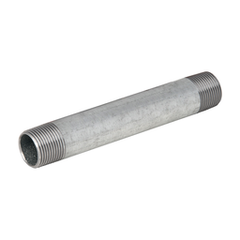
Southwire N-751000 Rigid Conduit Nipple 0.75x10 in

Availability:
In Stock
Ships same day if ordered by 12 pm
- $21.43
- $21.43
- Unit price
- / per
✓
Better Price in Cart
Manufacturer pricing rules prevent us from advertising our discount — no account or email required to see it.
-
Secure Payments
-
Easy Returns
-
Expert Advice
-
Fast Shipping
Product Description
The SOUTHWIRE N-751000 is a rigid conduit nipple designed for making short, fixed connections between electrical enclosures, junction boxes, panel boards, and conduit runs. This fitting provides a threaded, close-tolerance connection point that maintains wiring system integrity in commercial and industrial electrical installations. Sized at 0.75 inches trade size and 10 inches in length, this nipple suits a wide range of conduit routing applications where a pre-cut, pre-threaded section of rigid conduit is required. Licensed electricians and electrical contractors install this type of fitting as part of code-compliant raceway assemblies.
Rigid conduit nipples at this trade size are commonly used in commercial buildings, light industrial facilities, and residential service entrance installations. They are suited for dry, damp, or wet locations depending on the raceway system and enclosure ratings in use. The 10-inch length accommodates wall penetrations and close-proximity enclosure connections where standard conduit couplings and longer conduit runs are impractical. Installers working on switchgear, panel feeders, and meter socket connections frequently use nipples in this size range.
Key Features
- Trade size 0.75 inches with a 10-inch overall length for short, direct conduit connections
- Threaded ends ready for installation without additional cutting or threading
- Rigid construction provides mechanical protection for enclosed conductors
- One-year limited warranty from the manufacturer
Compatibility
Designed as an OEM-style replacement and standard-fitment rigid conduit nipple for 0.75-inch trade size rigid metal conduit systems in commercial and residential electrical raceways.
Installation Notes
Installation of rigid conduit nipples is performed by a licensed electrician in accordance with the National Electrical Code (NEC) and applicable local codes. De-energize all circuits and verify with a meter before working inside any enclosure or panel. Apply listed conduit thread lubricant or anti-oxidant compound as appropriate for the installation environment, and ensure fittings are wrench-tight to maintain grounding continuity through the raceway. Do not over-torque threaded connections, as this can damage enclosure knockouts or thread engagement.
Technical Specifications

Complete your install
We pulled together the parts most installs need for this unit, plus a few add-ons worth a look. Check what you need — nothing here blocks checkout.
Loading install accessories...
Add install kit to cart
—
Related Products
- Choosing a selection results in a full page refresh.