


Search
-
HVAC Equipment
-
Ductless Mini Splits
- Ductless Mini Splits
- Shop By Zone
- Shop by BTU
- Shop By Brand
- Components
- Accessories
-
HVAC Parts & Supplies
- HVAC Parts & Supplies
- HVAC Supplies
- HVAC Tools
-
HVAC Replacement Parts
- Blower Housing & Assemblies
- Blower Wheels
- Breakers, Contactors & Disconnects
- Capacitors & Transformers
- Control & Circuit Boards
- Filter Driers & Accumulators
- Gas Valves & Conversion Kits
- Heat Exchangers
- Thermal Expansion Valves (TXV)
- Temperature Controls
- Wall Brackets & Parts
- Miscellaneous Parts
- O-Rings & Gaskets
- Hydronics
- Motors
- Thermostats & Zoning
-
Plumbing
-
Pool
-
Electrical
-
Air Quality
-
Tools & Supplies
-
Door Security & Hardware


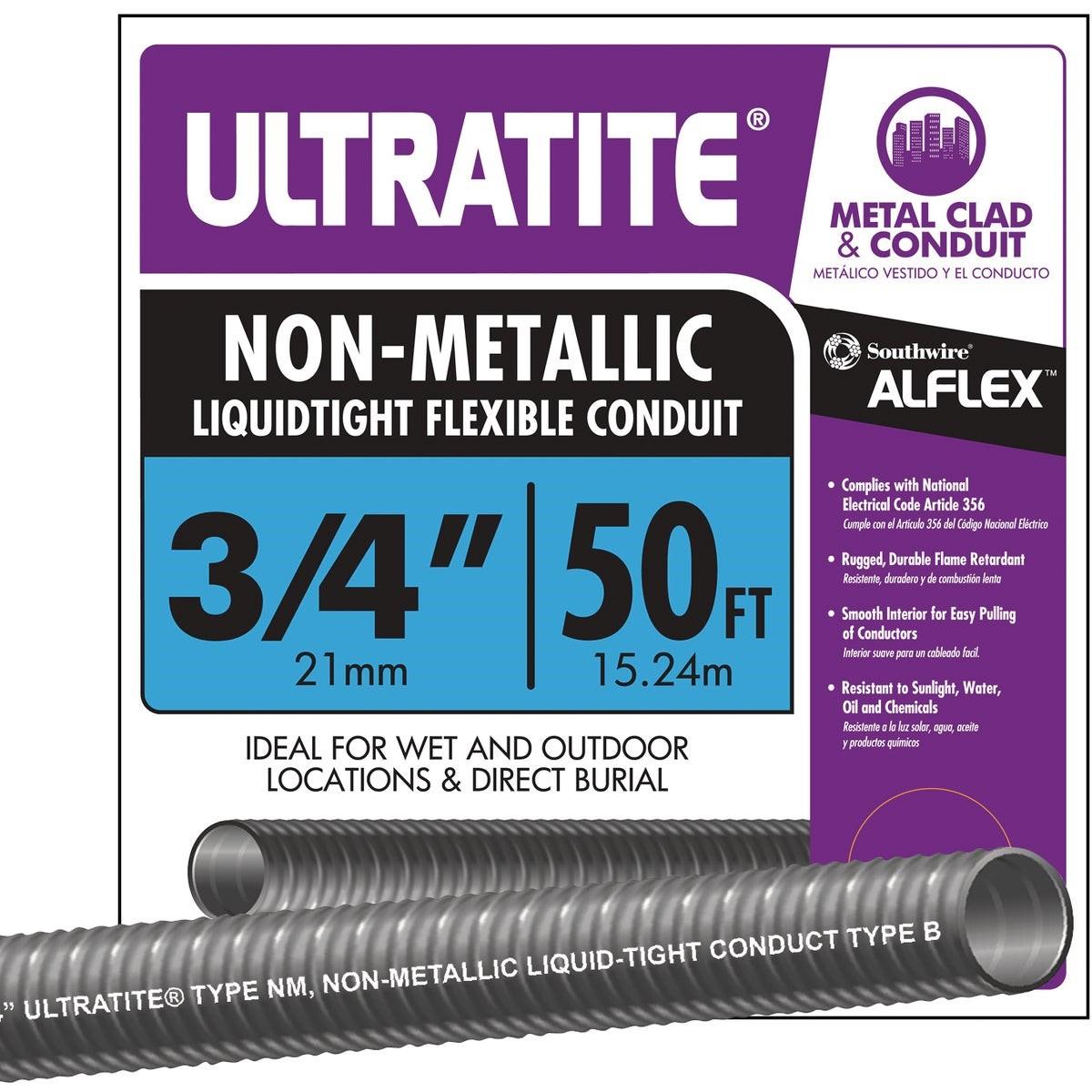
Southwire 55094322 Non-metallic Liquid Tight Conduit 3/4in 50ft

Ships in 1 - 2 Weeks
- $75.13
- $75.13
- Unit price
- / per
✓
Better Price in Cart
Manufacturer pricing rules prevent us from advertising our discount — no account or email required to see it.
-
Secure Payments
-
Easy Returns
-
Expert Advice
-
Fast Shipping
Product Description
The SOUTHWIRE 55094322 is a flexible, liquid-tight, non-metallic conduit supplied in a 50-foot roll at 3/4 inch trade size. It is built for routing electrical wiring in wet, corrosive, or mechanically demanding environments. The conduit is non-conductive and non-corrosive, making it a practical choice wherever metal conduit would be at risk from moisture, chemicals, or galvanic corrosion. Its consistent diameter and high flexibility allow it to bend around equipment without fracturing or separating. Electricians install this conduit on machinery, HVAC equipment connections, outdoor lighting circuits, and similar applications where a fully non-metallic, non-conductive wiring system is required. It is UL listed for direct burial.
This conduit is suited for both commercial and residential installations involving machinery wiring, air conditioning and heating equipment connections, and outdoor lighting runs. Its resistance to ozone, alkaline solutions, acids, and oil makes it appropriate for industrial environments and outdoor service. When paired with compatible non-metallic liquid-tight fittings, it forms a complete nonmetallic, non-conductive system that does not compromise ground integrity. The conduit cuts cleanly and smoothly, reducing installation time in the field.
Key Features
- Liquid-tight construction rated for wet and outdoor locations
- Non-conductive and non-corrosive — no metallic components in the conduit wall
- Abrasion-resistant with consistent diameter along the full 50-foot length
- Highly flexible — will not fracture or separate during bending
- Resistant to ozone, alkaline, acid, and oil exposure
- UL listed for direct burial installations
- Cuts easily and smoothly with standard conduit cutting tools
Compatibility
Designed for use with standard non-metallic liquid-tight conduit fittings at 3/4 inch trade size. Compatible with machinery, HVAC equipment, and outdoor lighting wiring applications where a non-metallic, non-conductive conduit system is specified.
Installation Notes
Licensed electricians should install this conduit in accordance with applicable NEC requirements for flexible conduit in wet or outdoor locations. Disconnect and lock out all power to the circuit before making connections. Use listed non-metallic liquid-tight fittings to maintain the liquid-tight rating at terminations. Avoid kinking the conduit at bends, as sharp kinks can restrict wire pulling and reduce conduit service life.
Technical Specifications

Complete your install
We pulled together the parts most installs need for this unit, plus a few add-ons worth a look. Check what you need — nothing here blocks checkout.
Loading install accessories...
Add install kit to cart
—
Related Products
- Choosing a selection results in a full page refresh.