


Search
-
HVAC Equipment
-
Ductless Mini Splits
- Ductless Mini Splits
- Shop By Zone
- Shop by BTU
- Shop By Brand
- Components
- Accessories
-
HVAC Parts & Supplies
- HVAC Parts & Supplies
- HVAC Supplies
- HVAC Tools
-
HVAC Replacement Parts
- Blower Housing & Assemblies
- Blower Wheels
- Breakers, Contactors & Disconnects
- Capacitors & Transformers
- Control & Circuit Boards
- Filter Driers & Accumulators
- Gas Valves & Conversion Kits
- Heat Exchangers
- Thermal Expansion Valves (TXV)
- Temperature Controls
- Wall Brackets & Parts
- Miscellaneous Parts
- O-Rings & Gaskets
- Hydronics
- Motors
- Thermostats & Zoning
-
Plumbing
-
Pool
-
Electrical
-
Air Quality
-
Tools & Supplies
-
Door Security & Hardware


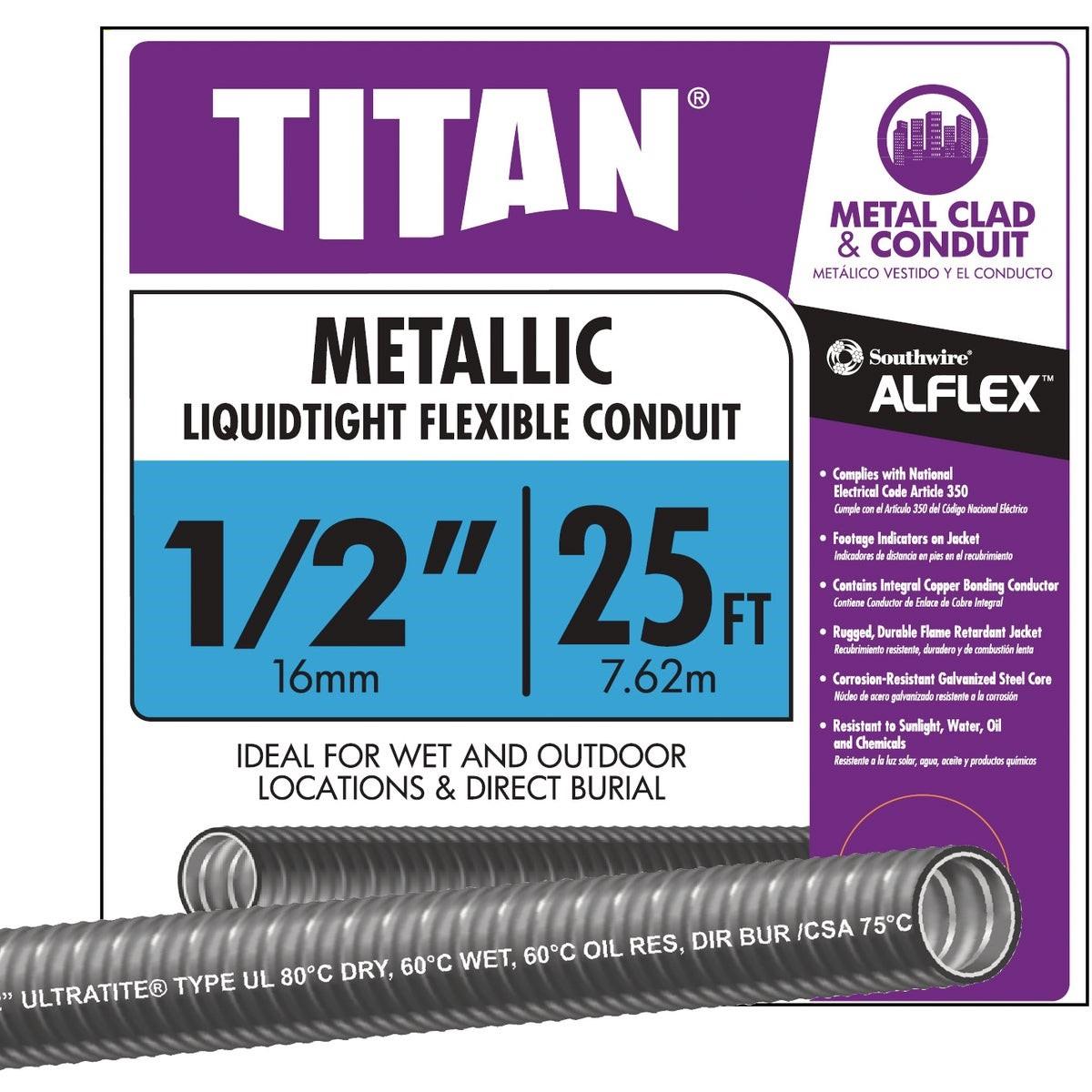

Southwire 55082621 Liquidtight Flex Conduit 1/2 in 25 Ft

Ships in 1 - 2 Weeks
- $64.41
- $64.41
- Unit price
- / per
✓
Better Price in Cart
Manufacturer pricing rules prevent us from advertising our discount — no account or email required to see it.
-
Secure Payments
-
Easy Returns
-
Expert Advice
-
Fast Shipping
Product Description
The SOUTHWIRE 55082621 is a liquidtight flexible metal conduit (LFMC) designed for wiring installations in wet, oily, and corrosive environments. The conduit features a spiral-wound, square-locked galvanized steel core covered with a sunlight-resistant PVC jacket, giving it strong mechanical protection alongside reliable moisture resistance. Sized at 1/2 inch trade size and supplied in a 25-foot roll, this conduit is a standard choice for licensed electricians connecting motors, compressors, HVAC equipment, and other machinery where rigid conduit cannot accommodate vibration or movement. Foot markings are printed directly on the extruded PVC cover to simplify field measuring and cutting.
This liquidtight flexible conduit is suited for residential, commercial, and light industrial applications wherever NEC requirements call for liquidtight protection. Common installation scenarios include final connections to HVAC condensing units, refrigeration compressors, pumps, and industrial machinery in damp or wet locations. The 1/2-inch trade size accommodates typical low-voltage and branch-circuit wiring configurations in these settings. Supplied as a single 25-foot roll, the quantity is practical for single-equipment connections or multiple short whip assemblies on a job site.
Key Features
- Spiral-wound, square-locked galvanized steel core for strong mechanical protection
- Sunlight-resistant PVC outer jacket rated for wet and oily locations
- Foot markings printed on extruded cover for easy field measuring
- UL listed per Underwriters Laboratories standards
- CSA approved for installations requiring Canadian Standards Association certification
- Supplied as a 25-foot roll for convenient handling and dispensing
Compatibility
Designed as an OEM-style replacement and standard-use LFMC for 1/2-inch trade-size liquidtight fittings used in residential, commercial, and light industrial electrical installations.
Installation Notes
Installation of liquidtight flexible metal conduit should be performed by a licensed electrician in accordance with NEC Article 350. De-energize all circuits before beginning any conduit work and verify lockout/tagout procedures are followed. Use listed liquidtight fittings at both termination ends to maintain the watertight integrity of the raceway system. Avoid kinking or bending the conduit below its minimum bend radius, as this can damage the steel core and compromise protection.
Technical Specifications

Complete your install
We pulled together the parts most installs need for this unit, plus a few add-ons worth a look. Check what you need — nothing here blocks checkout.
Loading install accessories...
Add install kit to cart
—
Related Products
- Choosing a selection results in a full page refresh.