


Search
-
HVAC Equipment
-
Ductless Mini Splits
- Ductless Mini Splits
- Shop By Zone
- Shop by BTU
- Shop By Brand
- Components
- Accessories
-
HVAC Parts & Supplies
- HVAC Parts & Supplies
- HVAC Supplies
- HVAC Tools
-
HVAC Replacement Parts
- Blower Housing & Assemblies
- Blower Wheels
- Breakers, Contactors & Disconnects
- Capacitors & Transformers
- Control & Circuit Boards
- Filter Driers & Accumulators
- Gas Valves & Conversion Kits
- Heat Exchangers
- Thermal Expansion Valves (TXV)
- Temperature Controls
- Wall Brackets & Parts
- Miscellaneous Parts
- O-Rings & Gaskets
- Hydronics
- Motors
- Thermostats & Zoning
-
Plumbing
-
Pool
-
Electrical
-
Air Quality
-
Tools & Supplies
-
Door Security & Hardware


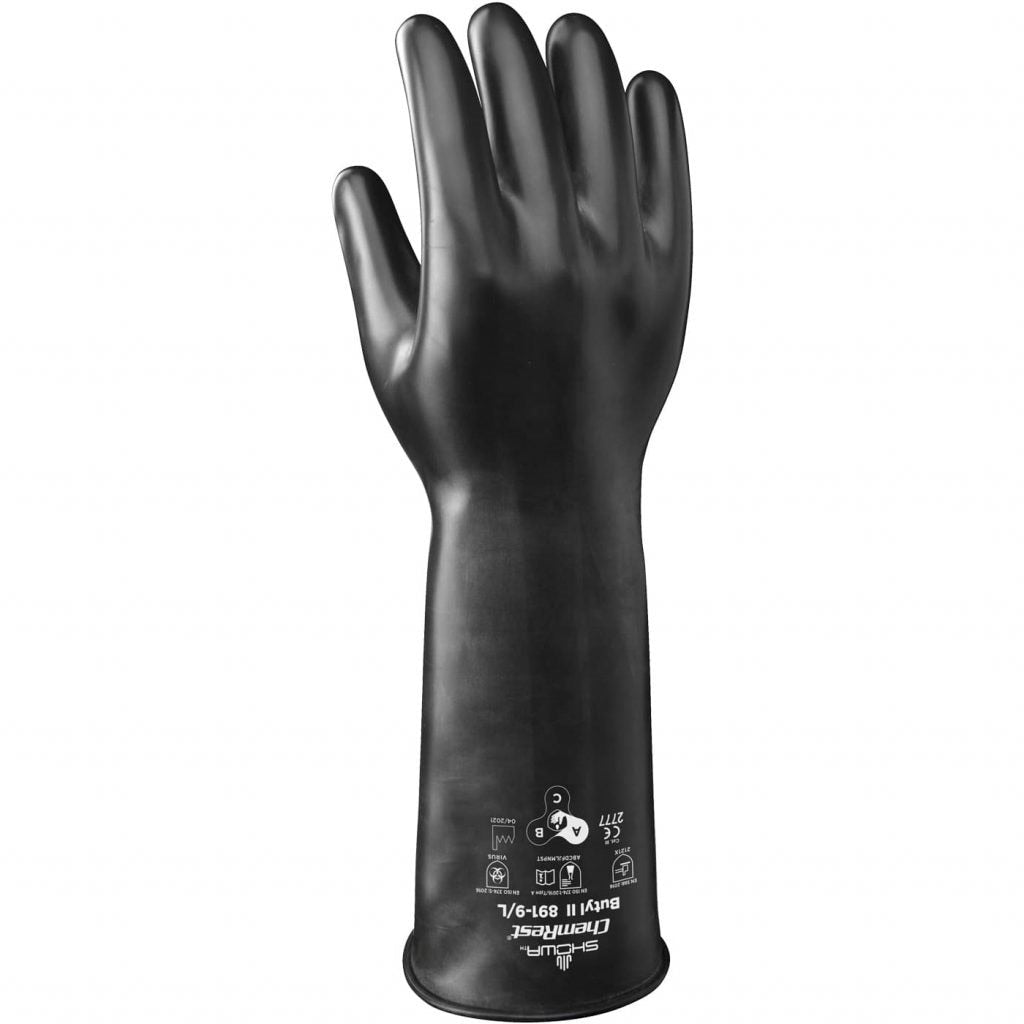
Showa 891-11 Chemical Resistance Glove 2x-large 28 Mil
Ships in 4 - 5 Weeks
- $307.01
- $307.01
- Unit price
- / per
✓
Better Price in Cart
Manufacturer pricing rules prevent us from advertising our discount — no account or email required to see it.

Secure Payments
-
Easy Returns
-
Expert Advice
-
Fast Shipping
Product Description
The SHOWA 891-11 is a chemical and acid resistant glove constructed from fluoroelastomer (Viton) bonded over a butyl rubber substrate. This dual-layer construction delivers superior protection against highly corrosive acids and aggressive organic solvents, making it a reliable choice for industrial chemical handling. At 28 mil thickness, the glove provides a meaningful barrier without sacrificing the dexterity needed for controlled, hands-on work. It is designed for use by chemical plant operators, industrial hygiene technicians, laboratory workers, and other trained professionals who work regularly with hazardous materials.
The 891-11 is well suited for environments where exposure to aliphatic and aromatic hydrocarbons is a primary concern, including Benzene, Toluene, and Xylene. The Viton outer coating resists permeation from these solvents far better than standard nitrile or latex gloves. The rolled cuff design helps prevent chemical runoff from reaching the wrist and forearm during immersion or splash-prone tasks. This size 2X-Large version is appropriate for workers requiring a larger fit without compromising the protective qualities of the glove construction.
Key Features
- Fluoroelastomer (Viton) outer layer over butyl rubber inner layer for layered chemical resistance
- 28 mil thickness provides a robust barrier for acid and solvent handling tasks
- Effective against aliphatic and aromatic hydrocarbons including Benzene, Toluene, and Xylene
- Rolled cuff style helps contain splash and runoff at the wrist
- Size 2X-Large for an accurate fit on larger hand profiles
- Black colorway allows for easy inspection of chemical contamination
Compatibility
Designed as a chemical-resistant hand protection solution for industrial, laboratory, and hazardous materials handling applications where exposure to corrosive acids and organic solvents is anticipated.
Installation Notes
Chemical-resistant gloves of this type are donned and doffed by qualified workers or safety personnel following site-specific PPE protocols. Always inspect gloves for pinholes, cracks, or delamination before each use. When removing contaminated gloves, follow proper doffing technique to avoid skin contact with the outer surface. Consult the applicable Safety Data Sheet for each chemical handled to confirm this glove construction provides adequate permeation resistance for the specific exposure.
Technical Specifications

Complete your install
We pulled together the parts most installs need for this unit, plus a few add-ons worth a look. Check what you need — nothing here blocks checkout.
Loading install accessories...
Add install kit to cart
—
Related Products
- Choosing a selection results in a full page refresh.