


Search
-
HVAC Equipment
-
Ductless Mini Splits
- Ductless Mini Splits
- Shop By Zone
- Shop by BTU
- Shop By Brand
- Components
- Accessories
-
HVAC Parts & Supplies
- HVAC Parts & Supplies
- HVAC Supplies
- HVAC Tools
-
HVAC Replacement Parts
- Blower Housing & Assemblies
- Blower Wheels
- Breakers, Contactors & Disconnects
- Capacitors & Transformers
- Control & Circuit Boards
- Filter Driers & Accumulators
- Gas Valves & Conversion Kits
- Heat Exchangers
- Thermal Expansion Valves (TXV)
- Temperature Controls
- Wall Brackets & Parts
- Miscellaneous Parts
- O-Rings & Gaskets
- Hydronics
- Motors
- Thermostats & Zoning
-
Plumbing
-
Pool
-
Electrical
-
Air Quality
-
Tools & Supplies
-
Door Security & Hardware


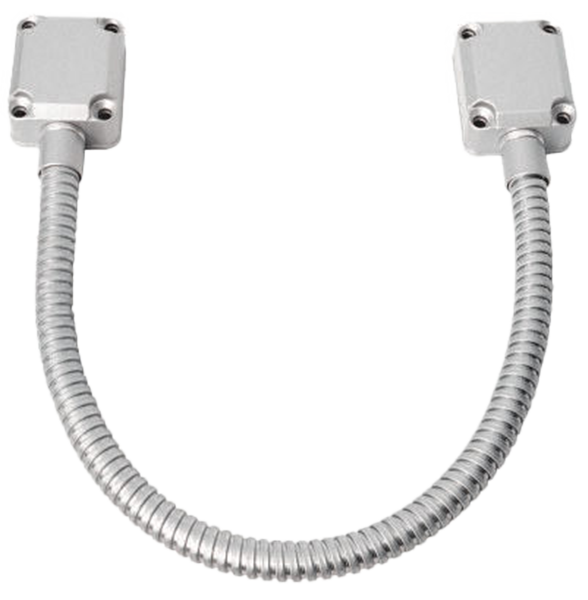
Seco Larm sd-969-s18q Armored Door Loop 18 in Stainless
Availability:
In Stock

Ships same day if ordered by 12 pm
- $29.02
- $29.02
- Unit price
- / per
✓
Better Price in Cart
Manufacturer pricing rules prevent us from advertising our discount — no account or email required to see it.
-
Secure Payments
-
Easy Returns
-
Expert Advice
-
Fast Shipping
Product Description
The SECO LARM sd-969-s18q is an armored door loop designed to protect and route low-voltage wiring between a door frame and a swinging door. It shields the conductors that supply power to electric locks, electromagnetic locks, access control readers, and similar hardware mounted on or in the door. The flexible stainless steel cord measures 17 inches in length and handles the repeated flex stress of door cycling. Die-cast aluminum end caps anchor each end of the loop securely to the door and frame surfaces. Mounting screws are included for a complete surface-mount installation.
This door loop is used in commercial and light industrial access control installations where wiring must cross the door gap without exposure to pinch, abrasion, or fatigue. It is appropriate for single-door applications involving electric strikes, magnetic locks, request-to-exit hardware, or access readers that require a continuous power or signal path through the door hinge side. Licensed security installers and low-voltage electricians are the primary tradespeople who specify and install this component. The surface-mount design allows retrofitting to existing doors without mortising or major door modification.
Key Features
- Stainless steel armored cord resists abrasion and repeated flex fatigue from door cycling
- Die-cast aluminum end caps provide rigid, secure anchoring at door and frame
- Inside cord diameter of 5/16 inches (8mm) and outside cord diameter of 1/2 inch (12.7mm) accommodate standard low-voltage cable bundles
- Cord length of 17 inches suits standard commercial door gap requirements
- Surface-mount design supports retrofit installation without door modification
- Mounting screws included for a complete out-of-box installation
Compatibility
Designed as an OEM-style surface-mount door loop for use with electric locks, electromagnetic locks, and access control systems requiring continuous low-voltage wiring across a door hinge gap.
Installation Notes
Installation is typically performed by a licensed low-voltage technician or security systems installer. De-energize all connected access control hardware and verify zero voltage at the wiring before routing conductors through the loop. Route the cable so it does not bind or kink when the door swings through its full range of motion. Follow local building and fire codes, including any applicable NEC low-voltage wiring requirements, when securing conductors inside the armored cord.
Technical Specifications

Complete your install
We pulled together the parts most installs need for this unit, plus a few add-ons worth a look. Check what you need — nothing here blocks checkout.
Loading install accessories...
Add install kit to cart
—
Related Products
- Choosing a selection results in a full page refresh.