


Search
-
HVAC Equipment
-
Ductless Mini Splits
- Ductless Mini Splits
- Shop By Zone
- Shop by BTU
- Shop By Brand
- Components
- Accessories
-
HVAC Parts & Supplies
- HVAC Parts & Supplies
- HVAC Supplies
- HVAC Tools
-
HVAC Replacement Parts
- Blower Housing & Assemblies
- Blower Wheels
- Breakers, Contactors & Disconnects
- Capacitors & Transformers
- Control & Circuit Boards
- Filter Driers & Accumulators
- Gas Valves & Conversion Kits
- Heat Exchangers
- Thermal Expansion Valves (TXV)
- Temperature Controls
- Wall Brackets & Parts
- Miscellaneous Parts
- O-Rings & Gaskets
- Hydronics
- Motors
- Thermostats & Zoning
-
Plumbing
-
Pool
-
Electrical
-
Air Quality
-
Tools & Supplies
-
Door Security & Hardware


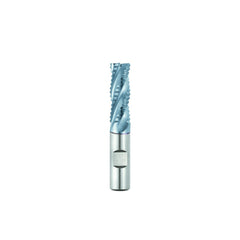
Seco 17013508 Roughing End Mill 1-1/8 in 6 Flute Cobalt
Availability:
Out Of Stock
- $253.35
- $253.35
- Unit price
- / per
✓
Better Price in Cart
Manufacturer pricing rules prevent us from advertising our discount — no account or email required to see it.

Secure Payments
-
Easy Returns
-
Expert Advice
-
Fast Shipping
Product Description
The SECO 17013508 is a single-end roughing end mill designed for aggressive material removal in milling operations. Built from M42 cobalt high-speed steel and finished with a TiCN coating, this tool delivers heat resistance and wear performance suited to ferrous and non-ferrous machining. The cutter measures 1.125 inches in diameter with a 1-inch shank and a 2-inch length of cut, giving machinists the reach and rigidity needed for standard roughing passes. Six right-hand spiral flutes at a 30-degree maximum helix angle break chips efficiently and reduce cutting load per edge. At 4.5 inches overall length, it fits standard milling machine spindles and CNC machining centers running right-hand cutting direction.
This end mill is suited for roughing applications in job shops, tool rooms, and production machining environments. The REM710 series geometry is built around interrupted-cut chip breaking, reducing radial forces and heat buildup during heavy stock removal. It is a non-centercutting, non-coolant-through tool, making it appropriate for conventional side milling and profiling where through-spindle coolant is not required. Machinists working on steel, stainless, and tough alloys will find the M42 substrate and TiCN coating a practical combination for extended tool life without regrinding frequency.
Key Features
- M42 cobalt substrate for elevated red hardness and toughness in demanding cuts
- TiCN coating reduces friction and increases surface hardness for extended tool life
- 6 right-hand spiral flutes at 30-degree helix for efficient chip evacuation
- 1.125-inch mill diameter with 2-inch length of cut suits standard roughing depths
- 1-inch shank diameter with tight tolerance (-0.0001 to -0.0005 inches) for secure holder fit
- Single-end construction; right-hand cutting direction; regular length series
Compatibility
Designed as an OEM-style replacement or direct-use roughing end mill compatible with standard end mill holders and collet chucks accepting a 1-inch shank diameter in CNC machining centers and manual milling machines.
Installation Notes
Installation is performed by a qualified machinist or tool crib technician. Secure the 1-inch shank in a properly sized end mill holder or collet chuck and confirm runout before cutting. Power down and lock out the spindle before tooling changes. Do not use this tool as a plunge-cutting drill — it is non-centercutting and should enter the workpiece radially or via a ramping strategy.
Technical Specifications

Complete your install
We pulled together the parts most installs need for this unit, plus a few add-ons worth a look. Check what you need — nothing here blocks checkout.
Loading install accessories...
Add install kit to cart
—
Related Products
- Choosing a selection results in a full page refresh.