


Search
-
HVAC Equipment
-
Ductless Mini Splits
- Ductless Mini Splits
- Shop By Zone
- Shop by BTU
- Shop By Brand
- Components
- Accessories
-
HVAC Parts & Supplies
- HVAC Parts & Supplies
- HVAC Supplies
- HVAC Tools
-
HVAC Replacement Parts
- Blower Housing & Assemblies
- Blower Wheels
- Breakers, Contactors & Disconnects
- Capacitors & Transformers
- Control & Circuit Boards
- Filter Driers & Accumulators
- Gas Valves & Conversion Kits
- Heat Exchangers
- Thermal Expansion Valves (TXV)
- Temperature Controls
- Wall Brackets & Parts
- Miscellaneous Parts
- O-Rings & Gaskets
- Hydronics
- Motors
- Thermostats & Zoning
-
Plumbing
-
Pool
-
Electrical
-
Air Quality
-
Tools & Supplies
-
Door Security & Hardware


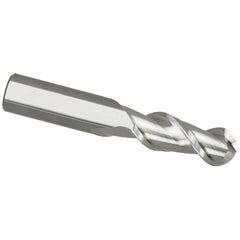
Seco 17003641 Ball End Mill 1/2 in 2 Flute Solid Carbide
Availability:
In Stock

Ships same day if ordered by 12 pm
- $129.26
- $129.26
- Unit price
- / per
✓
Better Price in Cart
Manufacturer pricing rules prevent us from advertising our discount — no account or email required to see it.
-
Secure Payments
-
Easy Returns
-
Expert Advice
-
Fast Shipping
Product Description
The SECO 17003641 is a solid carbide ball end mill designed for precise milling of aluminum and non-ferrous materials. Part of the AB245 series, this single-end tool features a 1/2 inch cutting diameter, a 1-1/4 inch length of cut, and a 45-degree high helix angle that promotes efficient chip evacuation in softer metals. With two right-hand spiral flutes and a bright, uncoated finish, it is suited for both roughing and finishing operations where clean surface quality and dimensional accuracy are required. Machinists and CNC operators in job shops and production environments rely on this geometry for consistent, repeatable results in aluminum milling applications.
This ball end mill is intended for use on CNC machining centers, vertical mills, and similar machine tool platforms working with aluminum, copper, brass, and other non-ferrous workpiece materials. Its center-cutting capability allows plunge entry, enabling helical interpolation and ramping without a pre-drilled start hole. The straight-cylindrical shank seats reliably in standard collet and end mill holders at 1/2 inch. This is a standard-length tool appropriate for general-purpose contouring, profiling, and 3D surface work where extended reach is not required.
Key Features
- 1/2 inch cutting diameter with 0.25 inch nose radius for smooth ball-end profiles
- 45-degree high helix angle promotes aggressive chip evacuation in aluminum and non-ferrous materials
- Solid carbide construction delivers stiffness and wear resistance over high-speed tool paths
- Bright, uncoated finish optimized for non-ferrous materials where coating adhesion is less critical
- Center-cutting design allows plunge milling and helical ramping entries
- Right-hand cut and right-hand flute direction for conventional CNC spindle operation
Compatibility
Designed as a standard-fitment replacement or direct-use ball end mill for CNC machining operations on aluminum and non-ferrous workpieces. Compatible with any machine tool spindle accepting a 1/2 inch straight-cylindrical shank via collet, end mill holder, or shrink-fit tooling.
Installation Notes
Installation is performed by qualified machinists or CNC setup technicians. Ensure the machine spindle is at a full stop and the control is in an e-stop or locked-out state before seating or removing the tool from its holder. Verify runout against the TIR specification after clamping to confirm holder concentricity. Do not exceed the recommended depth of cut or axial engagement for the workpiece material and machine rigidity available.
Technical Specifications

Complete your install
We pulled together the parts most installs need for this unit, plus a few add-ons worth a look. Check what you need — nothing here blocks checkout.
Loading install accessories...
Add install kit to cart
—
Related Products
- Choosing a selection results in a full page refresh.