


Search
-
HVAC Equipment
-
Ductless Mini Splits
- Ductless Mini Splits
- Shop By Zone
- Shop by BTU
- Shop By Brand
- Components
- Accessories
-
HVAC Parts & Supplies
- HVAC Parts & Supplies
- HVAC Supplies
- HVAC Tools
-
HVAC Replacement Parts
- Blower Housing & Assemblies
- Blower Wheels
- Breakers, Contactors & Disconnects
- Capacitors & Transformers
- Control & Circuit Boards
- Filter Driers & Accumulators
- Gas Valves & Conversion Kits
- Heat Exchangers
- Thermal Expansion Valves (TXV)
- Temperature Controls
- Wall Brackets & Parts
- Miscellaneous Parts
- O-Rings & Gaskets
- Hydronics
- Motors
- Thermostats & Zoning
-
Plumbing
-
Pool
-
Electrical
-
Air Quality
-
Tools & Supplies
-
Door Security & Hardware


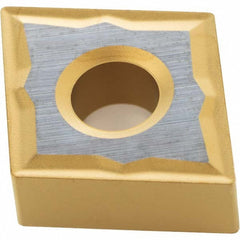
Seco 03309547 CNMG432-M3 CP500 Turning Insert Carbide
Availability:
In Stock

Ships same day if ordered by 12 pm
- $250.48
- $250.48
- Unit price
- / per
✓
Better Price in Cart
Manufacturer pricing rules prevent us from advertising our discount — no account or email required to see it.
-
Secure Payments
-
Easy Returns
-
Expert Advice
-
Fast Shipping
Product Description
The SECO 03309547 is a CNMG432-M3 indexable turning insert in grade CP500, manufactured from solid carbide with a multilayer TiAlN and TiN PVD coating. It features an 80-degree diamond (rhombic) insert shape with a negative rake and negative side clearance, suited for demanding metal-removal operations including turning, facing, and boring. The M3 chip breaker geometry supports both finishing and medium machining applications. With a 0.5079-inch insert length, a 0.5000-inch inscribed circle, and a 0.0315-inch corner radius, this insert is sized for consistent, repeatable toolpath performance across a range of CNC turning setups.
This insert is designed for machining stainless steel as its primary workpiece material, with strong performance also documented on steel, cast iron, superalloys, and titanium. It carries material grade designations M10, M20, and M30, indicating suitability across moderate to high toughness and wear-resistance requirements. Typical installation scenarios include production turning on CNC lathes in job shops, aerospace component machining, and general metalworking environments where multi-material versatility is required. It is installed by machinists and CNC operators using clamp, pin, or lever-lock insert holding methods.
Key Features
- CP500 grade carbide with multilayer TiAlN and TiN PVD coating for extended tool life on stainless steel and superalloys
- 80-degree diamond insert shape provides a strong cutting edge and wide lead angle for stable cuts
- M3 chip breaker geometry handles both finishing and medium machining operations
- Four usable cutting edges per insert maximizes cost efficiency per part
- Compatible with clamp, pin, and lever-lock toolholding systems for setup flexibility
- Conforms to ANSI and ISO standards (ANSI: CNMG432, ISO: CNMG120408-M3)
Compatibility
Designed for use in CNMG-style indexable turning toolholders that accept CNMG432 (ISO CNMG120408) inserts with clamp, pin, or lever-lock holding. Compatible with multi-use applications including boring, facing, and turning. Verify toolholder pocket geometry and seating tolerance before installation.
Installation Notes
Installation is performed by machinists or CNC tooling technicians. Power down and lock out the machine spindle before indexing or replacing inserts. Use the appropriate torque wrench and clamp screw specified by the toolholder manufacturer — do not overtighten the clamping screw, as this can fracture the insert or damage the pocket seat. Inspect the insert pocket for chips or debris before seating a new insert to ensure full contact and accurate tool-length offset.
Technical Specifications

Related Products
- Choosing a selection results in a full page refresh.