


Search
-
HVAC Equipment
-
Ductless Mini Splits
- Ductless Mini Splits
- Shop By Zone
- Shop by BTU
- Shop By Brand
- Components
- Accessories
-
HVAC Parts & Supplies
- HVAC Parts & Supplies
- HVAC Supplies
- HVAC Tools
-
HVAC Replacement Parts
- Blower Housing & Assemblies
- Blower Wheels
- Breakers, Contactors & Disconnects
- Capacitors & Transformers
- Control & Circuit Boards
- Filter Driers & Accumulators
- Gas Valves & Conversion Kits
- Heat Exchangers
- Thermal Expansion Valves (TXV)
- Temperature Controls
- Wall Brackets & Parts
- Miscellaneous Parts
- O-Rings & Gaskets
- Hydronics
- Motors
- Thermostats & Zoning
-
Plumbing
-
Pool
-
Electrical
-
Air Quality
-
Tools & Supplies
-
Door Security & Hardware


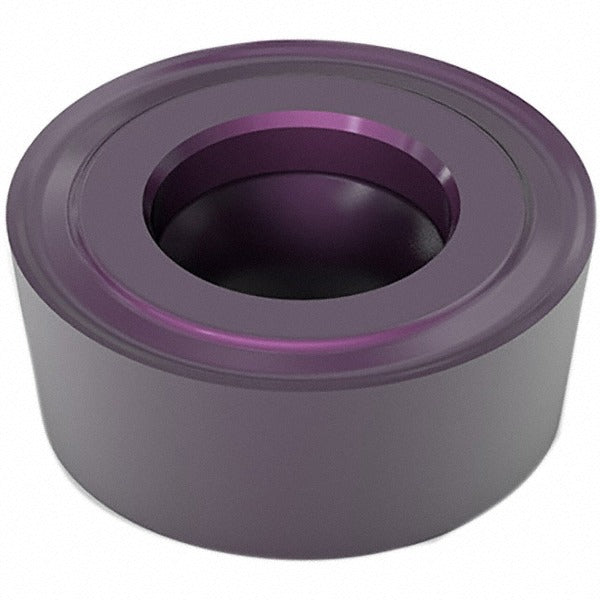

Seco 02998633 RCMT0803M0-F1 TH1000 Round Carbide Turning Insert
Availability:
In Stock

Ships same day if ordered by 12 pm
- $179.73
- $179.73
- Unit price
- / per
✓
Better Price in Cart
Manufacturer pricing rules prevent us from advertising our discount — no account or email required to see it.
-
Secure Payments
-
Easy Returns
-
Expert Advice
-
Fast Shipping
Product Description
The SECO 02998633 is a round carbide turning insert in the RCMT-F1 series, designed for high-performance metal cutting in demanding machining environments. It carries the RCMT0803M0-F1 ISO designation and is manufactured in grade TH1000 with a multilayer TiAlSiN coating applied via PVD process. The round insert shape provides a full-radius cutting edge and 4 usable cutting edges per insert. With a positive rake geometry, sharp cutting edge style, and F1 chip breaker, this insert is engineered to reduce cutting forces and manage chip flow when machining difficult materials. Licensed machinists and CNC operators working in aerospace, energy, and precision manufacturing will find this insert suited to their tooling programs.
This insert is intended for use on superalloys and titanium as its primary workpiece materials, with secondary application in hard materials — material grade designations S05 and H05. Suitable operations include turning, facing, and profiling. The neutral hand orientation allows flexible use in standard RCMT-style insert holders. The insert is compatible with screw-clamp insert holding systems and is sized for toolholders accepting the RCMT 0803 insert pocket. It complies with both ANSI and ISO standards as identified by the ISO code RCMT0803M0-F1.
Key Features
- Round insert shape with full radius and 4 cutting edges for maximum insert utilization
- TH1000 grade with multilayer TiAlSiN PVD coating for heat and wear resistance in superalloy and titanium cutting
- F1 chip breaker geometry with sharp cutting edge and positive rake for reduced cutting forces
- Neutral hand orientation for broad toolholder compatibility
- Screw-clamp insert holding method for secure seating and repeatable indexing
- Multi-use application: turning, facing, and profiling in a single insert style
- Meets ANSI and ISO standards; ISO code RCMT0803M0-F1
Compatibility
Designed for use in RCMT-style screw-clamp toolholders accepting an 0803 insert pocket. Primary workpiece materials are superalloys and titanium (material code S) and hard materials (material code H), per ISO material classification codes S05 and H05. Verify toolholder pocket specifications against the RCMT0803M0-F1 insert geometry before installation.
Installation Notes
This insert is installed by a qualified machinist or CNC tooling technician. Power down and lock out the machine spindle before indexing or replacing inserts. Use the appropriate Torx or hex key for the insert clamping screw and ensure the insert seats fully and evenly in the pocket before tightening. Do not exceed the maximum depth of cut specification for the insert geometry, and inspect the cutting edge and pocket seating surface for damage at each index.
Technical Specifications

Related Products
- Choosing a selection results in a full page refresh.