


Search
-
HVAC Equipment
-
Ductless Mini Splits
- Ductless Mini Splits
- Shop By Zone
- Shop by BTU
- Shop By Brand
- Components
- Accessories
-
HVAC Parts & Supplies
- HVAC Parts & Supplies
- HVAC Supplies
- HVAC Tools
-
HVAC Replacement Parts
- Blower Housing & Assemblies
- Blower Wheels
- Breakers, Contactors & Disconnects
- Capacitors & Transformers
- Control & Circuit Boards
- Filter Driers & Accumulators
- Gas Valves & Conversion Kits
- Heat Exchangers
- Thermal Expansion Valves (TXV)
- Temperature Controls
- Wall Brackets & Parts
- Miscellaneous Parts
- O-Rings & Gaskets
- Hydronics
- Motors
- Thermostats & Zoning
-
Plumbing
-
Pool
-
Electrical
-
Air Quality
-
Tools & Supplies
-
Door Security & Hardware


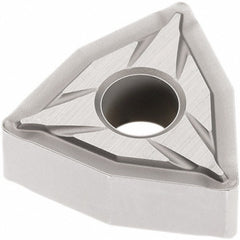
Seco 02956348 WNMG432-FF2 TP2501 Turning Insert Carbide
Availability:
In Stock

Ships same day if ordered by 12 pm
- $336.27
- $336.27
- Unit price
- / per
✓
Better Price in Cart
Manufacturer pricing rules prevent us from advertising our discount — no account or email required to see it.
-
Secure Payments
-
Easy Returns
-
Expert Advice
-
Fast Shipping
Product Description
The SECO 02956348 is a WNMG432-FF2 series indexable turning insert designed for high-productivity machining of steel, stainless steel, and cast iron. It is manufactured from solid carbide with a CVD-applied Duratomic multilayer coating consisting of TiCN, Al2O3, and Cr, qualifying it for grade TP2501 applications. The insert features a trigon (W) shape with an 80-degree included angle, a 0.5000-inch inscribed circle, and a 0.0315-inch corner radius. With a negative rake geometry and honed cutting edge, this insert delivers controlled chip formation and extended tool life in demanding turning, facing, and boring operations. It is sold individually with a minimum order quantity of 10 units.
This insert is intended for use in CNC lathes and turning centers performing general-purpose and finishing cuts on steel (ISO P10, P20, P30, P35), stainless steel (ISO M), and cast iron (ISO K) workpieces. The FF2 chip breaker geometry is optimized for light-to-medium depth cuts, making it suitable for both roughing passes and finish turning where consistent chip evacuation is critical. It accommodates boring, facing, and turning operations in a single insert geometry, reducing tooling changeover time in production environments.
Key Features
- CVD Duratomic multilayer coating (TiCN, Al2O3, Cr) for wear resistance in steel and stainless applications
- FF2 chip breaker geometry supports controlled chip flow during light-to-medium cuts
- 6 usable cutting edges per insert for extended service life per unit cost
- Negative rake, honed edge style reduces notching and edge chipping on interrupted cuts
- Compatible with clamp, pin, and lever lock holding methods for broad toolholder compatibility
- Meets ANSI and ISO standards; ISO code WNMG080408-FF2
Compatibility
Designed for use in WNMG-style toolholders with clamp, pin, or lever lock holding systems. Primary workpiece material is steel (ISO P); secondary materials include stainless steel (ISO M) and cast iron (ISO K). Material grades P10, P20, P30, and P35 are supported.
Installation Notes
Installation is performed by qualified machinists or CNC tooling technicians following standard indexable insert procedures. The machine spindle must be fully stopped and the toolholder secured in a vise or tool presetter before seating or indexing the insert. Use the appropriate torque wrench per the toolholder manufacturer's clamping specifications; do not overtighten clamp screws. Verify insert seating and edge indexing visually before resuming cutting operations.
Technical Specifications

Complete your install
We pulled together the parts most installs need for this unit, plus a few add-ons worth a look. Check what you need — nothing here blocks checkout.
Loading install accessories...
Add install kit to cart
—
Related Products
- Choosing a selection results in a full page refresh.