


Search
-
HVAC Equipment
-
Ductless Mini Splits
- Ductless Mini Splits
- Shop By Zone
- Shop by BTU
- Shop By Brand
- Components
- Accessories
-
HVAC Parts & Supplies
- HVAC Parts & Supplies
- HVAC Supplies
- HVAC Tools
-
HVAC Replacement Parts
- Blower Housing & Assemblies
- Blower Wheels
- Breakers, Contactors & Disconnects
- Capacitors & Transformers
- Control & Circuit Boards
- Filter Driers & Accumulators
- Gas Valves & Conversion Kits
- Heat Exchangers
- Thermal Expansion Valves (TXV)
- Temperature Controls
- Wall Brackets & Parts
- Miscellaneous Parts
- O-Rings & Gaskets
- Hydronics
- Motors
- Thermostats & Zoning
-
Plumbing
-
Pool
-
Electrical
-
Air Quality
-
Tools & Supplies
-
Door Security & Hardware


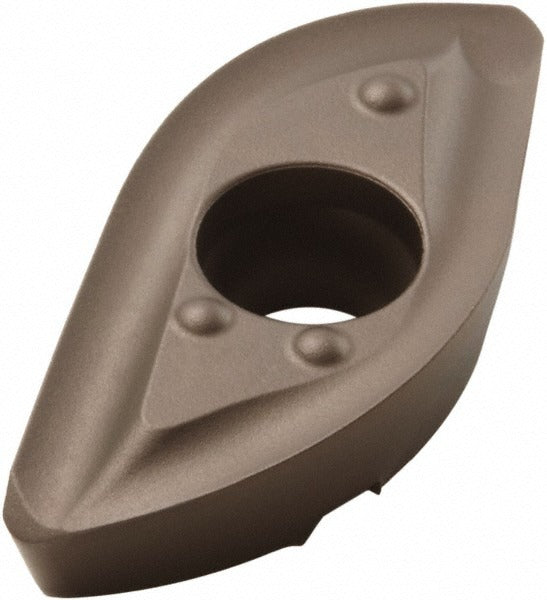

Seco 02744187 Ball Nose Milling Insert 0.750 MM4500
Availability:
In Stock

Ships same day if ordered by 12 pm
- $141.39
- $141.39
- Unit price
- / per
✓
Better Price in Cart
Manufacturer pricing rules prevent us from advertising our discount — no account or email required to see it.
-
Secure Payments
-
Easy Returns
-
Expert Advice
-
Fast Shipping
Product Description
The SECO 02744187 is a solid carbide ball nose milling insert designed for high-performance material removal in demanding machining applications. Manufactured to the ANSI and ISO standard designation 218.20-0.750ER-M10, this insert carries the MM4500 grade, a coarse-grain solid carbide substrate with a CVD-applied TiCN and Al2O3 multilayer coating. It features a 0.75-inch corner radius, a 0.3002-inch thickness, and an inscribed circle of 0.5953 inches. The positive rake geometry combined with a honed cutting edge and 15-degree relief angle supports controlled chip formation and extended tool life. Licensed machinists and CNC tooling professionals install this insert in compatible indexable milling cutters.
This insert is suited for milling stainless steel, carbon and alloy steel, superalloys, and titanium in both roughing and semi-finishing operations. The M10 chip breaker geometry is optimized for stainless steel as the primary workpiece material and handles steel and difficult-to-machine alloys including superalloys and titanium. Right-hand cutting orientation and screw-holding mounting make it a direct fit for indexed ball nose milling bodies in production CNC environments, including 3- and 5-axis machining centers used in aerospace, medical, and general metalworking applications.
Key Features
- MM4500 coarse-grain solid carbide substrate for toughness in interrupted cuts
- CVD TiCN and Al2O3 multilayer coating for wear resistance and thermal stability
- 0.75-inch corner radius ball nose geometry for contour and profile milling
- M10 chip breaker optimized for stainless steel, steel, superalloys, and titanium
- Positive rake angle with honed cutting edge reduces cutting forces on difficult alloys
- Maximum depth of cut reaches 1.339 inches for aggressive stock removal
Compatibility
Compatible with the SECO R218.20-01.50 cutter series. Fits indexable milling bodies accepting the 218.20-0.750 insert series with screw-holding retention and 0.2283-inch hole diameter. Conforms to ANSI and ISO designation 218.20-0.750ER-M10.
Installation Notes
Installation is performed by qualified CNC machinists or toolroom personnel. Confirm the milling cutter body is de-energized and spindle is fully stopped before indexing or replacing inserts. Use the correct Torx or hex key specified by the cutter body manufacturer to seat the clamping screw to proper engagement — do not overtighten or cross-thread the screw. Inspect the insert pocket and seating surface for chips or contamination before seating the new insert.
Technical Specifications

Related Products
- Choosing a selection results in a full page refresh.