


Search
-
HVAC Equipment
-
Ductless Mini Splits
- Ductless Mini Splits
- Shop By Zone
- Shop by BTU
- Shop By Brand
- Components
- Accessories
-
HVAC Parts & Supplies
- HVAC Parts & Supplies
- HVAC Supplies
- HVAC Tools
-
HVAC Replacement Parts
- Blower Housing & Assemblies
- Blower Wheels
- Breakers, Contactors & Disconnects
- Capacitors & Transformers
- Control & Circuit Boards
- Filter Driers & Accumulators
- Gas Valves & Conversion Kits
- Heat Exchangers
- Thermal Expansion Valves (TXV)
- Temperature Controls
- Wall Brackets & Parts
- Miscellaneous Parts
- O-Rings & Gaskets
- Hydronics
- Motors
- Thermostats & Zoning
-
Plumbing
-
Pool
-
Electrical
-
Air Quality
-
Tools & Supplies
-
Door Security & Hardware


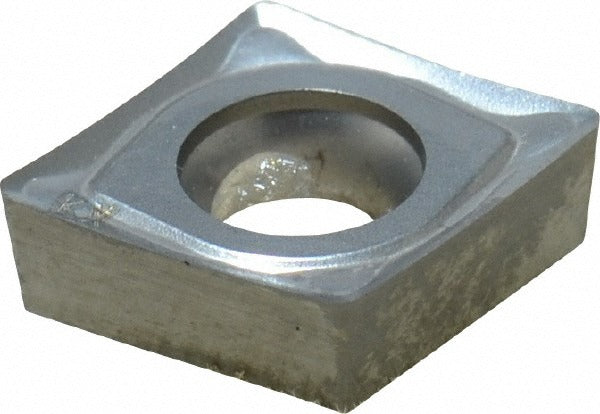

Seco 00015790 CCGT432F-ALKX Carbide Turning Insert 80 Diamond
Availability:
In Stock

Ships same day if ordered by 12 pm
- $353.82
- $353.82
- Unit price
- / per
✓
Better Price in Cart
Manufacturer pricing rules prevent us from advertising our discount — no account or email required to see it.
-
Secure Payments
-
Easy Returns
-
Expert Advice
-
Fast Shipping
Product Description
The SECO 00015790 is a solid carbide, uncoated turning insert in the CCGT-AL series, designed for high-performance machining of non-ferrous metals. Identified by the industry standard designation CCGT432F-AL and ISO code CCGT120408F-AL, it features an 80-degree diamond insert shape, a 1/2-inch inscribed circle, and a 1/32-inch (0.0315 inch) corner radius. The sharp cutting edge and positive rake geometry make this insert well-suited for light, precise cuts on aluminum and other non-ferrous workpiece materials. Machinists and toolroom operators working with CNC lathes and boring setups will find the KX grade appropriate for the demands of non-ferrous finishing and semi-finishing passes.
This insert is applied in turning, facing, and boring operations on non-ferrous metal components. The chip breaker designation AL is engineered specifically for aluminum alloys and similar soft, ductile materials, where built-up edge and chip control are primary concerns. The neutral hand orientation provides flexibility across left- and right-hand toolholder setups. It is suitable for both light production runs and high-precision finishing operations on CNC and manual turning equipment in manufacturing and maintenance environments.
Key Features
- Solid carbide construction, uncoated (bright finish) for non-ferrous and aluminum machining
- 80-degree diamond insert shape with positive rake and sharp cutting edge for reduced cutting forces
- 1/2-inch inscribed circle and 0.1874-inch insert thickness for stable toolholder engagement
- AL chip breaker geometry optimized for aluminum and other non-ferrous workpiece materials
- Maximum depth of cut of 0.4764 inches and insert length of 0.5079 inches
- Multi-use capability: boring, facing, and turning in a single insert style
- Screw-holding method with 0.2165-inch hole diameter for secure, repeatable indexing
Compatibility
Designed for use with CCGT-style screw-on toolholders that accept a 1/2-inch inscribed circle, 80-degree diamond (insert shape code C), Grade G tolerance insert with clearance code C. Compatible with material grades N15, N20, and N25 for non-ferrous metal applications. Conforms to ANSI and ISO standards as referenced in the input data.
Installation Notes
Installation of this turning insert should be performed by a qualified machinist or toolroom technician following the toolholder manufacturer's specified seating and clamping procedure. Ensure the machine spindle is fully stopped and the machine is in a safe, locked-out state before indexing or replacing inserts. Use the appropriate torx or hex key for the screw-clamp system to secure the insert without over-torquing the mounting screw. Inspect the insert pocket and locating surfaces for chips or debris before seating a new insert.
Technical Specifications

Complete your install
We pulled together the parts most installs need for this unit, plus a few add-ons worth a look. Check what you need — nothing here blocks checkout.
Loading install accessories...
Add install kit to cart
—
Related Products
- Choosing a selection results in a full page refresh.