


Search
-
HVAC Equipment
-
Ductless Mini Splits
- Ductless Mini Splits
- Shop By Zone
- Shop by BTU
- Shop By Brand
- Components
- Accessories
-
HVAC Parts & Supplies
- HVAC Parts & Supplies
- HVAC Supplies
- HVAC Tools
-
HVAC Replacement Parts
- Blower Housing & Assemblies
- Blower Wheels
- Breakers, Contactors & Disconnects
- Capacitors & Transformers
- Control & Circuit Boards
- Filter Driers & Accumulators
- Gas Valves & Conversion Kits
- Heat Exchangers
- Thermal Expansion Valves (TXV)
- Temperature Controls
- Wall Brackets & Parts
- Miscellaneous Parts
- O-Rings & Gaskets
- Hydronics
- Motors
- Thermostats & Zoning
-
Plumbing
-
Pool
-
Electrical
-
Air Quality
-
Tools & Supplies
-
Door Security & Hardware


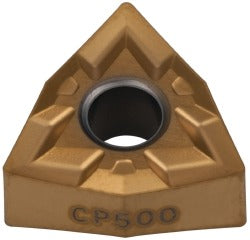
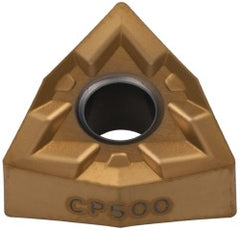
Seco 00000212 Turning Insert WNMP331-MF1 CP500 Carbide
Availability:
In Stock

Ships same day if ordered by 12 pm
- $272.28
- $272.28
- Unit price
- / per
✓
Better Price in Cart
Manufacturer pricing rules prevent us from advertising our discount — no account or email required to see it.
-
Secure Payments
-
Easy Returns
-
Expert Advice
-
Fast Shipping
Product Description
The SECO 00000212 is a solid carbide trigon turning insert in the WNMP-MF1 series, designed for precision metal cutting on CNC lathes and machining centers. It carries a CP500 grade multilayer PVD coating — TiAlN over TiN — engineered for wear resistance and thermal stability at elevated cutting speeds. The insert features an 80-degree included angle, a 3/8-inch inscribed circle, and a 1/64-inch corner radius with a honed cutting edge style. With six usable cutting edges and a neutral hand orientation, it delivers a strong cost-per-edge value for high-volume turning operations. Licensed machinists and CNC operators in job shops and production environments rely on this insert for consistent performance across multiple operations.
This insert is rated primarily for stainless steel (ISO material code M) and is also suited for steel, cast iron, and super-alloys including titanium (ISO codes P, K, and S). The MF1 chip breaker geometry is optimized for medium finishing cuts. It supports boring, facing, and turning applications, making it a versatile choice for multi-operation setups without an insert change. The insert conforms to both ANSI and ISO standards, with ISO equivalent designation WNMG060404-MF1, and fits material grades M10, M20, and M30.
Key Features
- CP500 multilayer PVD coating (TiAlN plus TiN) for thermal resistance and extended tool life on stainless steel
- Six cutting edges with neutral hand orientation for maximum utility per insert
- MF1 chip breaker geometry suited for medium finishing passes on difficult-to-machine materials
- Honed cutting edge style reduces microchipping on entry and exit
- Compatible with clamp, pin, and lever-lock insert holding methods
- Conforms to ANSI and ISO standards; ISO equivalent WNMG060404-MF1
Compatibility
Fits toolholders designed for WNMP-style inserts with clamp, pin, or lever-lock retention. Compatible with ANSI and ISO standard WNMP insert pockets. ISO equivalent designation is WNMG060404-MF1. Suitable for material grades M10, M20, and M30 as defined by ISO classification.
Installation Notes
Installation is performed by qualified CNC machinists or toolroom technicians. Power down and lock out the machine spindle before seating or indexing the insert. Confirm the insert pocket and seating surface are clean and free of chips before clamping — contamination under the insert causes premature edge failure and runout. Follow the toolholder manufacturer's clamping torque specifications for the specific retention method in use (clamp, pin, or lever lock).
Technical Specifications

Complete your install
We pulled together the parts most installs need for this unit, plus a few add-ons worth a look. Check what you need — nothing here blocks checkout.
Loading install accessories...
Add install kit to cart
—
Related Products
- Choosing a selection results in a full page refresh.