


Search
-
HVAC Equipment
-
Ductless Mini Splits
- Ductless Mini Splits
- Shop By Zone
- Shop by BTU
- Shop By Brand
- Components
- Accessories
-
HVAC Parts & Supplies
- HVAC Parts & Supplies
- HVAC Supplies
- HVAC Tools
-
HVAC Replacement Parts
- Blower Housing & Assemblies
- Blower Wheels
- Breakers, Contactors & Disconnects
- Capacitors & Transformers
- Control & Circuit Boards
- Filter Driers & Accumulators
- Gas Valves & Conversion Kits
- Heat Exchangers
- Thermal Expansion Valves (TXV)
- Temperature Controls
- Wall Brackets & Parts
- Miscellaneous Parts
- O-Rings & Gaskets
- Hydronics
- Motors
- Thermostats & Zoning
-
Plumbing
-
Pool
-
Electrical
-
Air Quality
-
Tools & Supplies
-
Door Security & Hardware


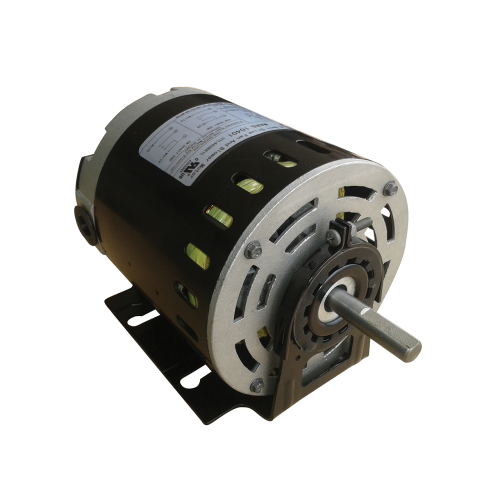
Rectorseal M10401 Oil Blower Motor 1/4 Hp 115V 1725 Rpm

Availability:
In Stock
Ships same day if ordered by 12 pm
- $123.32
- $123.32
- Unit price
- / per
✓
Better Price in Cart
Manufacturer pricing rules prevent us from advertising our discount — no account or email required to see it.
-
Secure Payments
-
Easy Returns
-
Expert Advice
-
Fast Shipping
Product Description
The RECTORSEAL M10401 is a single-phase split-phase oil blower motor rated at 1/4 HP and 1725 RPM, designed for continuous-duty blower applications in heating and air-handling systems. It features ball bearing construction for reliable, low-friction operation and an open air-over (OAO) enclosure suited for applications where airflow passes over the motor for cooling. Rotation is factory-set to reverse (REV), and the 4-pole design supports stable operation across an RPM range of 1350 to 1900. Licensed HVAC technicians and mechanical contractors install this motor type in oil-fired air handlers and forced-air blower assemblies.
The M10401 is suited for residential and light commercial oil-fired blower systems where a continuous-duty, single-phase motor is required. Its ball bearing design makes it appropriate for installations demanding longer service intervals and reduced maintenance compared to sleeve-bearing alternatives. The open air-over enclosure requires a mounted position within the airstream for proper thermal management, which is standard in forced-air blower applications. Where an existing split-phase blower motor has failed or requires replacement, the M10401 provides an OEM-style fit within compatible oil blower assemblies.
Key Features
- 1/4 HP continuous-duty rating for sustained blower operation
- Ball bearing construction for extended service life and reduced friction
- Single-phase split-phase motor type for standard residential power supply
- Reverse (REV) rotation factory configuration
- OAO enclosure designed for airstream-cooled blower mounting positions
- Broad RPM range of 1350 to 1900 for flexible system compatibility
Compatibility
Designed as an OEM-style replacement for single-phase oil blower motors in residential and light commercial forced-air heating systems requiring a 1/4 HP, 1725 RPM, reverse-rotation, split-phase motor with ball bearings.
Installation Notes
Installation should be performed by a licensed HVAC technician or qualified mechanical contractor. Disconnect and lock out all electrical power to the air handler before removing the existing motor or making any wiring connections. Verify that the replacement motor rotation, voltage, and HP rating match the equipment nameplate before energizing. Mounting hardware and wiring should comply with applicable NEC requirements and the equipment manufacturer's specifications.
Technical Specifications
- Horsepower: 1/4 HP
- Voltage: 115 volts
- Speed: 1725 RPM
- RPM Range: 1350 to 1900
- Phase: Single
- Motor Type: Split Phase
- Number of Poles: 4
- Rotation: Reverse (REV)
- Duty: Continuous
- Enclosure: Open Air-Over (OAO)
- Bearing Type: Ball
Standard Information
- Brand: RECTORSEAL
- Manufacturer Part Number: M10401

Complete your install
We pulled together the parts most installs need for this unit, plus a few add-ons worth a look. Check what you need — nothing here blocks checkout.
Loading install accessories...
Add install kit to cart
—
Related Products
- Choosing a selection results in a full page refresh.