


Search
-
HVAC Equipment
-
Ductless Mini Splits
- Ductless Mini Splits
- Shop By Zone
- Shop by BTU
- Shop By Brand
- Components
- Accessories
-
HVAC Parts & Supplies
- HVAC Parts & Supplies
- HVAC Supplies
- HVAC Tools
-
HVAC Replacement Parts
- Blower Housing & Assemblies
- Blower Wheels
- Breakers, Contactors & Disconnects
- Capacitors & Transformers
- Control & Circuit Boards
- Filter Driers & Accumulators
- Gas Valves & Conversion Kits
- Heat Exchangers
- Thermal Expansion Valves (TXV)
- Temperature Controls
- Wall Brackets & Parts
- Miscellaneous Parts
- O-Rings & Gaskets
- Hydronics
- Motors
- Thermostats & Zoning
-
Plumbing
-
Pool
-
Electrical
-
Air Quality
-
Tools & Supplies
-
Door Security & Hardware


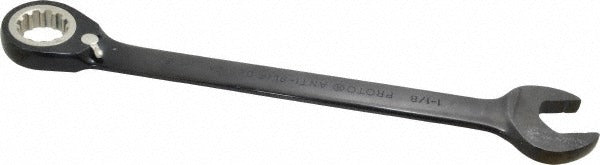
Proto JSCV36 Combination Wrench 1-1/8 in Ratcheting
Availability:
In Stock

Ships same day if ordered by 12 pm
- $117.40
- $117.40
- Unit price
- / per
✓
Better Price in Cart
Manufacturer pricing rules prevent us from advertising our discount — no account or email required to see it.
-
Secure Payments
-
Easy Returns
-
Expert Advice
-
Fast Shipping
Product Description
The PROTO JSCV36 is a ratcheting combination wrench designed for professional trade use in mechanical, plumbing, HVAC, and industrial service applications. It features a 1-1/8 inch head size with a 15-degree offset angle and a 12-point box end, allowing techs to work in tight or angled spaces where a standard wrench cannot seat cleanly. The straight handle measures 15-7/8 inches overall and is finished in chrome for corrosion resistance. The reversing ratcheting mechanism speeds up fastener work without repositioning the wrench on each stroke. At 1.96 pounds, it carries solid heft for the size. This wrench is tether capable, meeting safety requirements in elevated or overhead work environments.
This wrench suits licensed tradespeople working on large fasteners in residential and commercial mechanical systems, heavy equipment, pipe flanges, and structural connections. The 1-1/8 inch size is common on larger pipe fittings, flange bolts, equipment mounts, and structural hardware. The 15-degree offset positions the handle clear of obstructing surfaces, reducing knuckle clearance issues in confined installations. The tether-capable design makes it appropriate for work at height where dropped-tool policies are enforced on job sites or in industrial facilities.
Key Features
- Ratcheting and reversing box end for fast fastener drive without wrench removal
- 15-degree head offset angle for clearance in tight or obstructed spaces
- 12-point box end fits standard hex fasteners with multiple engagement positions
- Chrome finish provides corrosion resistance for long service life
- Tether capable for compliance with dropped-object prevention requirements
- Meets ASME B107.100-2010 standard for combination wrenches
- Backed by a lifetime warranty
Compatibility
Designed as a standard 1-1/8 inch combination wrench suitable for use on SAE hex fasteners in mechanical, HVAC, plumbing, and industrial service applications where a ratcheting offset wrench is required.
Installation Notes
This wrench is intended for use by qualified trade professionals. De-energize, depressurize, or lock out equipment before performing fastener work on mechanical or electrical systems per applicable OSHA and site safety requirements. Inspect the ratcheting mechanism for full engagement before applying torque. Do not use extension handles or cheater bars on this wrench, as doing so can exceed the designed load rating and cause tool failure.
Technical Specifications

Complete your install
We pulled together the parts most installs need for this unit, plus a few add-ons worth a look. Check what you need — nothing here blocks checkout.
Loading install accessories...
Add install kit to cart
—
Related Products
- Choosing a selection results in a full page refresh.