


Search
-
HVAC Equipment
-
Ductless Mini Splits
- Ductless Mini Splits
- Shop By Zone
- Shop by BTU
- Shop By Brand
- Components
- Accessories
-
HVAC Parts & Supplies
- HVAC Parts & Supplies
- HVAC Supplies
- HVAC Tools
-
HVAC Replacement Parts
- Blower Housing & Assemblies
- Blower Wheels
- Breakers, Contactors & Disconnects
- Capacitors & Transformers
- Control & Circuit Boards
- Filter Driers & Accumulators
- Gas Valves & Conversion Kits
- Heat Exchangers
- Thermal Expansion Valves (TXV)
- Temperature Controls
- Wall Brackets & Parts
- Miscellaneous Parts
- O-Rings & Gaskets
- Hydronics
- Motors
- Thermostats & Zoning
-
Plumbing
-
Pool
-
Electrical
-
Air Quality
-
Tools & Supplies
-
Door Security & Hardware


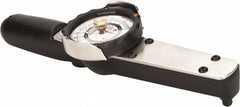
Proto J6169F Dial Torque Wrench 1/4 in Drive 75 In/lb
Availability:
Out Of Stock
- $310.35
- $310.35
- Unit price
- / per
✓
Better Price in Cart
Manufacturer pricing rules prevent us from advertising our discount — no account or email required to see it.

Secure Payments
-
Easy Returns
-
Expert Advice
-
Fast Shipping
Product Description
The PROTO J6169F is a dial torque wrench designed for precise inch-pound fastener torque measurement in professional trade and mechanical service applications. Built around a 1/4 inch drive, it reads from 0 to 75 inch-pounds with 1 in/lb graduations, giving technicians a clear, direct-reading dial without the need for a click or beam reference. The fixed head keeps the drive square to the fastener throughout the torque stroke. At 10 inches overall length and 1.96 pounds, it is compact enough for tight access points while remaining steady in hand. HVAC technicians, electricians, and plumbers reach for this size wrench when torquing small fasteners on equipment panels, terminal blocks, and compression fittings.
The J6169F fits service scenarios that require repeatable, low-range torque verification. Its 0 to 75 in/lb range covers small fasteners commonly found on residential and light commercial HVAC equipment, electrical enclosures, plumbing fixtures, and pool equipment hardware. The dial display allows the technician to watch torque build in real time rather than relying on tactile or audible feedback, which reduces the risk of over-torquing sensitive components. This wrench is equally useful on a bench during assembly and in the field during service calls.
Key Features
- 0 to 75 in/lb torque range with 1 in/lb dial graduation for fine resolution
- 1/4 inch drive accepts standard quarter-inch sockets and adapters
- Fixed head design maintains consistent drive-to-fastener alignment
- Direct-reading dial eliminates click-threshold guesswork
- Compact 10 inch overall length suits restricted access areas
Compatibility
Designed as a general-purpose 1/4 inch drive dial torque wrench suitable for low-range inch-pound fastener applications across HVAC, electrical, plumbing, and mechanical service work.
Installation Notes
This torque wrench is intended for use by qualified trade professionals familiar with fastener torque requirements for their specific application. Always zero the dial before use and apply smooth, steady force through the handle without jerking. Store the wrench in its case and avoid using it as a breaker bar or for loosening fasteners, as this can damage the internal mechanism. Consult the relevant equipment manufacturer specifications for required torque values before use.
Technical Specifications

Complete your install
We pulled together the parts most installs need for this unit, plus a few add-ons worth a look. Check what you need — nothing here blocks checkout.
Loading install accessories...
Add install kit to cart
—
Related Products
- Choosing a selection results in a full page refresh.