


Search
-
HVAC Equipment
-
Ductless Mini Splits
- Ductless Mini Splits
- Shop By Zone
- Shop by BTU
- Shop By Brand
- Components
- Accessories
-
HVAC Parts & Supplies
- HVAC Parts & Supplies
- HVAC Supplies
- HVAC Tools
-
HVAC Replacement Parts
- Blower Housing & Assemblies
- Blower Wheels
- Breakers, Contactors & Disconnects
- Capacitors & Transformers
- Control & Circuit Boards
- Filter Driers & Accumulators
- Gas Valves & Conversion Kits
- Heat Exchangers
- Thermal Expansion Valves (TXV)
- Temperature Controls
- Wall Brackets & Parts
- Miscellaneous Parts
- O-Rings & Gaskets
- Hydronics
- Motors
- Thermostats & Zoning
-
Plumbing
-
Pool
-
Electrical
-
Air Quality
-
Tools & Supplies
-
Door Security & Hardware


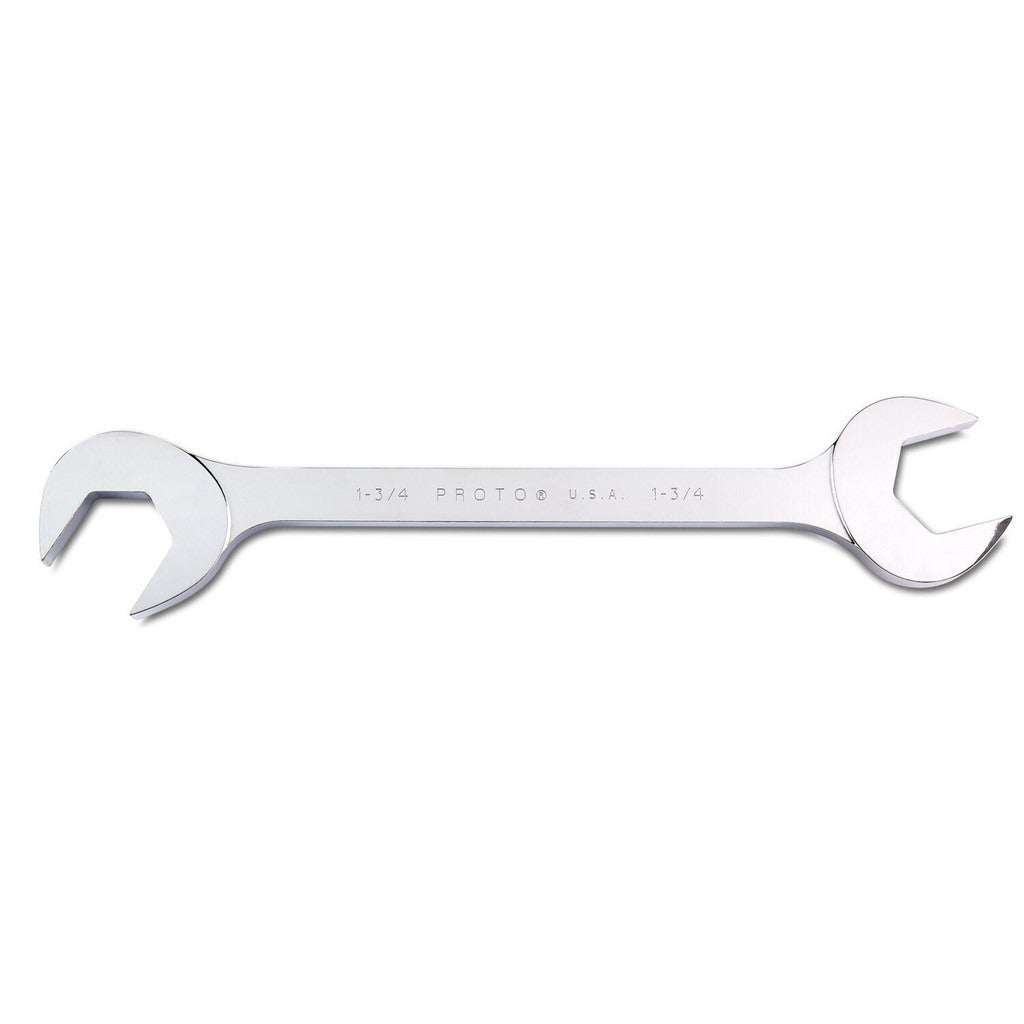
Proto J3156 Open End Wrench 1-3/4 in Double End
Availability:
In Stock

Ships same day if ordered by 12 pm
- $147.35
- $147.35
- Unit price
- / per
✓
Better Price in Cart
Manufacturer pricing rules prevent us from advertising our discount — no account or email required to see it.
-
Secure Payments
-
Easy Returns
-
Expert Advice
-
Fast Shipping
Product Description
The PROTO J3156 is a double-ended open end wrench sized at 1-3/4 inches, built for heavy-duty fastener work in trade and industrial environments. The wrench is manufactured from steel with a chrome-plated finish that resists corrosion and simplifies cleaning in shop or field conditions. The head design features a 15-degree and 60-degree head angle on opposing ends, allowing access to fasteners in both open and offset positions. At 2.62 pounds and 16.5 inches in length, it delivers solid leverage for large-fastener applications. This wrench meets GGG-W-636E federal specification standards and carries a lifetime warranty, making it a long-term tool for licensed mechanics, pipefitters, and industrial maintenance technicians.
The PROTO J3156 is suited for large-diameter fastener applications found in mechanical rooms, industrial equipment, heavy HVAC systems, and piping installations. The double-ended design with two distinct head angles allows technicians to adapt quickly to tight or angled access points without switching tools. It is appropriate for use in commercial and industrial settings where large fasteners on pumps, compressors, flanges, and structural connections require a reliable open-end wrench. The 3-31/64 inch head width accommodates the reach needed for 1-3/4 inch fasteners.
Key Features
- Double-ended open end head with 15-degree and 60-degree head angles for versatile fastener access
- 1-3/4 inch wrench size for large-fastener applications
- Steel construction with chrome-plated finish for corrosion resistance and durability
- Meets GGG-W-636E federal specification standard
- Lifetime warranty backed by the manufacturer
- Head width of 3-31/64 inches for reach on wide fastener formats
Compatibility
Designed as an OEM-style service wrench for 1-3/4 inch fasteners in industrial, mechanical, and heavy-trade applications conforming to GGG-W-636E standards.
Installation Notes
This wrench is intended for use by trained mechanics, pipefitters, and industrial maintenance technicians. Before applying torque to any fastener on pressurized systems, shut off and isolate the system per applicable codes and lockout/tagout procedures. Use the appropriate head angle for the access geometry to avoid slipping off large fasteners. Do not extend the wrench handle with a cheater bar, as this can exceed the tool design limits and cause injury.
Technical Specifications

Complete your install
We pulled together the parts most installs need for this unit, plus a few add-ons worth a look. Check what you need — nothing here blocks checkout.
Loading install accessories...
Add install kit to cart
—
Related Products
- Choosing a selection results in a full page refresh.