


Search
-
HVAC Equipment
-
Ductless Mini Splits
- Ductless Mini Splits
- Shop By Zone
- Shop by BTU
- Shop By Brand
- Components
- Accessories
-
HVAC Parts & Supplies
- HVAC Parts & Supplies
- HVAC Supplies
- HVAC Tools
-
HVAC Replacement Parts
- Blower Housing & Assemblies
- Blower Wheels
- Breakers, Contactors & Disconnects
- Capacitors & Transformers
- Control & Circuit Boards
- Filter Driers & Accumulators
- Gas Valves & Conversion Kits
- Heat Exchangers
- Thermal Expansion Valves (TXV)
- Temperature Controls
- Wall Brackets & Parts
- Miscellaneous Parts
- O-Rings & Gaskets
- Hydronics
- Motors
- Thermostats & Zoning
-
Plumbing
-
Pool
-
Electrical
-
Air Quality
-
Tools & Supplies
-
Door Security & Hardware


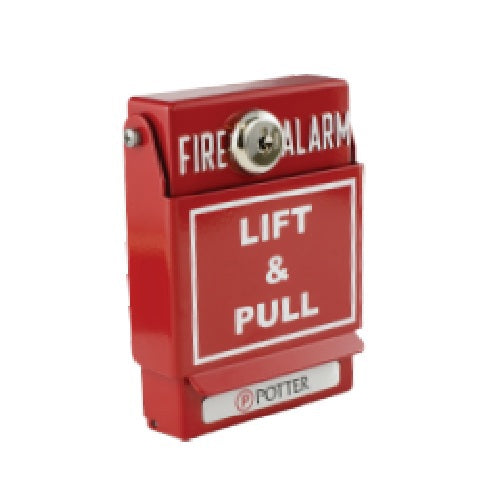

Potter pad100-psda Addressable Pull Station Dual Action
Availability:
Out Of Stock
- $156.62
- $156.62
- Unit price
- / per
✓
Better Price in Cart
Manufacturer pricing rules prevent us from advertising our discount — no account or email required to see it.

Secure Payments
-
Easy Returns
-
Expert Advice
-
Fast Shipping
Product Description
The POTTER ELECTRIC SIGNAL pad100-psda is an addressable manual pull station designed for fire alarm signaling systems. It features a dual-action pull mechanism, requiring two distinct motions to activate, which reduces accidental trips in the field. The station operates at 24 volts and communicates over a Signaling Line Circuit (SLC) that supports Class A, Class X, and Class B wiring configurations. The housing is constructed from die-cast material, providing durability in demanding installation environments. Licensed fire alarm technicians and low-voltage contractors are the primary installers of this device.
The pad100-psda is suited for commercial and institutional fire alarm systems where addressable initiating devices are required. Its SLC compatibility with Class A, Class X, and Class B configurations gives system designers flexibility in how they route and supervise circuits. The dual-action design meets code requirements in many jurisdictions that mandate tamper-resistant pull station actuation. This device is typically mounted at exit points, egress corridors, and other locations specified by the authority having jurisdiction (AHJ) per NFPA 72 installation standards.
Key Features
- Dual-action pull mechanism reduces accidental activation
- Addressable SLC communication supports Class A, Class X, and Class B wiring
- 24-volt operating voltage compatible with standard fire alarm control panels
- Die-cast construction for durable, long-term performance in commercial environments
- Addressable design allows individual device identification at the panel
Compatibility
Designed as an addressable pull station for use with fire alarm control panels that support SLC Class A, Class X, and Class B wiring topologies. Verify panel compatibility with the POTTER ELECTRIC SIGNAL addressable device protocol before installation.
Installation Notes
Installation must be performed by a licensed fire alarm technician or qualified low-voltage contractor in accordance with NFPA 72 and applicable local codes. De-energize and lock out the SLC circuit at the fire alarm control panel before wiring the device. Mount the station at the height required by NFPA 72 and as directed by the AHJ, typically at accessible egress locations. After installation, conduct a full functional test at the panel to confirm proper address assignment and signal response.
Technical Specifications

Complete your install
We pulled together the parts most installs need for this unit, plus a few add-ons worth a look. Check what you need — nothing here blocks checkout.
Loading install accessories...
Add install kit to cart
—
Related Products
- Choosing a selection results in a full page refresh.