


Search
-
HVAC Equipment
-
Ductless Mini Splits
- Ductless Mini Splits
- Shop By Zone
- Shop by BTU
- Shop By Brand
- Components
- Accessories
-
HVAC Parts & Supplies
- HVAC Parts & Supplies
- HVAC Supplies
- HVAC Tools
-
HVAC Replacement Parts
- Blower Housing & Assemblies
- Blower Wheels
- Breakers, Contactors & Disconnects
- Capacitors & Transformers
- Control & Circuit Boards
- Filter Driers & Accumulators
- Gas Valves & Conversion Kits
- Heat Exchangers
- Thermal Expansion Valves (TXV)
- Temperature Controls
- Wall Brackets & Parts
- Miscellaneous Parts
- O-Rings & Gaskets
- Hydronics
- Motors
- Thermostats & Zoning
-
Plumbing
-
Pool
-
Electrical
-
Air Quality
-
Tools & Supplies
-
Door Security & Hardware


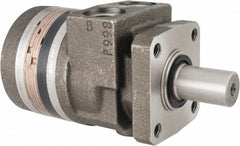
Parker TB0050FP100AAAB Hydraulic Motor 4 Bolt 3 Cu in
Availability:
In Stock

Ships same day if ordered by 12 pm
- $558.92
- $558.92
- Unit price
- / per
✓
Better Price in Cart
Manufacturer pricing rules prevent us from advertising our discount — no account or email required to see it.
-
Secure Payments
-
Easy Returns
-
Expert Advice
-
Fast Shipping
Product Description
The PARKER TB0050FP100AAAB is a bi-rotational hydraulic motor from the Parker TB Series, designed for industrial and mobile hydraulic systems. It delivers up to 722 RPM at continuous duty and handles a maximum operating pressure of 1,800 psi. Displacement is 3.0 cubic inches per revolution, making it suitable for moderate-torque, low-to-mid-speed applications. The motor mounts via a 4-bolt flange configuration and uses 1/2-inch NPT ported connections. The 0.99-inch shaft diameter and 0.62-inch keyway depth accommodate standard drive couplings. Weighing 10 pounds, this unit is compact enough for tight equipment bays while handling demanding hydraulic loads. Installation is handled by qualified hydraulic technicians or millwrights.
The TB0050FP100AAAB fits residential, commercial, and light industrial hydraulic circuits where a compact gear-style motor is required. Its bi-rotational design allows shaft rotation in either direction without reconfiguring the motor body, which simplifies integration into reversing drive systems. The 4-bolt flange mount provides rigid, vibration-resistant attachment to equipment frames, pumps, or gearboxes. The 1/2-inch NPT ports are compatible with standard hydraulic hose fittings and manifold blocks commonly found in agricultural equipment, conveyor drives, and small power units. Maximum fluid temperature is rated at 180 degrees F, which covers most standard petroleum-based and synthetic hydraulic fluid operating ranges.
Key Features
- Bi-rotational operation allows clockwise or counterclockwise shaft rotation without motor repositioning
- Maximum continuous speed of 722 RPM with speed at maximum pressure rated at 932 RPM
- 1,800 psi maximum operating pressure for moderate-duty hydraulic circuits
- 3.0 cubic inch displacement per revolution for consistent low-speed torque output
- 4-bolt flange mount provides rigid, vibration-resistant installation
- 1/2-inch NPT port connections compatible with standard hydraulic fittings
- 180 degrees F maximum fluid temperature rating covers most standard hydraulic fluids
Compatibility
Designed as an OEM-style replacement or direct-fit hydraulic motor for systems requiring a Parker TB Series gear motor with 4-bolt flange mounting and 1/2-inch NPT porting.
Installation Notes
Installation should be performed by a licensed hydraulic technician or qualified millwright. Depressurize and lock out the hydraulic circuit completely before disconnecting any lines or removing the existing motor. Verify shaft alignment and coupling engagement before final torque of mounting hardware. Confirm port connections are properly sealed and that system fluid is clean and within the rated temperature and viscosity range before startup.
Technical Specifications

Complete your install
We pulled together the parts most installs need for this unit, plus a few add-ons worth a look. Check what you need — nothing here blocks checkout.
Loading install accessories...
Add install kit to cart
—
Related Products
- Choosing a selection results in a full page refresh.